
Community Screenings Revive Memories of Punjab’s Past
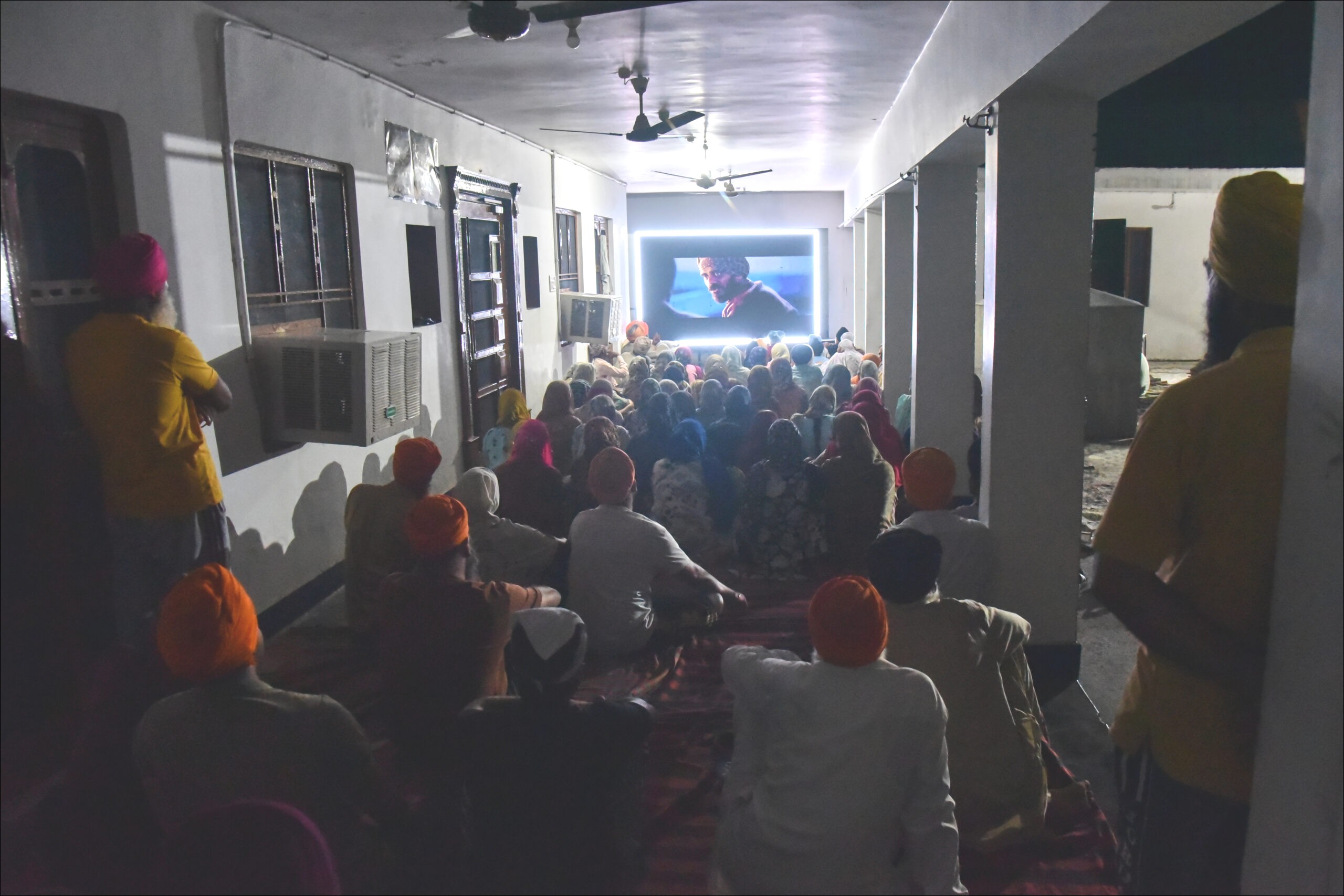
GURDASPUR, India — As night fell over the fields of Gurdaspur, locals gathered in the courtyard of a Sikh temple to watch a film that has faced restrictions from Indian authorities.
The movie, titled “Satluj,” tells the real-life story of a human rights activist who uncovered numerous disappearances and killings during a government crackdown on a separatist movement in Punjab during the 1980s and 1990s.
At the screening, elderly individuals who experienced the turmoil sat alongside younger generations born long after the conflict ended. When the film began, a hush fell over the crowd, indicating the weight of the story being told.
Initially named “Punjab 95,” the film faced censorship delays for three years, with officials asking for over 120 edits. Although it premiered on the ZEE5 streaming platform last week, it was pulled from Indian viewing just two days later.
This decision sparked a movement across Punjab, where various Sikh groups and activists started hosting community screenings using copies that have circulated online. These gatherings transformed temples and village halls into lively cinemas, allowing viewers to revisit the painful memories of one of India’s most tragic conflicts.
Exploring Punjab’s Insurgency
“Satluj” centers around the life of Jaswant Singh Khalra, a rights activist whose investigation into unlawful killings highlighted a dark chapter in Punjab’s history. The conflict involved Sikh militants advocating for independence against Indian security forces, resulting in immense loss of life on both sides.
During this turbulent time, rights organizations documented numerous cases of enforced disappearances and killings. Khalra’s findings suggested that many victims were cremated without the knowledge of their families, leaving them in anguish.
Khalra was abducted in 1995 and later killed, with some police officers held accountable for his death.
Although the insurgency has been suppressed and talk of Khalistan has dwindled, the Indian government remains wary of separatist movements. Officials have not publicly discussed the removal of the film but claimed it was for security reasons.
Community Initiatives Flourish
Local residents have come together to organize screenings, pooling resources like projectors and sound systems. Sikh temples and community centers take on the role of open-air theaters, where friends and families can come together to reflect on painful memories of their past.
Inderjeet Singh Bains, who helps coordinate various screenings in Gurdaspur, expressed that these events allow families to share in their heritage. “When we show the film, we often see our elders in tears, remembering their lost sons. The suffering has been immense,” he noted.
Gurmukh Singh, a viewer, shared that the movie gave a voice to stories that younger generations had only heard in whispers. For many, this conflict isn’t just a chapter in history; it’s a reality etched in their lives. “After watching the film, we are reminded of the grief our older generations carried,” he said.
Debate over Freedom of Expression
The removal of “Satluj” has reignited discussions about artistic freedom in India, where filmmakers have faced increasing censorship under Prime Minister Narendra Modi’s government. Critics have expressed concerns that the government favors films aligning with its nationalist views.
Balwinder Singh, a Sikh leader, spoke out, saying, “We witnessed everything firsthand. The truth should be accessible to everyone.”
The government maintains that film certification is handled independently. Meanwhile, ZEE5 stated that the film will not be available in India “in light of current developments” but aims to find a way to restore it.
Reflecting on the Past
Diljit Dosanjh, who portrays Khalra, expressed that the film’s impact goes beyond its online presence. “Once people have seen it, the story cannot be erased,” he remarked.
This sentiment is evident throughout Punjab. Inside the Gurdaspur temple, viewers absorbed scenes showcasing the police’s brutalities and families’ desperate searches for truth. Afterward, many lingered to discuss, comparing the film’s narrative with their lived experiences.
Pawan Deep Kaur described the film as a poignant reflection of the older generation’s suffering, stating, “It made us cry endlessly.”
In Gurdaspur and beyond, these screenings are not just about watching a film but about remembering, sharing pain, and preserving a collective history that still resonates today.
