
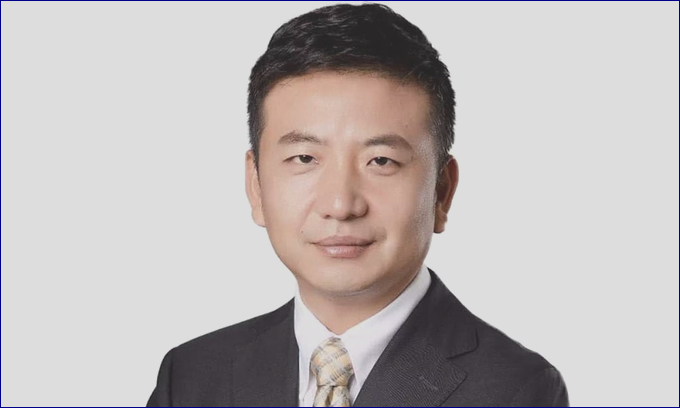
CXMT’s Landmark IPO: A Step Toward Memory Chip Dominance
On July 15, 2026, ChangXin Memory Technologies (CXMT), China’s leading producer of dynamic random-access memory (DRAM) chips, made headlines with Asia’s largest initial public offering. This event highlighted the ambition of founder Zhu Yiming to establish a major domestic player in the global memory-chip market.
The company’s Shanghai listing aimed to raise 57.9 billion yuan (around US$8.5 billion), giving CXMT a valuation of approximately $85 billion. This milestone is significant for Zhu, who committed in 2018 to not take a salary until the company turned a profit, which it achieved last year.
Zhu’s vision for China to become a key player in the memory-chip industry dates back over 20 years. While he worked in Silicon Valley as an engineer with just a chip design in mind, he predicted that the industry’s focus would eventually move from the U.S. to Japan, then to South Korea, and finally to China. In a 2004 email to investors, he stated, “It is time for China to play a role in this industry” and expressed a clear ambition to become the leading memory designer and manufacturer in the country.
Zhu, a graduate of Tsinghua University, initially studied physics before becoming captivated by semiconductors. While his classmates often took tutoring jobs, he worked as a programmer and earned significantly more than the average annual income in China at the time. His increasing involvement in software and hardware projects led him to develop an interest in integrated circuits, an area where China heavily depended on foreign suppliers.
In 2004, Zhu decided to become an entrepreneur. With help from a fellow Tsinghua alumnus, he met venture capitalist Hsun K Chou, who invested $100,000 in Zhu’s new venture and provided low-cost space to start his business. Along with engineer Shu Qingming, he launched GigaDevice, focusing on semiconductor design and successfully creating a memory-chip prototype.
By 2005, Zhu raised an additional $920,000 from fellow alumni and moved GigaDevice to Beijing, where it eventually became a leading chip designer and went public on the Shanghai Stock Exchange in 2016. That same year, he partnered with the Hefei government to create CXMT, aiming not just to design chips but to manufacture them, requiring substantial investment in production facilities.
In 2018, Zhu shifted his attention to CXMT and pledged to forgo his salary until the company became profitable. By 2019, CXMT produced its first mainstream DRAM chip, marking a significant entry into a market traditionally dominated by foreign companies.
The company faced years of losses but received significant government support, crucial for its entry into the capital-intensive memory industry. Experts believe this backing was vital for its early days. The global memory-chip market saw a surge in demand driven by advancements in artificial intelligence, which eventually benefited CXMT.
Recently, CXMT’s revenues exploded, showing a remarkable 719% growth in the first quarter compared to the previous year, reaching 50.8 billion yuan. The forecast for mid-year revenue is between 110 billion and 120 billion yuan. Additionally, tech giant Apple has reportedly shown interest in testing CXMT’s chips for its products sold in China.
Despite its rapid growth, CXMT still trails global leaders in advanced memory technology. The DRAM market is currently led by Samsung Electronics, SK Hynix, and Micron Technology. As of early 2026, CXMT became the fourth-largest DRAM supplier, increasing its global market share from 3% to about 8%.
Moving forward, the company will need to keep investing heavily in technology while navigating industry fluctuations and facing challenges from U.S.-led restrictions on China’s access to high-end semiconductor equipment.
Zhu, once an engineer focused on technology and business development, now leads a company that employed nearly 19,300 individuals by the end of 2025. His net worth stands at around $3.7 billion, reflecting his success. In a recent interview, he attributed the achievements of GigaDevice to selecting the right market and the hard work of his team, encapsulating his entrepreneurial philosophy: “The most important thing in entrepreneurship is to stay alive.”
