
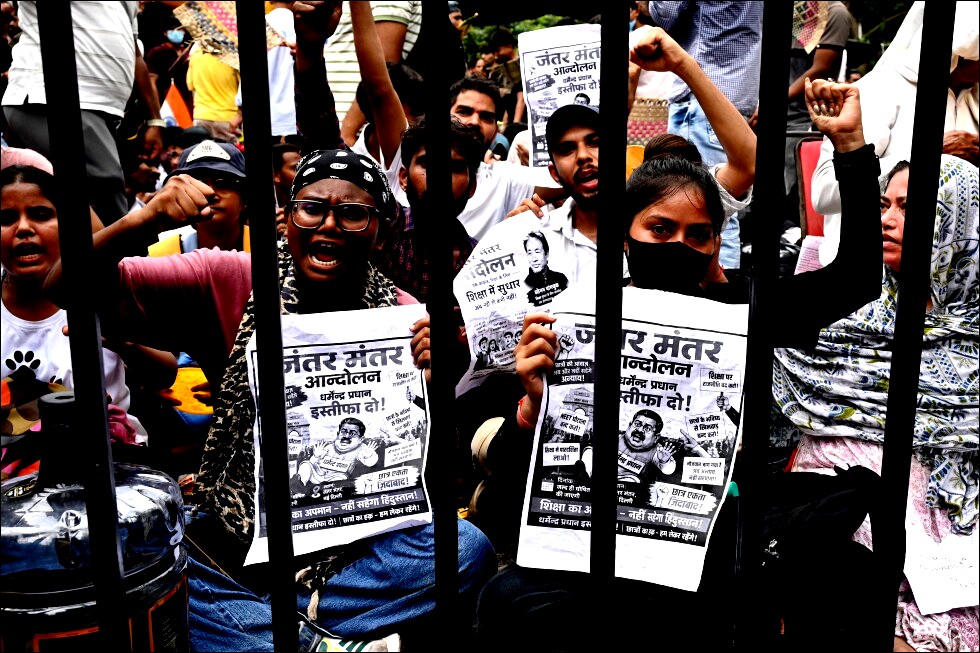
Youth Protest Movement in India Gains Momentum
NEW DELHI (AP) — What started as a light-hearted joke has turned into a powerful protest movement in India, led by young people eager to reform the country’s political landscape and address the issues they believe the government has caused.
Self-named the “Cockroaches,” these young Indians are using their frustrations about the education system to push for greater government accountability. This wave of activism is becoming one of the most visible challenges to the Hindu nationalist government under Prime Minister Narendra Modi in recent years.
A Court Comment Sparks Action
The protests were ignited by a controversial comment made by Chief Justice Surya Kant during a court session. He likened some unemployed youth to “cockroaches,” which led to a strong online backlash. In response, Boston University student Abhijeet Dipke started the Cockroach Janta Party, or Cockroach People’s Party.
This label resonated with many young Indians, who adopted the cockroach as a symbol of resilience. Within days, the movement exploded on social media, garnering over 21 million followers on Instagram. Supporters shared memes, humorous campaign slogans, and pointed critiques of the Modi administration’s handling of unemployment and economic challenges.
Protests Take to the Streets
In June, Dipke returned to India and organized demonstrations across cities, which quickly attracted hundreds of participants. Plans for a sit-in at Jantar Mantar, a significant protest site in New Delhi, captured nationwide attention.
The movement is calling for the resignation of Education Minister Dharmendra Pradhan, reforms to the examination system, and compensation for families of students who have taken their own lives due to exam-related stress.
Expanding Concerns
Initially, the sit-in attracted a few hundred people, but the numbers swelled to thousands, especially after prominent activist Sonam Wangchuk joined and began a hunger strike, which continues to gain attention. In response to increased solidarity, police forcibly transferred Wangchuk to a hospital last weekend.
As the protests have grown, they have come to represent wider discontent with government accountability and the challenges faced by youth. Many participants express a deep mistrust in institutions such as the education system, political leadership, and media.
Community Support Grows
Support for the movement has expanded beyond just students, with professionals and families joining the cause. Many participants have also organized food deliveries for those protesting, demonstrating widespread community support.
The lack of a traditional party structure is a unique aspect of this movement. Volunteers self-fund their travel to protests and rely on social media for coordination and outreach.
Government’s Evolving Response
Initially, the government dismissed the protesters’ calls for dialogue, with Pradhan accusing them of undermining the country’s interests and stating that new exams would resolve the issue. However, as the protests gained momentum, the government’s tone began to shift.
After a large demonstration attempted to breach security barriers outside Parliament, the police used tear gas and batons to disperse the crowd. This heavy-handed response led to increased public outrage. Eventually, a government minister met with representatives of the movement, although talks failed to alleviate tensions.
As pressure mounted, opposition leader Rahul Gandhi staged a sit-in outside Modi’s residence, pushing the Cockroaches into the spotlight of national political discussions. Under the strain of this grassroots activism, Minister Pradhan stated that the government is committed to addressing the concerns of the youth but has not indicated if he will resign, a key demand of the protesters.
A Sign of Changing Times
The rapid growth of this movement underscores a rising frustration among young Indians, echoing a broader trend across South Asia where youth have played pivotal roles in recent anti-government protests.
Despite divisions among India’s opposition parties and a shrinking space for dissent under Modi, the ruling government now faces a challenge from a leaderless youth movement rather than traditional political entities.
Opposition parties and human rights advocates have rallied behind the protests, framing them as vital for democratic accountability and the right to peaceful assembly. With a significant portion of the electorate being young voters, the sentiment among this demographic could impact future elections and reshape India’s political landscape.
