
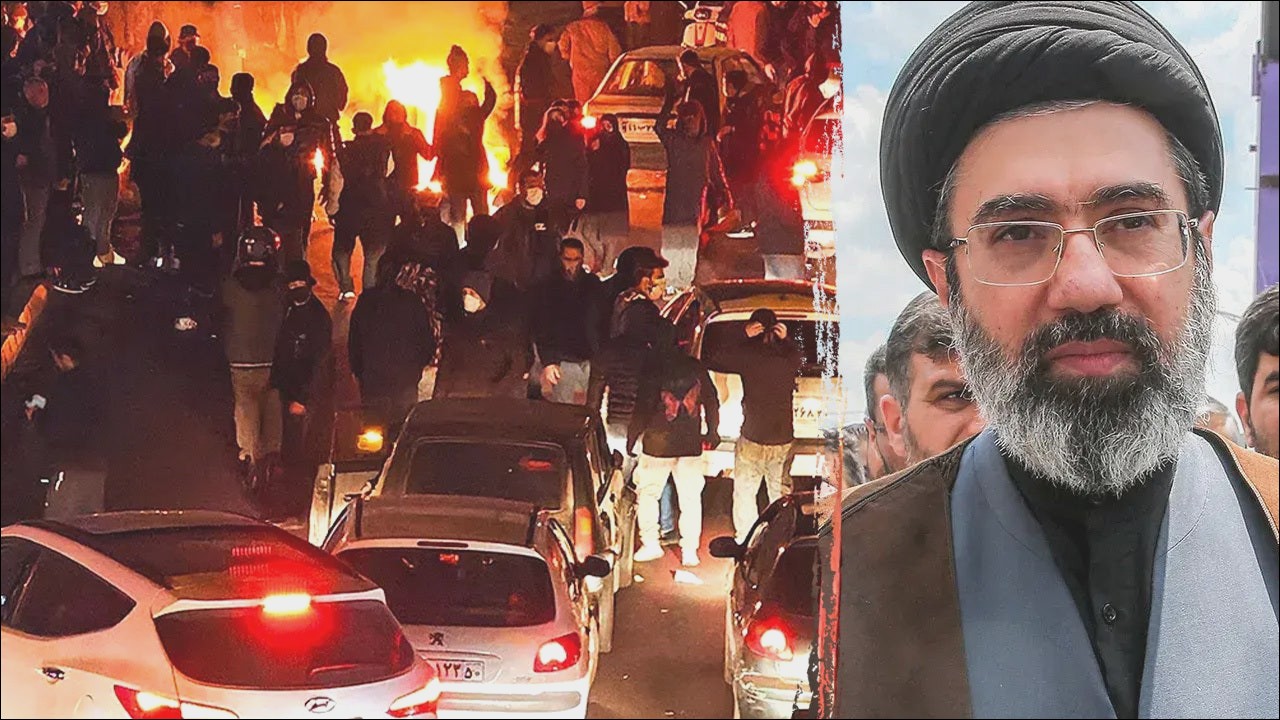
Iranian Public Anger and Calls for Change Spark Debate on Regime Vulnerability
A private report prepared for the Iranian presidency is raising important questions for the United States and its allies: Could the strong public anger in Iran indicate that the government is more at risk of change than previously thought?
The report, titled “What Iran Wants,” shows that only 9% of those surveyed want things to stay the same. In contrast, 53% are demanding major reforms, while over 19% want a complete change in the political system. This suggests that around three-quarters of respondents favor either significant reforms or a complete overhaul, highlighting a deeper political crisis in Iran beyond just dissatisfaction with specific leaders.
According to IranWire, the document was acquired on July 13 and written by Ali Rabiei, the social adviser to President Masoud Pezeshkian. It is based on polling conducted in May 2026 by the Ara Opinion Research Center and was shared within Iran’s governing bodies in June.
Miad Maleki, a senior fellow at the Foundation for Defense of Democracies, believes the report should lead to a new evaluation of the potential for political change in Iran. He pointed out that the survey likely underrepresents the depth of anger among Iranians. “Even a survey from the regime’s own pollsters shows that anger levels are above 63%—which is extraordinary,” he noted.
However, Maleki warned that surveys conducted under an authoritarian regime may not fully capture public sentiment due to fear of repercussions for speaking out. He stated that in a police state, people may hold back their true feelings, making these results a lower estimate, not the upper limit.
The report highlights several concerning trends. About 64% of respondents reported ongoing anger—a rise of 12% since December 2025. Half of those surveyed expressed feelings of hopelessness, and many reported anxiety and sadness. Economic troubles appear to be a driving force behind this anger. More than 81% are having difficulties affording food, with 75% struggling to cover medical expenses. A majority of respondents blamed domestic issues rather than outside forces for the country’s struggles.
Despite numerous issues, the government’s recommendations seem focused on managing public dissatisfaction rather than addressing the root causes. Rabiei suggested that state institutions should clarify the impact of sanctions and adopt a more inclusive approach in their communications.
The report does not provide a complete picture, as its methodology remains unclear and the sample may not represent the full diversity of Iranian society. This makes it difficult to determine if the anger will convert into a movement capable of changing the government.
Nonetheless, the findings indicate a high level of distrust in government institutions. Nearly 60% of respondents expressed skepticism about major government bodies, highlighting a crisis of institutional confidence.
Maleki emphasized that the rising anger corresponds with increasing protests, which spread from over 80 cities in 2017 to more than 200 across all provinces in 2026. He noted that many Iranian citizens are coming to the conclusion that reform is impossible.
While the report brings attention to growing unrest, it does not solve one of the key challenges: the Iranian regime has built strong systems designed to suppress opposition. Maleki concludes that further protests are likely, stating, “The issue isn’t if unrest will occur, but when it will happen and if the international community will support the Iranian people during that time.”
