
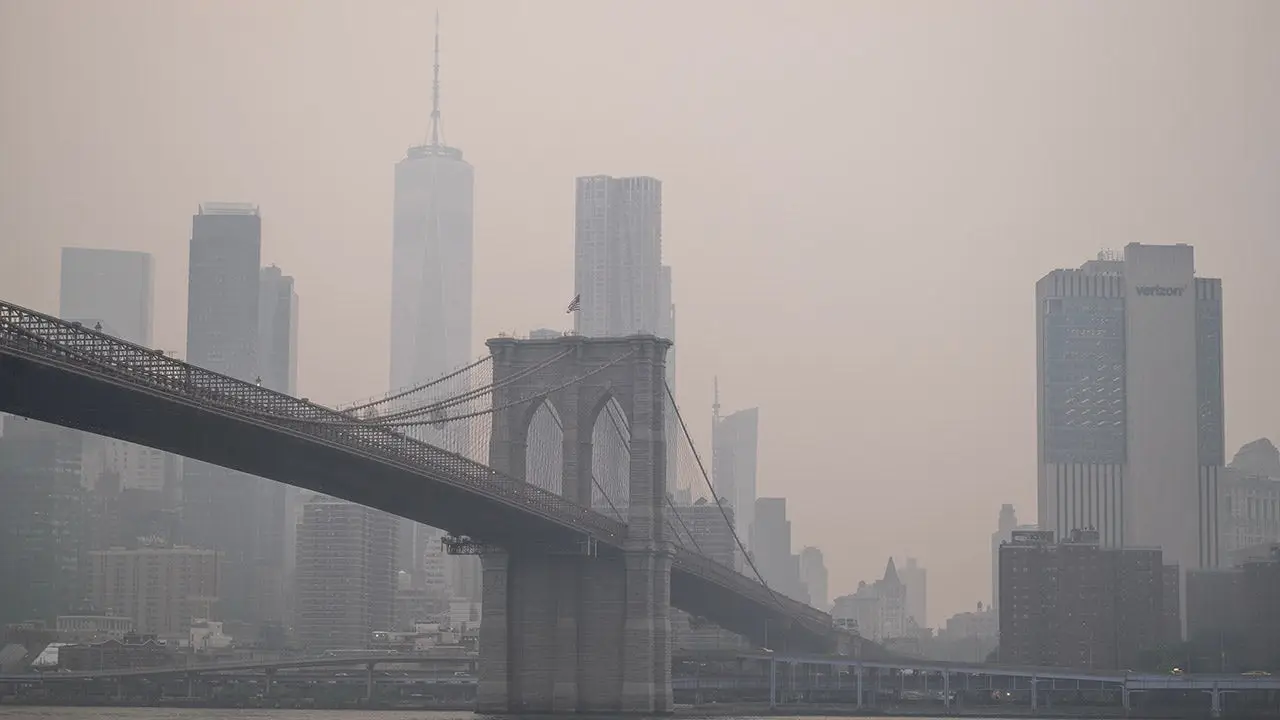
Wildfire Smoke from Canada Affects U.S. Air Quality; Calls for Better Forest Management
As smoke from wildfires in Canada spreads across parts of the United States, experts are urging for improved forest management in Canada to help lessen the severity of these fires.
The situation caught the attention of the White House recently, with President Trump criticizing Canada for poor forest management. He expressed concerns about the unhealthy air quality affecting U.S. citizens, saying the issue could influence tariffs on imports from Canada.
In a post on Truth Social, Trump accused Canada of “willful negligence” in forest management and said he would reach out to Canadian Prime Minister Mark Carney to discuss the matter.
Experts like Andrew Hale from Advancing American Freedom argue that Canada’s approach to managing its forests has been ineffective. Hale stated that Canada has not prioritized vital practices like creating firebreaks or thinning forests, which are crucial for fire prevention. This, according to him, has been influenced by various environmental groups.
Recently, four U.S. congress members from Michigan wrote to Prime Minister Carney highlighting that residents were suffering from unhealthy air due to smoke from the wildfires. They called for action, urging Canada to invest more in forest management practices to prevent such issues in the future.
While Canada’s Senate recognizes the impact of climate change intensifying the wildfire season, it agrees that more needs to be done in terms of forest preparation before fires occur. A report from the Senate Committee on Agriculture and Forestry indicated that recent wildfires have shown the need for better management strategies to help cope with the growing threat from wildfires.
Experts suggest that reducing dry vegetation and dead trees is vital for preventing smaller fires from escalating into larger ones. They emphasize that using prescribed fires can be an effective way to manage wildfire risks.
The call for improved forest management comes as neighboring areas experience unhealthy air conditions, raising concerns about public health. Witnesses at the Canadian Senate highlighted the need for better training and resources in wildfire management, as many areas of Canada are hard to reach for firefighting efforts.
Despite these challenges, experts remain hopeful that proactive forest management can make a difference in reducing the intensity of wildfires moving forward.
