
Growing Concerns Over Neural Implants and Surveillance
As cutting-edge medical technology inches closer to reaching consumers, the importance of regulations on its use becomes increasingly clear. What starts out as a device to help people communicate could easily morph into tools for monitoring private thoughts.
Rachel Sava, a PhD candidate in the Harvard-MIT Program in Health Sciences and Technology, shines a light on both the promising and alarming aspects of neural implants. Her project, titled “Superintelligence, Superintimate,” won the fourth annual Envisioning the Future of Computing Prize. Sava’s work draws attention to the dual nature of these devices, which could be wielded by businesses and government entities to invade personal space.
Her interest was sparked during an internship at IBM, where she collaborated with the PACE Center in London. There, she learned from Kevin Brown, one of the pioneers of brain decoding technology who designed an EEG system to help a colleague affected by stroke-related locked-in syndrome. “It was this patient group that inspired me to examine the implications of neuroprosthetics years later,” Sava explains.
Sava believes we are at a crucial turning point in neurotechnology. She warns that companies could use neural implants to track mental efficiency or that authorities could monitor citizens for “thought crimes.” As these technologies become available, there is a real possibility that medical devices meant to improve lives could lead to more dystopian outcomes.
Envisioning a Better Future
The Envisioning the Future of Computing Prize, backed by the Social and Ethical Responsibilities of Computing (SERC) initiative at the MIT Schwarzman College of Computing, called on students to identify the sector that could benefit the most from artificial intelligence. Submissions, limited to 3,000 words, invited students to explore practical tech applications while weighing risks and ethical questions. The prize offers a grand award of $10,000 along with cash prizes for finalists.
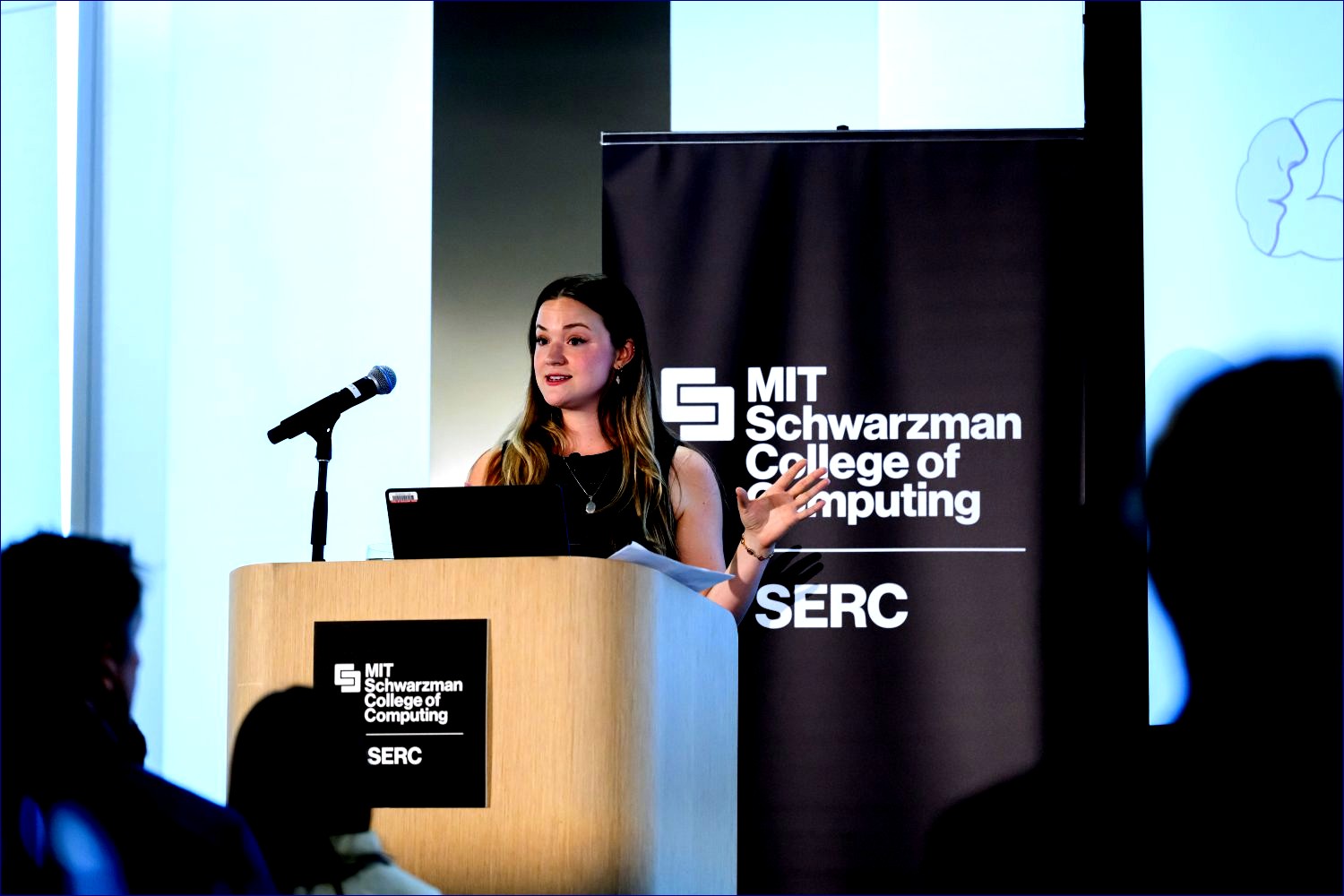
During a recent awards ceremony, students presented their ideas to judges and an audience. Former SERC dean Caspar Hare acknowledged the importance of shaping a better future through inquiry and dialogue. “What world do you want to see?” he asked, urging students to reflect deeply on their vision.
This year’s entries were diverse, covering topics from brain-computer interfaces to AI’s role in scientific discovery and improving energy systems. Brian Hedden, co-associate dean of SERC, noted the depth and creativity of student submissions, highlighting how they considered both social and ethical implications of technology.
Nikos Trichakis, also a co-associate dean with a focus on management, praised the imaginative scope of the essays, pointing out that students skillfully connected fields like medicine, law, and ethics while keeping the concept of human agency at their core.
In addition to Sava’s well-deserved grand prize, two runners-up received $5,000 each: Cordiana Cozier, a PhD candidate who explored the use of AI to support public defenders, and Strahinja Janjusevic, who submitted research on neuro-controlled prosthetics. The judges also acknowledged four others with honorable mention awards of $500 each.
This competition continues to inspire a new generation of thinkers to envision how technology can serve humanity better, both now and in the future.
