
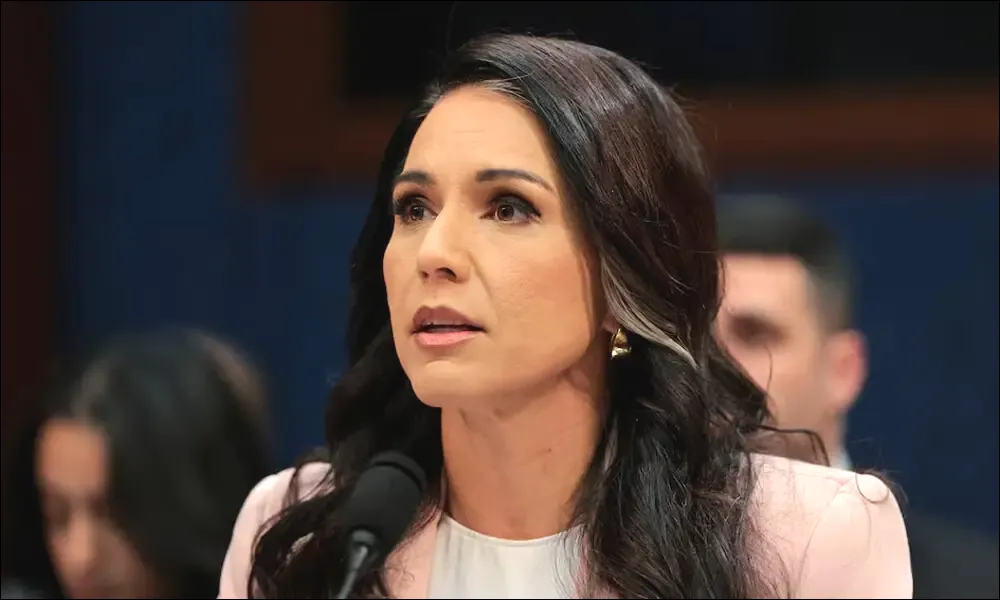
Tulsi Gabbard Resigns as Director of National Intelligence Amid Family Health Crisis
WASHINGTON: Tulsi Gabbard announced on Friday that she is stepping down from her position as Director of National Intelligence under President Donald Trump. The reason for her resignation comes as her husband, Abraham Williams, has been diagnosed with a rare form of bone cancer. Gabbard has decided to leave her role to support him during this challenging time.
During a meeting in the Oval Office on Friday, Gabbard informed Trump of her choice to resign, which will take effect on June 30, according to reports from Fox News Digital.
While some sources suggest her departure was prompted by the White House, a spokesperson stated that Gabbard was leaving to focus on her husband’s health. “Tulsi Gabbard is an America First patriot who has served this country faithfully for the past 16 months,” said Davis Ingle, the White House spokesperson.
In her resignation letter, Gabbard expressed gratitude to Trump for the trust he placed in her and reflected on her time leading the Office of the Director of National Intelligence. She emphasized that she could not continue in her demanding role while her husband faced such a serious health battle alone.
President Trump acknowledged her contributions in a post on his Truth Social platform, stating that Aaron Lukas, the Principal Deputy Director of National Intelligence, will take over as acting director. He noted Gabbard had done “a great job” but rightly wanted to be by her husband’s side as they navigate this tough fight.
In past remarks, Trump hinted at some differences with Gabbard, particularly regarding Iran. In April, reports surfaced suggesting she might be replaced in an upcoming cabinet shuffle, as the president had expressed concerns about her performance.
There have also been signs of tension regarding her position, particularly her absence from key discussions surrounding military operations and national security issues. Some insiders suggest she was ‘pushed out’ due to dissatisfaction from the White House.
Gabbard led several initiatives aimed at reducing partisanship within the intelligence community, including revoking security clearances for a number of former officials, which caused further friction.
After Gabbard’s announcement, Senator Mark Warner, the top Democrat on the Senate Intelligence Committee, commented that the role had become overly politicized and stressed the need for a leader focused on foreign intelligence, rather than domestic issues.
As Gabbard steps aside, the search for a new director is underway, with hopes of finding someone who can restore a sense of independence and professionalism to the office.
