
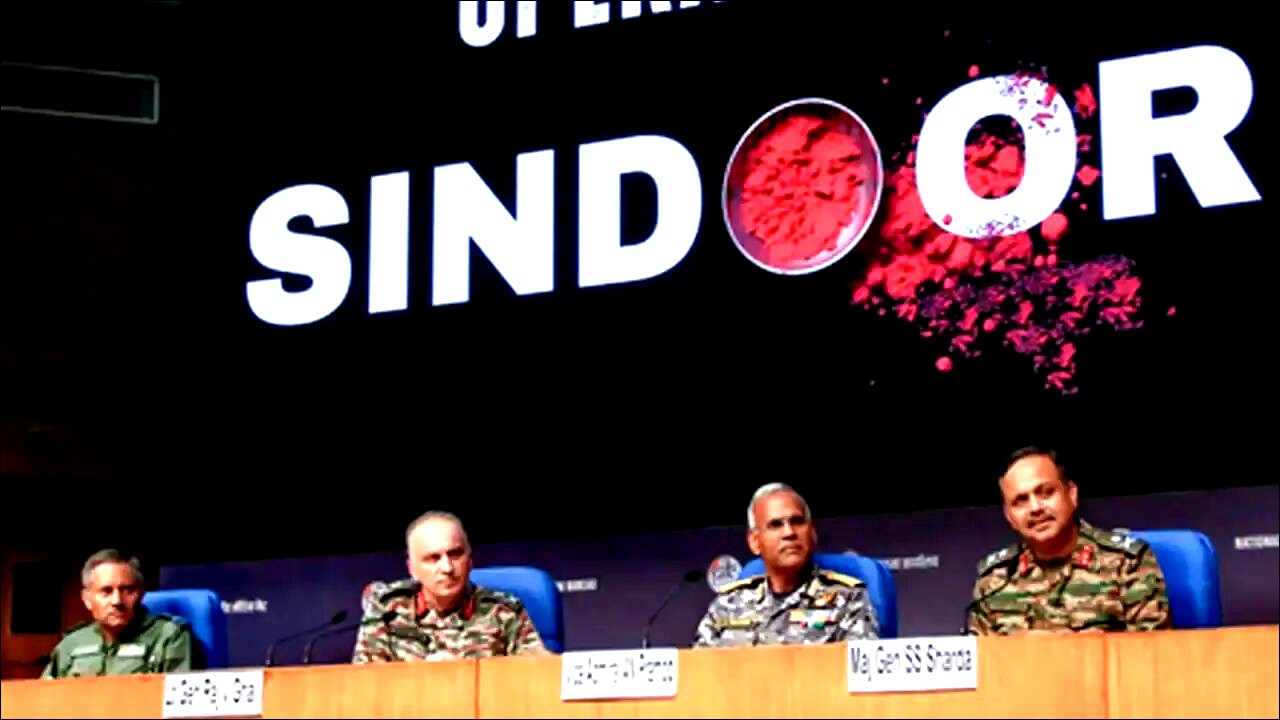
Title: Reflecting on Operation Sindoor: A Year Later
One year after Operation Sindoor, a military campaign by India, assessments suggest it has significantly influenced the nation’s strategy towards terrorism and security. According to a recent report, this operation marks a turning point in how India views and responds to threats.
Launched on May 6 and 7, 2025, Operation Sindoor was a direct response to a tragic attack in Pahalgam that claimed the lives of 26 innocent people, executed by terrorists supported by Pakistan. During this operation, Indian forces targeted nine key terror camps in Pakistan and areas under its control.
Political analyst A. Jathindra discussed the implications of this campaign in a report titled “One Year after Operation Sindoor: India’s Doctrine of Resolve.” He emphasized that the operation showcased a mix of political commitment, military skill, and clear strategy. It reshaped India’s stance on terrorism, signaling a strong willingness to act decisively when national security is threatened.
Jathindra highlighted that the true importance of Operation Sindoor goes beyond military action; it sends a broader message about India’s dedication to security. He pointed out that understanding the lessons from this operation could influence future policies, emphasizing that peace requires both strength and careful planning.
Additionally, a documentary released by the Defence Ministry during a Joint Commanders’ Conference in Jaipur described Operation Sindoor as a “punitive and targeted campaign.” It highlighted the elimination of over 100 terrorists and emphasized the coordinated efforts behind this military action.
Prime Minister Narendra Modi, featured in the documentary, asserted that India would “identify, track, and punish” anyone connected to terrorism, making it clear that any future attacks would meet with a powerful response. Deputy Chief of Army Staff Lieutenant General Rajiv Ghai also remarked that this mission represents the beginning of India’s long-term fight against terrorism.
Operation Sindoor was initiated in the wake of the Pahalgam attack, which involved the Resistance Front, a group linked to the Pakistan-based Lashkar-e-Taiba. This attack saw terrorists deliberately targeting individuals based on their religion, leading to a horrific scene where victims were killed in front of their families.
In response, Indian armed forces launched what they called a “focused and measured” operation. The report suggests that this campaign is now recognized as one of India’s most significant military efforts in recent times, reflecting a shift towards more assertive and strategic military actions.
Military analysts note that India’s defensive capabilities effectively neutralized Pakistan’s potential counterattacks. Analysts also highlighted that India’s recent actions indicate its ability to strike significant targets inside Pakistan, effectively altering the balance of power in the region.
Following the operation, Prime Minister Modi indicated a substantial shift in India’s security strategy, declaring that the nation would no longer tolerate threats. He stated that there is no distinction between terrorists and those who support them—both pose a danger to peace.
For decades, Pakistan believed that India’s nuclear capabilities would deter any military response from New Delhi. However, under Modi and National Security Advisor Ajit Doval, India has shifted to a more assertive doctrine that does not shy away from responding decisively to acts of terrorism.
In summary, Operation Sindoor represents a pivotal moment in India’s approach to combating state-sponsored terrorism. The operation was not merely a one-time reaction but a signal of India’s readiness to respond robustly to threats, emphasizing that true deterrence lies in the ability to strike back effectively.
