
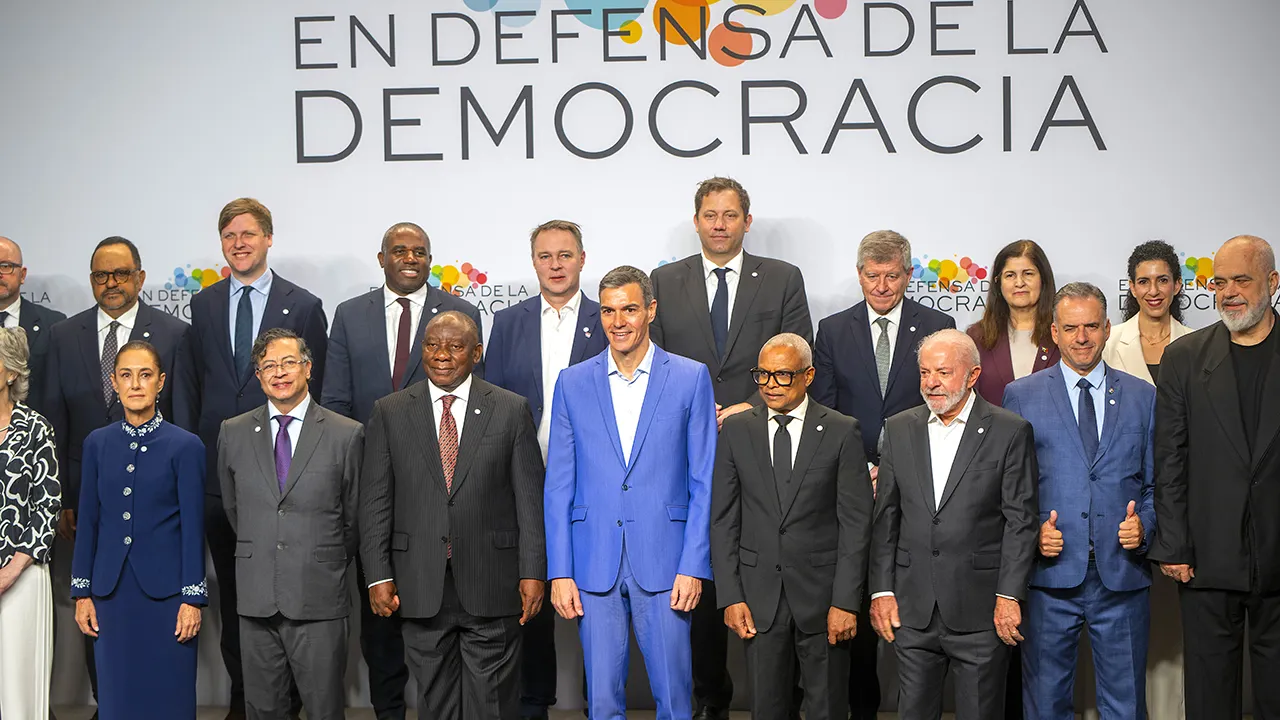
MEXICO CITY: A recent meeting of leftist leaders in Barcelona, organized by Spain’s socialist Prime Minister Pedro Sánchez, has garnered significant attention. Analysts see this gathering as a potential shift in geopolitical dynamics that could challenge U.S. influence in Latin America and other regions.
This summit brought together prominent figures such as Brazil’s President Lula da Silva, Colombia’s Gustavo Petro, and Mexico’s Claudia Sheinbaum. While the event aimed to discuss issues like inequality and climate change, many are questioning whether it marks the beginning of a more unified opposition to U.S. policies in the region.
Though Sánchez didn’t mention the Trump administration directly, he criticized what he called “the normalization of the use of force” and “efforts to undermine international law.” He also called for reforms in global organizations, suggesting that the current system doesn’t reflect today’s geopolitical realities, implicitly challenging U.S. dominance.
Experts view the summit as an effort by Sánchez to position himself as a key player among a new progressive group that is increasingly critical of U.S. foreign policy. According to Juan Angel Soto, head of Fortius Consulting, Spain’s close ties with the EU and NATO complicate these relationships, as Sánchez balances links with leaders in the Global South like Lula and Petro, aiming for more independence from the U.S.
Colombia’s Petro connected global tensions to economic dependencies on fossil fuels, saying these issues lead to conflicts and inequality. On the other hand, Mexican analyst Roberto Salinas León described the summit as a gathering of leaders who oppose what he refers to as “Trump 2.0,” suggesting that their mutual criticism of the U.S. is politically motivated.
Brazil’s Lula also criticized interventionist policies of powerful nations, pushing for changes within global governance structures like the U.N. Security Council to counter perceived U.S. instability.
In contrast, some Latin American leaders are reacting to the rising influence of right-wing politics in the region. Those involved in the Barcelona summit, while expressing concerns about democracy, have also been criticized for supporting authoritarian regimes in places like Cuba and Venezuela, showcasing a complex political landscape.
Sánchez and others emphasized the importance of national sovereignty and non-intervention in Latin American affairs, openly opposing U.S. sanctions against countries such as Cuba. Observers believe this could be the start of a loosely connected group opposing U.S. stances on global policy.
Despite warnings about rising right-wing movements from leaders in Barcelona, a significant shift is happening in the Americas. Countries like Argentina, El Salvador, and Ecuador are focusing on enhancing security, economic reforms, and stronger government authority. These approaches—often more aligned with U.S. interests—counter the progressive narrative emerging from the summit.
In summary, while leaders in Barcelona call for a rethinking of the global order traditionally tied to U.S. influence, other nations are pursuing paths centered on security and economic liberalization—actions that may resonate more effectively with American audiences.
