
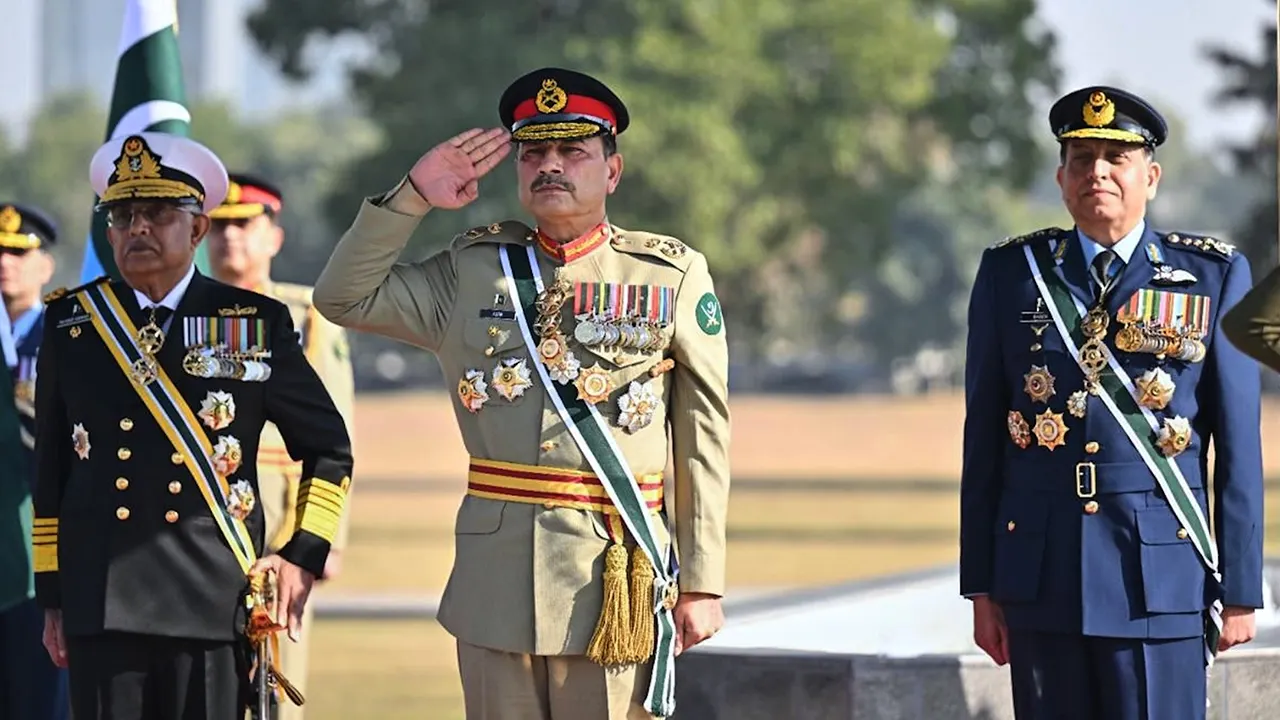
Pakistan’s Role in US-Iran Tensions: Insights from Mark Dubowitz and Gen. Asim Munir
Mark Dubowitz, CEO of the Foundation for Defense of Democracies, recently examined President Trump’s approach to Iran amid a two-week ceasefire agreement. He noted that Iran’s government appears weaker now, after 15 months of Trump’s policies. According to Dubowitz, Iran’s proposed 10-point peace plan seems unrealistic with “ridiculous demands” that are unlikely to gain traction.
In a significant move, President Trump praised Pakistan’s Prime Minister Shehbaz Sharif and military chief Gen. Asim Munir on social media, calling them “fantastic people!” Munir’s quick response reflected gratitude on behalf of Pakistan. This interaction marks a shift as Munir gains trust from both the Trump administration and Iran’s military officials.
Asim Munir, viewed as a key figure, recently visited Iran, making him the first foreign military leader to engage with them since rising tensions between the US and Iran. Munir has been acting as an informal communicator between Washington and Tehran, as efforts to resolve the ongoing conflicts and Iran’s nuclear ambitions continue.
Former Pakistani General Ahmed Saeed explained Munir’s unique position, highlighting his longstanding relationships with Iranian leaders dating back to his tenure as head of military intelligence. His connections with Iranian military structures and intelligence have made him a pivotal player in these complicated negotiations.
As negotiations stall, U.S. Vice President JD Vance noted that the future of the peace talks lies with Iran. He emphasized that “the ball is in Iran’s court” after discussing the process with Munir.
Saeed mentioned that Munir’s background since 2016 has facilitated his interactions with various Iranian military groups, allowing him to build trust and rapport. It remains a mystery how Munir maintains such close ties both with Trump and Iranian commanders.
While some believe Munir’s connections could pave the way for future dialogue and negotiations, others have raised concerns about trusting Pakistan, stating it has acted under misleading pretenses in the past.
Critics argue that Munir’s rise in military power has resulted in increased military influence over Pakistan’s foreign policy, overshadowing civilian leadership. As discussions around Iran and international relations progress, all eyes remain on Munir’s ability to navigate these waters effectively.
Despite the challenges, Saeed believes in Munir’s determination to pursue effective solutions, underscoring his reputation for perseverance in complex situations.
As the situation develops, the intertwining of U.S., Iranian, and Pakistani interests suggests a complex path ahead in regional diplomacy.
