
Increasing Tensions in the Bab el-Mandeb Strait Raise Concerns Over Maritime Safety
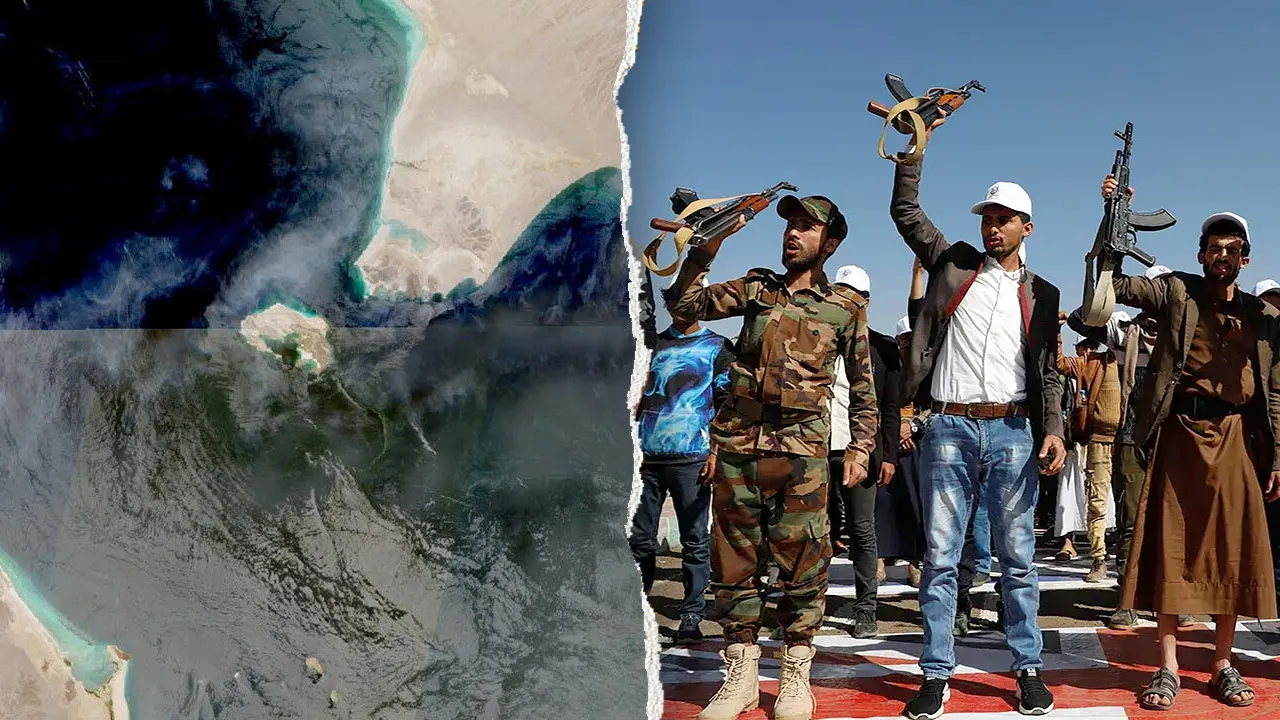
Recent attacks by the Iran-supported Houthi group on shipping routes in the Bab el-Mandeb Strait are causing concerns about maritime security. Analysts are pondering whether this strategic waterway could follow the path of the Strait of Hormuz in terms of threats to shipping routes.
The situation is complicated due to Yemen’s fragmented political landscape. Unlike the direct threats posed by Iran from its own coast near Hormuz, Tehran’s influence over shipping in Bab el-Mandeb relies on its Houthis allies. This complex scenario leaves the U.S. and its regional partners facing challenges that may not be resolved through naval power alone.
A troubling incident occurred recently when the Houthis attacked the Egyptian-owned cargo ship Tihamah in the Bab el-Mandeb Strait. Reports indicate that four crew members, including three from Pakistan and one from Indonesia, lost their lives in the incident. The fatalities might mark the first deaths linked to Houthi assaults on shipping since the U.S.-Iran hostilities escalated earlier this year.
The Bab el-Mandeb Strait plays a crucial role in global trade, linking the Gulf of Aden and the Arabian Sea to the Red Sea, which further connects to the Suez Canal and Mediterranean. However, the region has been embroiled in conflict for years, complicating security efforts.
The Houthis maintain control over parts of northern Yemen, while various groups, supported by Saudi Arabia and other nations, govern different areas. One such group, the Southern Transitional Council (STC), has emerged forcefully in the south.
Amr Al Bidh, who is responsible for foreign affairs at the STC, expressed concerns that naval forces, while able to defend individual vessels, cannot eliminate the threats posed by Houthi-controlled areas overlooking the maritime route. He emphasized that a robust ground presence is essential to effectively secure the Bab el-Mandeb Strait.
The ongoing danger has intensified as the Houthi group declared a naval blockade of Saudi ports in July, threatening any vessels involved in trade with Saudi Arabia. Despite these claims, Saudi Arabia firmly denies imposing a siege on Yemen.
The U.S. has stated that it expects the Houthis to adhere to a ceasefire agreement. A White House official reiterated the United States’ commitment to maintaining freedom of navigation and protecting commercial shipping from Houthi attacks, underscoring the importance of regional dialogue.
The escalation in attacks and threats has led to significant declines in tanker movements through the Bab el-Mandeb Strait, as operators have taken precautionary measures. Reports suggest that tankers have begun marking themselves with identifiers indicating armed security onboard to deter potential attacks.
Yemeni Nobel Peace Prize winner Tawakkol Karman warned that the ongoing conflict in Yemen poses risks not just locally but to international navigation and trade, energy security, and global supply chains. Karman pointed out that the worsening situation in Yemen is affecting interests far beyond its borders.
To combat these threats, Saudi Arabia is actively seeking regional support for a maritime defense coalition aimed at ensuring safety in the Bab el-Mandeb Strait and surrounding areas. Recently, Saudi Arabia, Turkey, and Pakistan signed a joint defense agreement to enhance cooperation against groups like the Houthis.
Experts caution against viewing the Bab el-Mandeb Strait as a mere extension of the Strait of Hormuz, pointing out that Iran does not exert the same level of direct control over its operations. The Houthis operate with more independence, focusing primarily on their regional disputes rather than escalating conflicts into a broader war.
In summary, as the conflict in Yemen evolves, the international community watches closely, aiming to navigate these complex geopolitical waters and secure vital maritime routes.
