
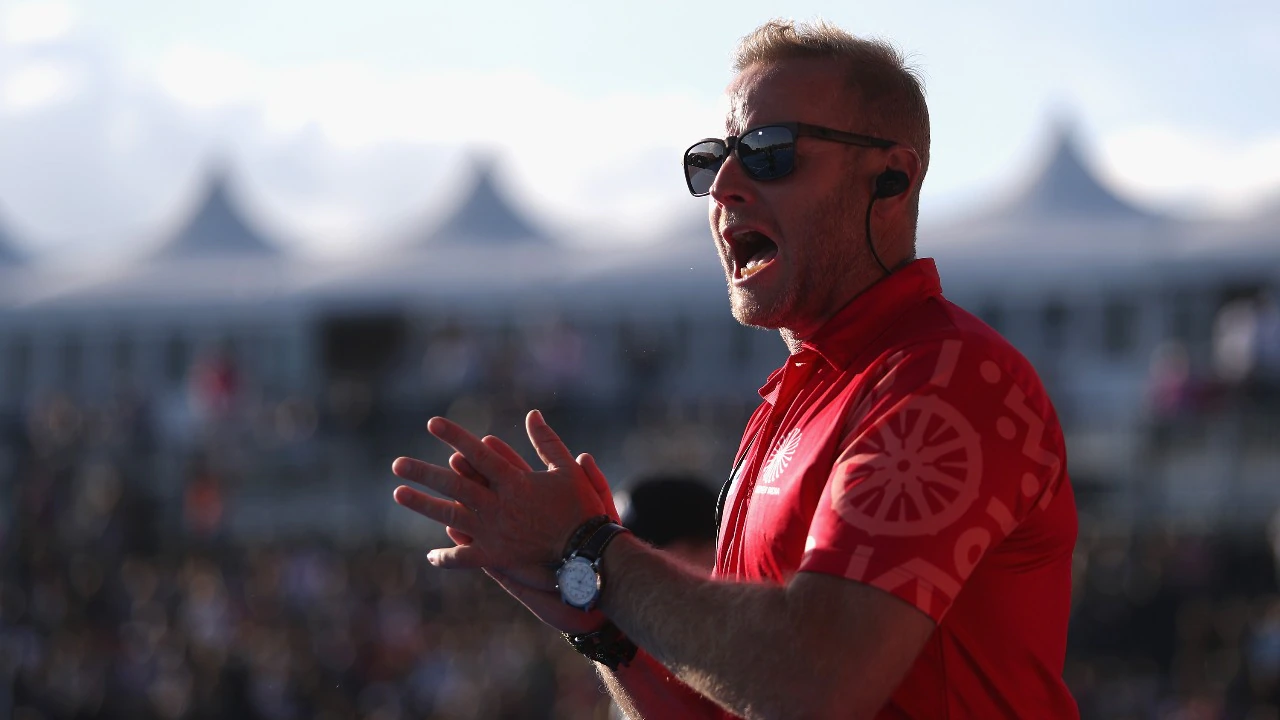
Indian Women’s Hockey: A New Chapter Under Sjoerd Marijne
During a recent press conference, a curious question was posed to Sjoerd Marijne, the coach of the Indian women’s hockey team: Has he seen the film Chak De! India? While it might seem out of place, for many, the film and the journey of the team often resonate with each other.
Marijne played a crucial role in one of Indian women’s hockey’s remarkable moments, leading the team to a fourth-place finish at the Tokyo Olympics. When asked about the movie, he eagerly shared that watching it was one of the first things he did upon taking over the team in 2017.
“I’m definitely aware of Chak De! India. Watching it was my first task when I joined in 2017. Then we created our own Chak De! story,” Marijne said during an interaction organized by the Sports Authority of India.
The question holds significance as Marijne finds himself once again working to instill belief in the team’s potential during his second stint as coach. In his previous term, besides the historic Olympics success, he also guided the team to their best World Cup result in recent times, reaching the quarterfinals in 2018.
However, since Marijne’s departure after the Olympics, the Indian women’s team has faced challenges. They finished ninth at the 2022 World Cup and failed to qualify for the upcoming Paris Olympics, leading to changes in the coaching staff with Janneke Schopman and Harendra Singh taking their turn.
Now, Marijne returns to a team without its former captain, Rani Rampal. The squad is facing issues like difficulties in converting penalty corners and has been affected by injuries.
Hope on the Horizon
Despite the challenges, there are signs of a revival. The Indian women’s team qualified for the World Cup and recently faced world No. 2 Argentina in a four-match series, achieving notable results with a win and a draw.
The road ahead is crucial, with an upcoming exposure tour in Australia before significant tournaments like the World Cup in August and the Asian Games in September—creating a pathway to the Los Angeles Olympics in 2028.
Marijne sees positive changes not just in the team, but also in the support structure surrounding them. “Since I left, we’ve seen more young players stepping up to the senior level. We now have around five new players, which is a big improvement,” he noted.
He also mentioned an increased coaching staff, stating, “I used to have five or six people; now we have nearly 12 with specialist coaches. This helps us develop the players further.”
There’s a balanced outlook from Marijne, who acknowledges the competitive nature of hockey today. “It’s tough to predict our success because teams like the Netherlands and Argentina are continually improving. But I firmly believe in our potential to achieve great things,” he added.
Consistency is Key
According to team captain Salima Tete, Marijne remains as demanding as ever, expecting high standards from the players. This mentality has become a part of the team culture.
“There isn’t much difference in him as a coach. He has high expectations and we need to meet them,” Tete said. “We have to work hard and that’s just how it is.”
Marijne’s focus isn’t just on past achievements; it’s about building consistency and improving overall performance. Renowned dragflick specialist Taeke Taekema has joined to work on penalty corner strategies, showcasing the emphasis on specific skills.
“Improvement is key in everything. We want our habits to become normal because that leads to winning matches,” he explained.
As the team prepares for upcoming competitions, Marijne views every tournament as a chance to build the team’s identity and strength.
Despite the challenges that lie ahead, Indian women’s hockey is on a promising path. With a familiar coach returning and a younger squad gaining confidence, another Chak De! moment may be just around the corner.
The journey continues, and hope shines bright for the future of the Indian women’s hockey team.
