
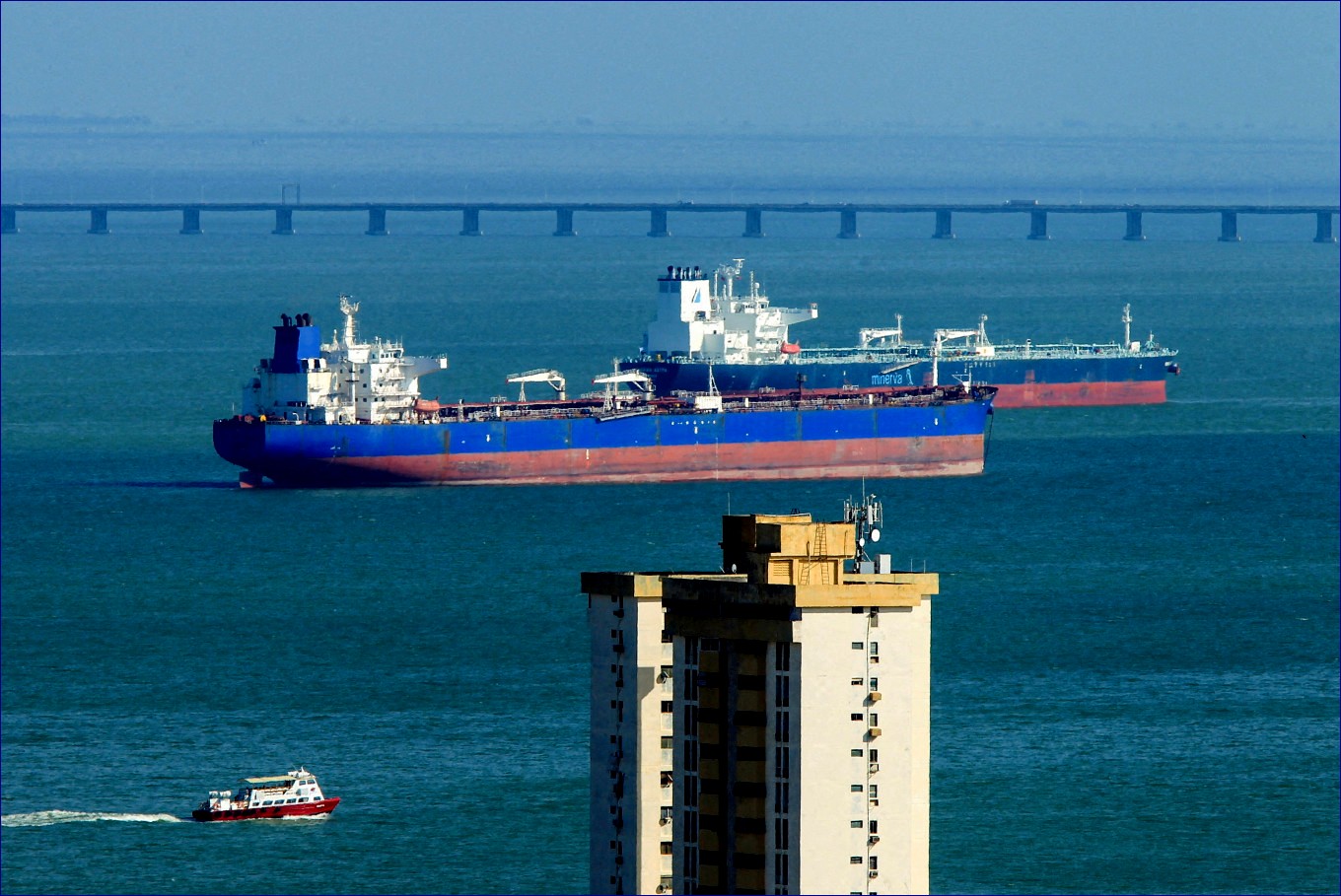
Global Oil and Gas Demand Projected to Rise Until 2050: IEA Report
The International Energy Agency (IEA) released a report on Wednesday, indicating that worldwide demand for oil and gas could continue to grow until 2050. This marks a significant shift from previous expectations that a faster transition to cleaner energy sources would take place. The IEA now suggests that the world is unlikely to meet its climate goals.
The IEA, which is often seen as a guardian of energy security in the West, has faced pressure, especially from the United States, to place more emphasis on clean energy policies. Under former President Donald Trump, there was a push for increased investment in oil and gas production. Conversely, the current administration under President Joe Biden believes that global oil demand will peak this decade and asserts that no further investment in oil and gas is necessary for achieving climate targets.
Chris Wright, who served as Energy Secretary during Trump’s term, dismissed the IEA’s forecast regarding peak demand as “nonsensical.” The IEA’s work is crucial for shaping energy policies globally, as it is funded by member nations, with the U.S. being the largest contributor.
Current Policies Point to Rising Demand
In its annual World Energy Outlook, the IEA highlighted that under a scenario based on existing policies, oil demand could reach 113 million barrels per day by the middle of this century. This is approximately a 13% increase from the consumption levels expected in 2024. The report also estimated that global energy demand might rise by 90 exajoules by 2035, which reflects a 15% growth compared to current levels.
This scenario considers the policies currently in place, rather than the aspirational climate goals many countries have set. The IEA had previously shifted its projections towards more optimistic clean energy transitions starting in 2020. However, this year’s report has moved back to an analysis based on existing policies.
Although the IEA planned to evaluate new climate targets from various countries between 2031 and 2035, not enough submissions were received to form a comprehensive assessment.
Under a more optimistic scenario, where suggested policies are taken into account, oil demand could peak around 2030. The IEA’s models provide a range of possibilities rather than concrete forecasts.
Surge in LNG Projects
The report also noted a surge in investments for new liquefied natural gas (LNG) projects. By 2030, operations for new annual LNG export capacity totaling about 300 billion cubic meters are expected to begin, marking a significant 50% increase in available supply.
In the current policies scenario, global LNG market capacity is anticipated to grow from around 560 billion cubic meters in 2024 to approximately 880 billion cubic meters by 2035, and further to about 1,020 billion cubic meters by 2050. This growth is largely driven by the rising energy demands of the power sector, especially due to the growth of data centers and artificial intelligence.
In fact, global investment in data centers is projected to reach $580 billion by 2025, surpassing the annual global expenditure of $540 billion on oil supply.
Warming Trends Beyond 1.5 Degrees Celsius
The report also highlighted concerning climate trends, indicating that global temperatures are likely to exceed a 1.5 degrees Celsius increase under all scenarios examined. Although over 190 countries pledged during the Paris climate talks in 2015 to prevent global warming beyond this threshold, projections suggest that only under a net-zero scenario—where carbon dioxide removal technologies are utilized—could temperatures eventually decline.
As the world navigates these complex energy dynamics, the need for effective and sustainable energy policies remains critical.
