
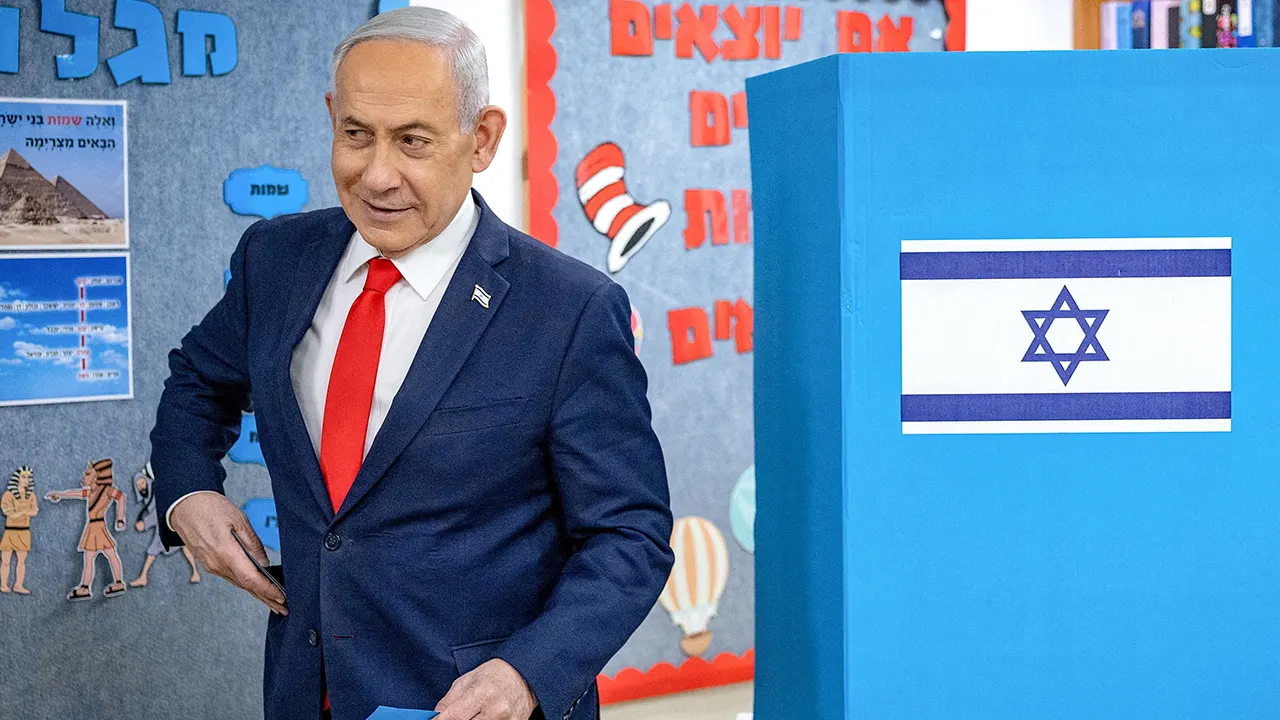
High Voter Turnout in Israel’s Election Amid Political Tensions
TEL AVIV, Israel — On Tuesday, Israelis cast their votes in notably high numbers in the first national election since the tragic Hamas attack on October 7, 2023. Early exit polls suggest that Prime Minister Benjamin Netanyahu’s Likud party has emerged as the largest party, but they may not have enough support to secure a majority in parliament, hinting at potential changes in leadership.
As the polls closed at 10 p.m. local time (4 p.m. ET), reports from Israel’s major television networks indicated that Likud could win 25 seats in the 120-seat Knesset. Former military chief Gadi Eisenkot’s Yashar party is projected to gain 23 seats, while another report suggests it could be 21 seats.
The overall political landscape seems divided, with 50 seats likely going to Netanyahu’s right-wing bloc, 53 for the opposition parties, and 17 for Arab parties. This division means that neither side has the 61 seats typically needed to form a government.
Although Likud is expected to remain the biggest party, Netanyahu’s political career could be at risk. The combined seat count for the opposition and Arab parties could reach 70, although it’s uncertain whether they will agree to collaborate in forming a government.
Eisenkot: A Leading Challenger to Netanyahu
The election results set the stage for weeks of coalition discussions. Even with Likud’s strong showing, Netanyahu may face challenges ahead. Recent voter turnout reached unprecedented levels, with 55.7% of eligible voters participating by 4 p.m. local time—the highest since tracking began in 1973. This surge highlighted the urgency and importance placed on this election, seen as a referendum on Netanyahu’s leadership, especially in light of recent security concerns.
To facilitate the high turnout, election officials streamlined voting procedures, reassuring voters that anyone in line before the 10 p.m. deadline would still be able to vote. Many view this election as crucial not just for the future of Netanyahu’s government but also in response to the October 7 attack, which resulted in significant loss of life and apparent security oversights.
Last-Minute Campaigning Intensifies
In the final hours of campaigning, candidates engaged in intense efforts to rally supporters and sway undecided voters. Netanyahu’s Likud party utilized extensive digital outreach, preparing targeted campaign videos and social media posts. Meanwhile, Eisenkot’s supporters called on voters to back Yashar as the primary alternative to Likud, with former Prime Minister Naftali Bennett directly engaging with voters.
The upcoming negotiations will focus on which candidate can gather support from at least 61 lawmakers when President Isaac Herzog consults with the elected factions. Should Eisenkot gain backing from Arab parties, he could be in a strong position to form the next government, although this doesn’t guarantee a smooth coalition.
What Lies Ahead?
As the dust settles from this election, the identity of Israel’s next prime minister may remain unclear for several weeks. Unlike in the U.S., voters in Israel select political parties rather than a prime minister directly. The allocation of the 120 seats in parliament is proportionate, and parties must earn at least 3.25% of the valid votes to gain representation.
After the final results are certified, President Herzog will meet with the elected parties to determine the most suited candidate to lead the formation of a new government. That candidate will have 28 days to piece together a coalition, with an option for a 14-day extension. Official results are expected to be finalized by November 4, at which point Netanyahu’s current government will continue until a new one is in place.
