
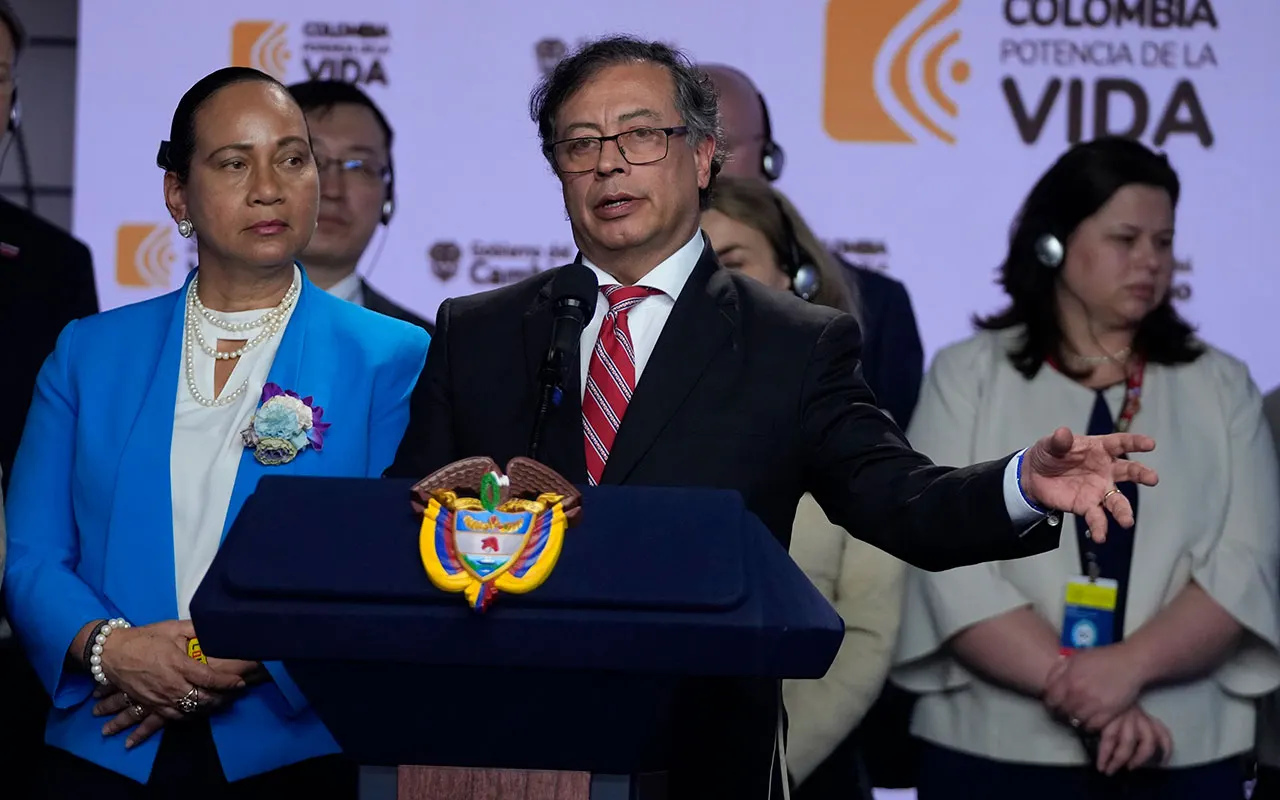
Former Colombian President Accused of Exploiting Women for Parties
Former Colombian President Gustavo Petro faces serious allegations of manipulating and exploiting 48 women for events during his presidency. Officials claim these women were hired specifically to be in the president’s presence.
Carlos Andrés Ríos, head of Colombia’s Administrative Department of the Presidency (DAPRE), stated that Petro managed a system that used service contracts to control the women, exchanging public salaries for personal relationships. Ríos emphasized that this setup was not about governance but rather a means to facilitate parties at the presidential palace.
During a congressional hearing, Ríos declared, “We will show the Colombian people how the Casa de Nariño was unfortunately arranged. It was not meant for governing but for parties every single day.”
In response to the allegations, Petro strongly denied any misconduct. In a recent statement, he asserted, “I have never issued a contract in exchange for sexual relations. I would be appalled if I did such a thing.” He explained that his office provided assistance to vulnerable women through proper state-funded programs, which he insists is vastly different from the actions he is being accused of.
Petro also shared that in his youth, he occasionally visited places associated with sex work but stopped after realizing the negative impact it had on the individuals involved. “It felt wrong to me, and I was saddened by those who were there,” he said, adding that those experiences were decades ago.
These accusations come amid ongoing criticisms of Petro regarding alleged mismanagement of public funds and connections to drug trafficking activities. Petro asserts that the accusations come from political adversaries, including figures like President Donald Trump and Colombian President Abelardo de la Espriella.
“The attempts to label me as corrupt or involved in drug trafficking are baseless,” Petro stated, challenging his opponents to provide any evidence of wrongdoing. He insists he has always fought against drug trafficking and has never misused public resources.
This controversy continues to unfold, stirring significant debate within Colombia.
