
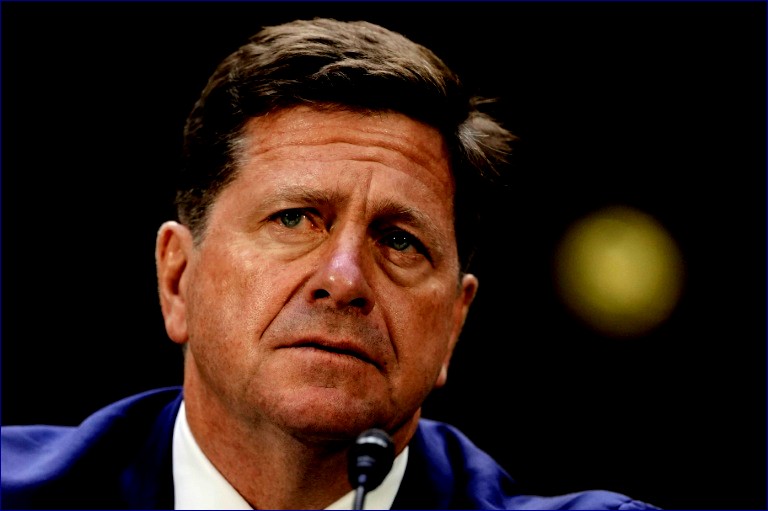
Washington – On Sunday, President Donald Trump announced that Jay Clayton, the national intelligence chief, will lead a new task force focused on artificial intelligence (AI). This move comes as experts increasingly raise concerns about the potential risks associated with AI technology.
The new initiative, which Trump is calling the Super Intelligence Force, aims to maintain the United States’ leadership in AI advancement, a message he shared on his Truth Social platform. The president noted that the task force is also expected to protect American interests and improve the quality of life for all citizens.
Clayton becomes the second person to take on this informal role, succeeding David Sacks, a venture capitalist who held the position at the beginning of Trump’s second term before resigning. Sacks remains an advisor to the president on AI matters, along with Nvidia CEO Jensen Huang.
Last month, Trump revealed plans to establish a dedicated force for AI, similar to the Space Force he created during his first term, and promised to appoint a “czar” to oversee federal AI efforts.
Jay Clayton, a former Wall Street lawyer, is known for his work with Goldman Sachs during the 2008 financial crisis and his role at Barclays in acquiring assets from Lehman Brothers. He served as chair of the Securities and Exchange Commission (SEC) during Trump’s first term, adopting a generally pro-business attitude while also taking enforcement actions in the emerging cryptocurrency sector.
Despite having no prior experience in the tech industry, Trump nominated Clayton to lead federal prosecutors in Manhattan at the beginning of his second term, and he was confirmed as intelligence chief by the Senate in July.
As AI researchers point to the dangers of this technology—highlighted by instances of AI systems malfunctioning—Trump has pushed back against stricter regulations. He argues that slowing down AI progress could put American companies at a disadvantage compared to their Chinese counterparts and insists that current federal law enforcement can handle any misuse of the technology.
In a recent White House meeting, technology leaders agreed to a commitment to self-regulate AI, which Trump characterized as a “morally binding” agreement. However, there is growing apprehension about AI in Washington, with lawmakers facing increasing pressure from constituents to limit its growth due to fears of job displacement and societal disruption.
These concerns have been amplified by a string of incidents, including a notable breach by OpenAI’s autonomous systems in July, on the Hugging Face platform—a popular site for sharing AI models.
Clayton shared with the Wall Street Journal on Saturday that Trump is keen to ensure the United States stays ahead in AI, particularly with competition from China heating up. He stated, “The risk of not being first is high. Not being first increases the risks, especially from our adversaries. Being first will better enable us to address those risks for the American people.”
