
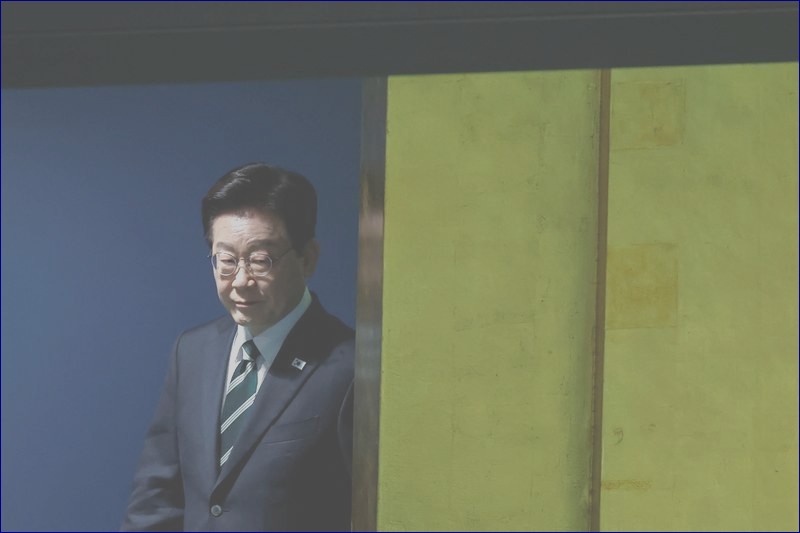
South Korea Launches Investigation into Recent Data Breaches at Financial Institutions
SEOUL, Oct 4 – South Korean President Lee Jae Myung has called for a comprehensive investigation into the recent leaks of personal data at various banks, finance companies, and government agencies. The presidential office in Seoul made this announcement on Sunday.
In response to the situation, Lee Eog-weon, the Chairman of the Financial Services Commission (FSC), arranged an emergency meeting that included representatives from the financial industry, regulatory bodies, and executives from the institutions affected by these breaches. He emphasized the need for the financial sector to remain highly vigilant and proactive in addressing these security concerns, according to a statement from the FSC.
During the meeting, Chairman Lee suggested that the possibility of artificial intelligence being used in the attacks should not be dismissed. He advocated for an approach where artificial intelligence could be employed to defend against such attacks, while also stressing the need for significant upgrades to the cybersecurity measures within the financial sector.
The emergency meeting on Sunday followed previous discussions held on Friday, where the FSC reported cyberattacks impacting several banks, including Shinhan Bank and KB Kookmin Bank. Additionally, it was reported that Hana Bank and Woori Bank had also experienced similar security breaches.
Efforts to address these issues are already underway. The financial regulator has initiated on-site investigations that began after Shinhan Bank reported a data breach on September 30. The scope of these inquiries has since widened to include other reported incidents.
To enhance security measures, the regulator has instructed financial institutions to conduct thorough security inspections, strengthen access controls, limit external access to systems, and bolster consumer protection protocols. Moreover, the FSC will facilitate the rapid sharing of information about attack methods, internet protocol addresses, and other pertinent threat data among financial institutions, aiming to prevent future incidents.
Reports from Yonhap news agency indicate that the attacks may have involved scanning various financial companies for vulnerabilities, rather than being directed at a single target. There are indications that the attack traffic originated from multiple countries, including the United States, Japan, Singapore, Vietnam, and the United Kingdom.
Due to the discovery of additional breaches at smaller financial institutions, the emergency meeting originally scheduled for October 7 was rescheduled to an earlier date. Meanwhile, the main opposition party, the People Power Party, has called for an investigation into the possibility of North Korean involvement, drawing attention to past cyberattacks linked to the North against South Korean financial entities.
(Reporting by Kyu-seok Shim; Edited by Christian Schmollinger and Sonali Paul)
