
Australia and India Aim to Boost Energy Partnership Amid Global Crisis
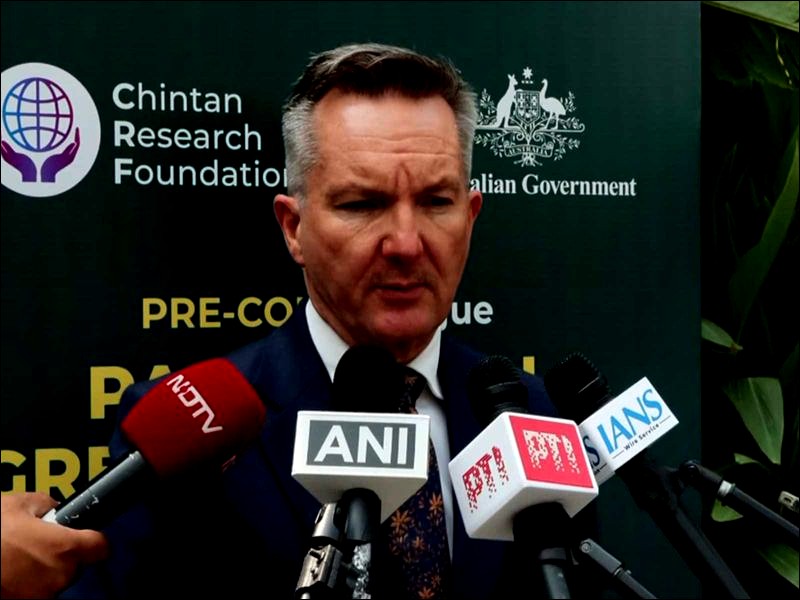
New Delhi, September 23 (ANI): Chris Bowen, Australia’s Minister for Climate Change and Energy, expressed optimism about deepening the energy partnership between India and Australia. He made these remarks while addressing the media during the Chintan Research Foundation (CRF) Pre-COP Dialogue held in New Delhi. Bowen emphasized the increasing importance of renewable energy in the context of the current global energy crisis.
During his visit, Bowen met with Indian Union Ministers Yadav and Joshi to discuss key issues related to COP31, fuel security for Australia, and the mutual cooperation between the two countries in the area of liquid fuels. He also announced plans to visit Reliance’s operations in Jamnagar, Mumbai.
Bowen acknowledged Minister Yadav’s significant role in global climate discussions, noting their collaboration on negotiations at three previous COP events. He pointed out that Yadav is expected to play an important part in the upcoming COP31.
Bowen outlined his main negotiating priorities, which include electrification and ensuring access to financial resources for Small Island Developing States. He highlighted the importance of oceans in these discussions and mentioned his intention to hold further talks with India and other stakeholders in the weeks leading up to the conference.
“We are currently facing an energy crisis around the world,” Bowen stated, linking this crisis to a growing need for reliable renewable energy sources. He stressed that discussions with companies like Reliance are crucial, stating, “Renewable energy is reliable energy. No conflict can disrupt the sunlight reaching us, and the wind will continue to flow.”
He emphasized the need for nations to collaborate on creating new, dependable supply chains, which will be essential both now and for the future as renewable energy increasingly replaces fossil fuels. Bowen pointed out that India and Australia’s energy partnership leverages each country’s strengths, particularly in solar energy and green hydrogen.
The minister highlighted the initiatives in Gujarat, where the Solar Academy aims to train 2,000 solar technicians. He remarked on the advances being made in green hydrogen, indicating a strong collaborative effort.
Regarding the principle of Common But Differentiated Responsibilities (CBDR) and discussions around a fossil fuel roadmap, Bowen expressed that he sees alignment between the two. “Every country has responsibilities, even if they differ, but there is a common goal we all strive towards,” he explained.
On the subjects of adaptation and loss and damage, Bowen mentioned the devastating floods in Nepal as a reminder of the urgency of these discussions at COP31. He reiterated that adaptation and resilience will remain key topics, even though loss and damage will not dominate this year’s agenda. He expressed commitment to facilitating access to existing climate finance for vulnerable countries.
Recognizing Australia’s position as a significant coal exporter while advocating for a transition to renewables, Bowen acknowledged the ongoing role of fossil fuels in the energy landscape. “We understand that coal has a part to play, and we cannot eliminate it overnight, but we must progress toward transition,” he remarked.
Lastly, Bowen reported that Australia would adopt a consultative approach in engaging countries with differing viewpoints during COP31. “We want to foster an inclusive and ambitious COP based on open dialogue,” he concluded.
This ongoing collaboration highlights the urgency and goal of building a sustainable, reliable energy future for both nations.
