
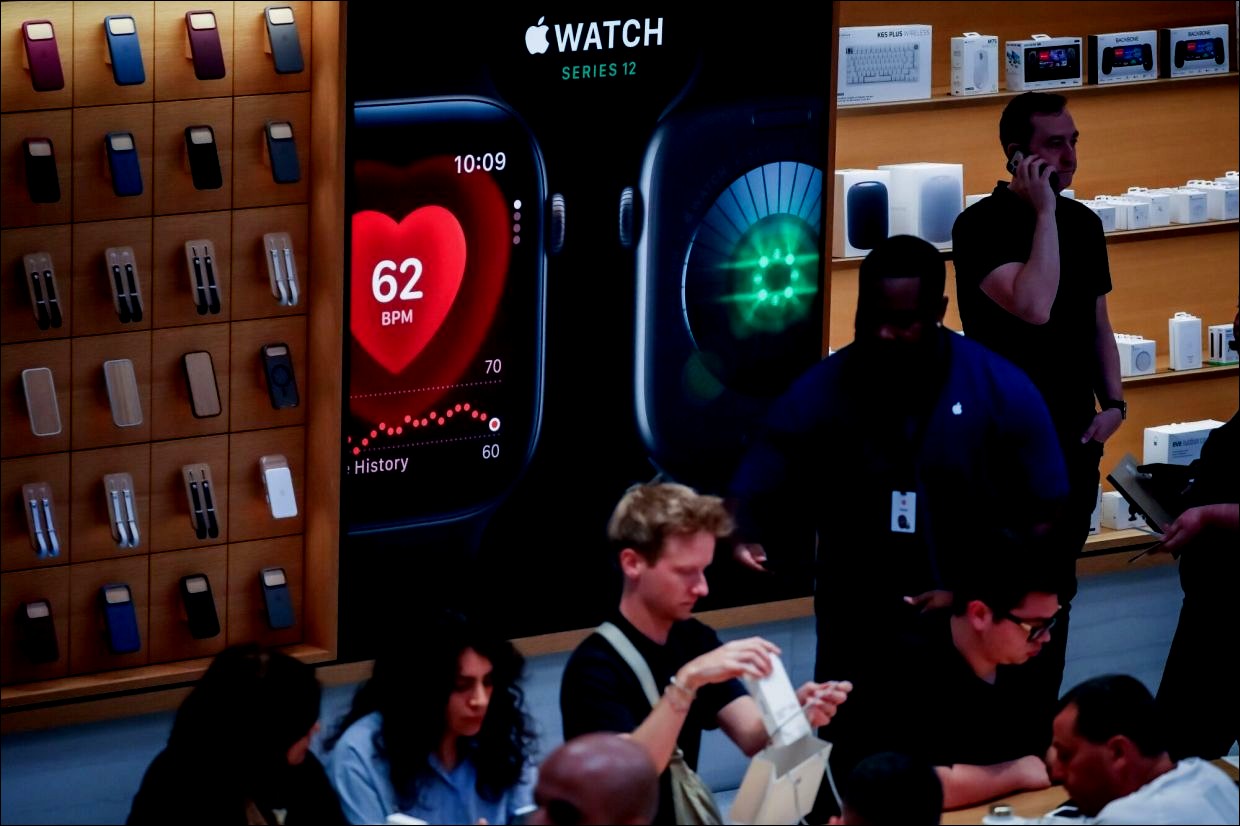
Apple Inc. is reportedly working on a new health and fitness tracker that does not have a screen, similar to the popular device made by Whoop Inc. This initiative is part of Apple’s strategy to rethink its smartwatch offerings and explore new wearable technologies.
According to sources familiar with the project, Apple has been testing this new category for several months and is currently developing prototypes. Although the project has gained backing from top executives, the company has yet to make a decision on whether to officially launch the product. The sources, who wished to remain anonymous due to the confidential nature of the work, described the project as still being in an early stage or what Apple calls a “technology investigation.” If Apple goes ahead with the release, the device may not be available until 2028. A representative from Apple declined to provide any comments on the matter.
The prototypes being developed feature a slim fabric band equipped with sensors but lack a traditional display. This design choice would set the new device apart from the Apple Watch, which is heavily focused on a screen and offers a range of features, from fitness tracking to notifications.
There is keen interest in this potential new product from Apple’s executive chairman Tim Cook and Eddy Cue, who now oversees the company’s health initiatives after taking over last year. Although Apple remains a leader in smartwatch sales, especially in the United States, competitors like Whoop and Oura are rapidly growing their user base. This has prompted Apple to reassess how it approaches health and fitness tracking.
In the background, some changes are taking place in Apple’s leadership in its watch and health divisions. Jeff Williams, who previously managed these areas, retired last year. Furthermore, marketing head Stan Ng and fitness strategy lead Jay Blahnik have also departed from the company.
Eddy Cue has been encouraging Apple’s health team to incorporate features from newer competitors, who offer simpler interfaces focused more directly on health and fitness. While the Apple Watch serves a variety of functions, these rival devices are becoming increasingly attractive to consumers.
Apple has already started integrating some features similar to those found in Whoop’s products into its latest smartwatch and updated Health app. These enhancements include improved heart-rate monitoring and new metrics helping users gauge their readiness for daily activities. There’s even technology that can estimate a person’s biological age based on their health data. The revamped app also boasts a more user-friendly design, reflecting the influence of the competition.
Other players in the wearables sector are also stepping into the screenless device market. For example, Alphabet Inc.’s Google recently launched the Fitbit Air, while Garmin Ltd., known for its fitness and location-tracking devices, has been exploring similar concepts.
Members of Apple’s Vision hardware team are involved in the early development of this new tracker. This group previously worked on the Vision Pro headset and is also focused on creating other wearable technologies, such as smart glasses and AirPods with cameras, both expected to launch in 2027.
Apple is also pursuing the development of an AI pendant equipped with a camera, although this project has been delayed. The AI pendant is designed to be worn as a necklace, clipped onto clothing, or placed on the body, to collect visual data for its new Siri AI assistant.
Additionally, Apple continues to incorporate artificial intelligence into its devices. This month, they introduced a smartwatch capable of recording audio throughout the day and using AI to summarize the user’s conversations and activities.
The company is preparing for a significant update to its smartwatch lineup, with a potential release as early as late 2027. This redesign would be a departure from recent years, which have seen only minor changes. While the Series 10 made the main watch thinner two years ago, the more robust Ultra model has maintained its original design for four years.
