
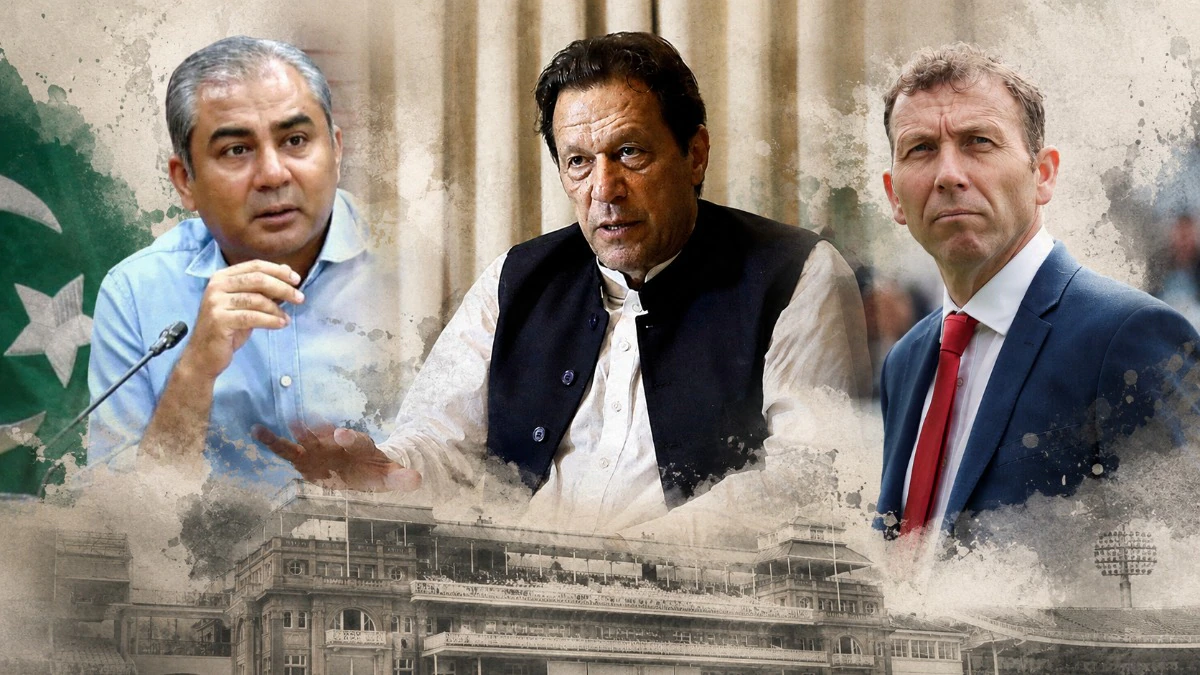
The recent situation surrounding the Test match at Lord’s between England and Pakistan has taken an unexpected turn. Reports indicate that the Pakistan Cricket Board (PCB) threatened to withdraw from the match after an interview aired on Sky Sports featuring Imran Khan’s sons, Sulaiman and Kasim. This interview focused on their father, the former Prime Minister of Pakistan and a renowned cricketer.
The threat to forfeit a Test match is significant, but what’s even more concerning is the underlying issue: has a television interview about a former Prime Minister overshadowed the game of cricket itself?
This situation raises important questions about the influence of political discussions on sports. The PCB seemed ready to jeopardize a prestigious match and the integrity of Pakistan cricket simply because they did not want Imran Khan’s name to be mentioned during the broadcast. This raises alarms for anyone passionate about the sport. When political interests threaten the very essence of cricket, it highlights deeper issues within the management of Pakistan cricket.
Pakistan cricket has seen better days. The administration has been unstable, often influenced by political motives, and the sport seems to be too closely linked with political power. This is seen particularly when the Prime Minister takes on a significant role in cricket management and when the current Interior Minister is also the chairman of the PCB.
When such a close relationship exists between politics and cricket, it’s likely that cricket could be used for political purposes, which appears to be happening in this case. However, the role of Sky Sports in this incident also deserves scrutiny.
As a journalist, I support the right to interview Imran Khan’s sons. They must be allowed to speak out regarding their father’s treatment, and it’s crucial for the media to raise pertinent questions. However, the timing and context of such discussions matter. Sky News is a news channel, while Sky Sports is meant for sports coverage. Mixing the two can become problematic.
Sports broadcasts can address the political aspects of the game when they’re relevant, but using a sports platform primarily for political interviews raises concerns. If sports broadcasts become increasingly politicized, where will it end? Today it’s an interview regarding Imran Khan; tomorrow it may be another political figure taking center stage during a game, shifting the focus away from the sport.
This could lead to governments boycotting broadcasts or networks seeking controversy for attention, transforming sports events into political platforms, ultimately affecting the essence of the game.
This brings us to Michael Atherton, a former cricket captain who has spoken out on Imran Khan’s situation and was involved in a campaign urging the Pakistani government to treat him more fairly. His intentions are commendable, but given his established public position, one must ask: should he have conducted the interview?
While Atherton has a right to express his views and ask tough questions, the setting still matters. There’s a distinction between journalism and advocacy, and between a news outlet and a sports channel. This distinction is vital because sports provide a rare opportunity for people with different political views to come together.
That said, cricket shouldn’t ignore the impact of politics entirely, as they often intersect. However, it might be better to keep political journalism in its proper place rather than allowing every sporting event to turn into a political debate.
Ultimately, when cricket falls victim to political maneuvering, the sport itself suffers—something fans on all sides should be concerned about.
