
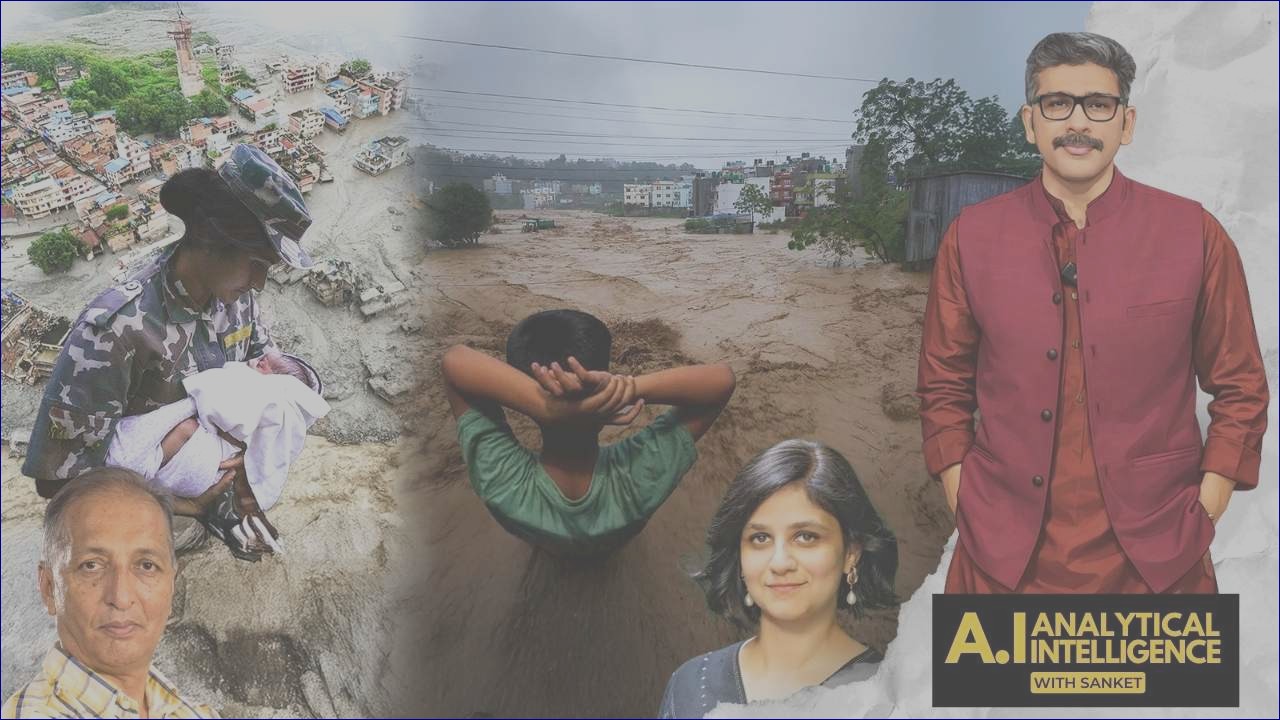
A recent glacial lake burst along the border of Nepal and China has led to a devastating flood in the region, highlighting significant concerns about disaster preparedness in South Asia, particularly for India.
Zerin Osho, the Director of the India Program at the Institute for Governance & Sustainable Development, expressed a stark reality: India’s response capabilities are not what they should be. In a discussion on the show “AI with Sanket,” she emphasized that while scientists cannot predict precisely when a glacier might give way, they are aware of the increasing risks posed by melting ice, glacial lakes, and extreme weather conditions. The issue lies not in a lack of scientific knowledge but in the reluctance to act on it.
The River Linking Two Countries and Two Failures
The flood’s impact is most apparent along the Bhotekoshi River, which flows into India and becomes the Gandak River in Bihar. This connection means that any early warnings from Nepal or satellite observations directly affect Indian communities located hundreds of kilometers downstream.
According to Osho, Indian authorities should have a solid understanding of which areas—specific streets, neighborhoods, and homes—would be at risk if similar floods happened in India. Modern tools such as satellite imagery and flood simulation technology can provide detailed forecasts, even down to individual streets.
An Outdated Approach to Flood Management
Despite this, India’s flood management still relies on outdated practices. Currently, officials use a “danger mark” system, which only alerts towns and districts once river levels hit a predetermined threshold. While this might be effective for gradual seasonal floods, it is insufficient for sudden disasters like flash floods, which can escalate in mere hours.
Osho challenges policymakers to consider why, with available advanced technology, the alert systems still rely on measures suited for entirely different flood types.
A Reactive Rather Than Proactive Culture
This situation isn’t unique; Osho highlighted recurring disasters across regions like Uttarakhand, Himachal Pradesh, Chennai, and Kerala as part of a disturbing trend. Governments tend to treat each flood or extreme weather event as a separate incident rather than as part of a broader, ongoing risk intensified by climate change.
The costs of this reactive approach go beyond the loss of lives; they also include the destruction of homes, damaged infrastructure, and disrupted livelihoods, placing an increasing burden on public resources.
The Need for Financial Preparedness
Osho also pointed out a significant gap in financial readiness. She suggested that India could benefit from examining the structure of the US National Flood Insurance Program. For areas that frequently experience floods, having a systematic insurance mechanism could provide vital financial support that traditional emergency relief funds cannot match, as they often come too late to be fully effective.
In conclusion, the recent disaster serves as a critical reminder for South Asian countries, especially India, to rethink their approach to flood management and preparedness in the face of changing climate conditions.
