
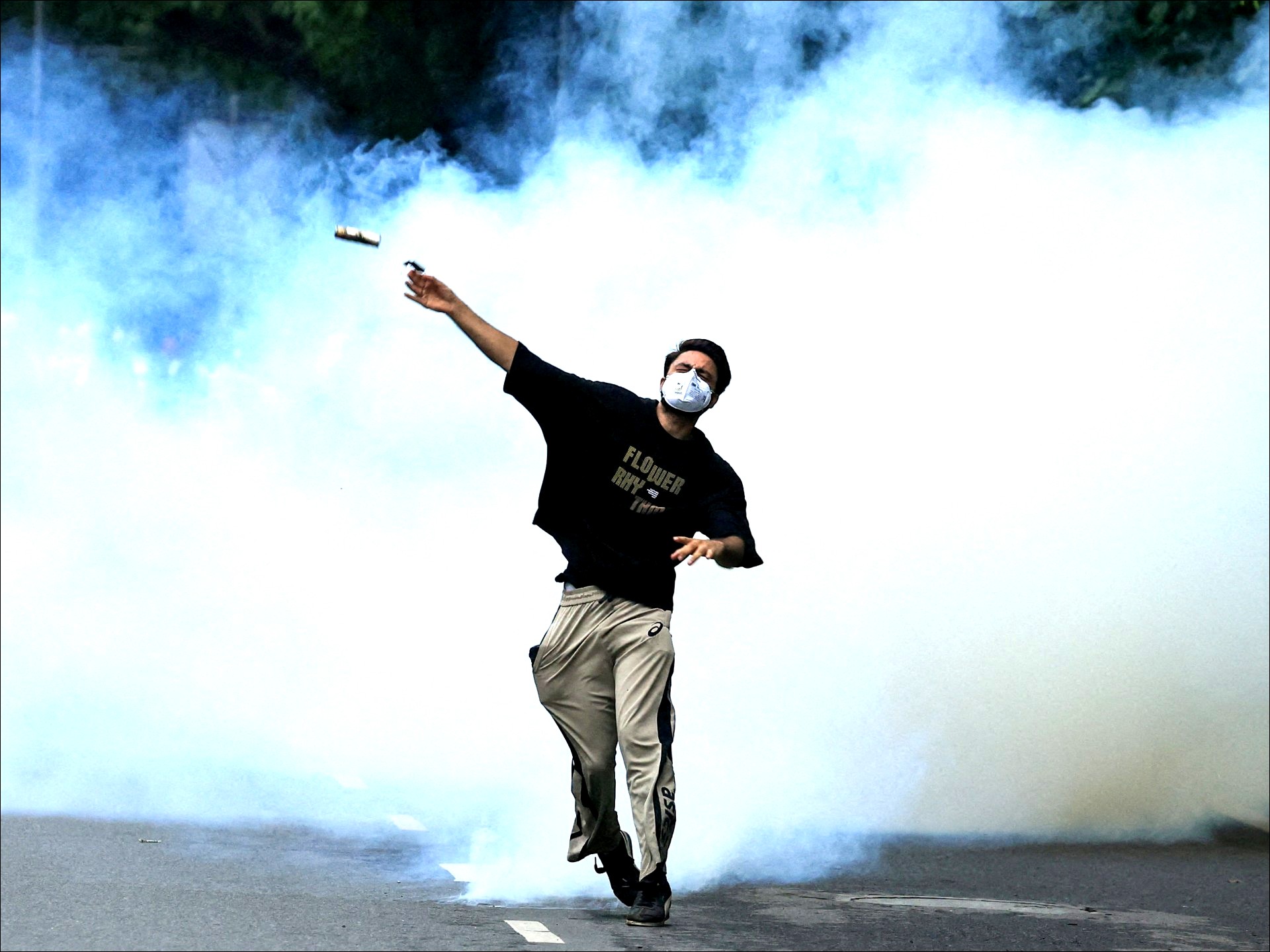
New Delhi Sees Student Protests over Education Scandal
New Delhi, India — On July 26, early in the morning, workers were sent to Jantar Mantar in New Delhi to clean up graffiti on the walls near the famous observatory. This action followed protests the day before, led by the Cockroach Janta Party (CJP), which resulted in the resignation of the Education Minister, Dharmendra Pradhan, amid controversy over exam leaks.
At the protest, a sign made by demonstrators proclaimed: “#2026 Gen-Z REVOLUTION!!!” The atmosphere was charged as a young man climbed a tree with a loudspeaker and shouted, “Azadi, give me freedom!” The crowd echoed his words, raising their hands in solidarity. “Azadi,” which means “freedom,” is a well-known song from the Bollywood movie Gully Boy and has become a rallying anthem for these student protests. This movement presents one of the most significant challenges to Prime Minister Narendra Modi’s government in years.
Graphic videos of police confronting students on Parliament Street circulated widely, reviving interest in this almost decade-old song. The energetic chants spread beyond Delhi, reaching cities like Jaipur, Lucknow, and Mumbai.
Just ten years earlier, “Azadi” was an extremely controversial term in Delhi, often associated with students facing severe legal consequences. As the protests died down after the minister’s departure, police barricades remained in place, some marked with messages like, “Umar, Sharjeel, Gulfisha were here before you,” referring to activists who were jailed in past protests.
The Story Behind ‘Azadi’
The phrase “Azadi” has a complex history, tracing its roots back to various movements, including Pakistan’s feminist activism and the Kashmiri struggle against oppression. Its recent revival among students highlights the evolving nature of political expression and activism in India, particularly under Modi’s leadership.
In December 2016, a seemingly simple gathering at Jawaharlal Nehru University (JNU) turned into a significant moment in Indian politics. Students organized a discussion about the death penalty in relation to a controversial case, but the event drew intense media scrutiny, branding attendees as “terrorist sympathizers.” This backlash set off a wave of arrests and allegations of sedition, targeting students like Umar Khalid.
Political tensions heightened after tragedy struck in 2016 when a Dalit student, Rohith Vemula, died by suicide, alleging caste discrimination. The incidents led to a prominent crackdown on dissent in universities across India, with students facing increasing threats and restrictions on protest activities.
The Rise of the Cockroach Janta Party
In June 2026, a new movement emerged online after a controversial statement by India’s Chief Justice likening unemployed youth to cockroaches. Abhijeet Dipke, an activist and Boston University graduate, created the Cockroach Janta Party and quickly gained a massive following on social media. Upon his return to India, he joined with student leaders, including Neha Bora from the All India Students’ Association, aiming to demand education reforms and the resignation of the education minister after scandals disrupted student exams.
Protests were held at Jantar Mantar, where older activist organizations collaborated with newer groups to strengthen the movement. For a month, dedicated volunteers ensured the protest site remained active, providing structure and alignment to the cause.
Bora expressed that the younger generation approached activism differently, using social media to amplify their voices, making them less reliant on traditional media, which they saw as biased.
A New Era of Student Activism
The ongoing protests reflect a shift in how students in India engage with political issues. The new wave of activists has adapted to the challenges of organizing under restrictive conditions, utilizing social media to reach broader audiences. This generation of student leaders is not only tech-savvy but also determined to change the narrative around their activism.
Student activists today, no longer just representing a singular issue, are shifting national discourse. For instance, the visuals from recent protests showed a solidarity call against divisive politics, echoing through various parts of New Delhi. The chant of “Azadi” now resonates as a powerful assertion of student rights and demands for meaningful change, illustrating a resilience among India’s youth that is poised to reshape the future of activism in the country.
