
US State Department Responds to UNICEF’s Report on Gaza Nutrition
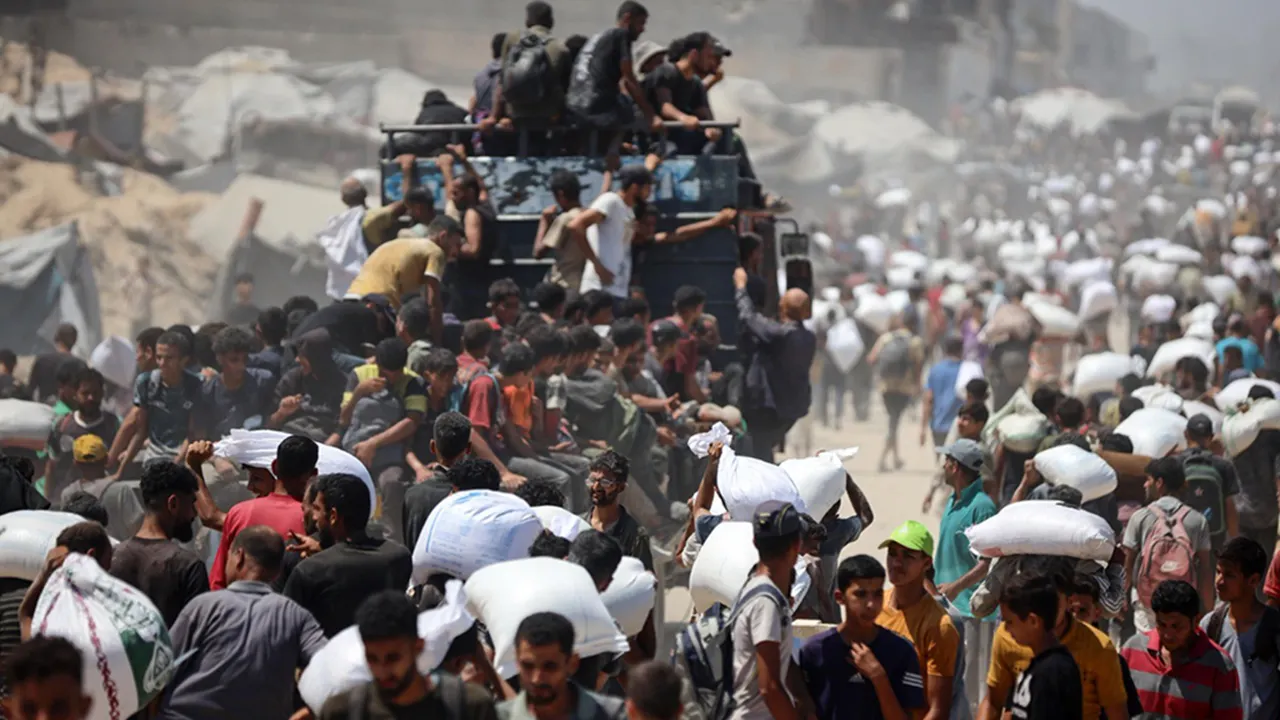
The US State Department has addressed a new UNICEF report concerning malnutrition in Gaza, claiming that the findings contradict assertions that Israel intentionally starved civilians in the region. This reaction comes amid widespread international concern about the humanitarian crisis in Gaza, as illustrated in a recent UN report projecting ongoing hunger issues extending into June.
Following Hamas’s attack on southern Israel on October 7, 2023, which resulted in over 1,200 deaths and numerous kidnappings, Israel launched a military response in Gaza. This escalation has led to accusations of genocide and claims that the Israeli government has used starvation tactics against Palestinian civilians.
UNICEF’s National Nutrition Cluster report, released last month, gathered data from 1,335 children under the age of five across 83% of the Gaza Strip to evaluate malnutrition risks. The study found malnutrition rates, as measured by weight-for-height Z-scores and mid-upper-arm circumference, ranged from 0.2% in Khan Younis and Rafah to 0.8% in Gaza City using the WHZ method. Meanwhile, MUAC assessments revealed malnutrition rates of 1.5% in Gaza City and 1.9% in Deir Al-Balah. It’s important to note that about 17% of the population could not be evaluated due to security and operational challenges.
A spokesperson for the State Department emphasized that UNICEF’s recent findings provide evidence that refutes numerous baseless allegations against Israel regarding the starvation of Gazan civilians. They highlighted that Israel has delivered over two million tons of food to Gaza since the ceasefire.
The report found malnutrition rates comparable to, or even lower than, those in neighboring countries. For instance, the Israeli government noted that acute malnutrition levels in the region were between 1.3% to 17.7%, with Gaza appearing to fare better than places like Sudan and Syria.
The controversy surrounding UNICEF’s report was fueled by earlier statements from the Integrated Food Security Phase Classification (IPC), which declared famine conditions in Gaza in August 2025. The IPC previously predicted that by June 2026, about 132,000 children under five would experience acute malnutrition, exacerbating fears of a deepening crisis.
While UNICEF’s report highlighted a decrease in nutrition-related deaths during treatment in Gaza, the IPC has yet to respond publicly to these findings or clarify its position on the famine claims.
Experts such as Andrew Fox from the Henry Jackson Society argue that new data indicates the situation regarding hunger in Gaza was overstated. He argues that distribution issues, rather than widespread famine, were primarily to blame for hunger in some areas.
Prof. Aron Troen from The Hebrew University remarked that the UNICEF findings are encouraging, showing improvements compared to previous reports that claimed widespread famine.
Meanwhile, UNICEF’s Kurtis Cooper pointed out that the recent nutrition survey reflects conditions more than nine months after IPC’s famine confirmation and emphasizes that previous challenges in food supply significantly impacted malnutrition treatment efforts during that period.
As agencies continue to assess the humanitarian situation in Gaza, calls for accurate reporting and responsible narratives about the crisis are growing, with many advocating for an end to politically motivated claims that distort the realities on the ground.
Recent events underscore the need for careful consideration of humanitarian needs, balancing both bad and good news, to pave the way for more effective aid and governance.
The ongoing challenges in Gaza highlight the complex interplay of military actions, humanitarian access, and political narratives, illustrating the urgent necessity for a renewed focus on the well-being of the civilians caught in the conflict.
