
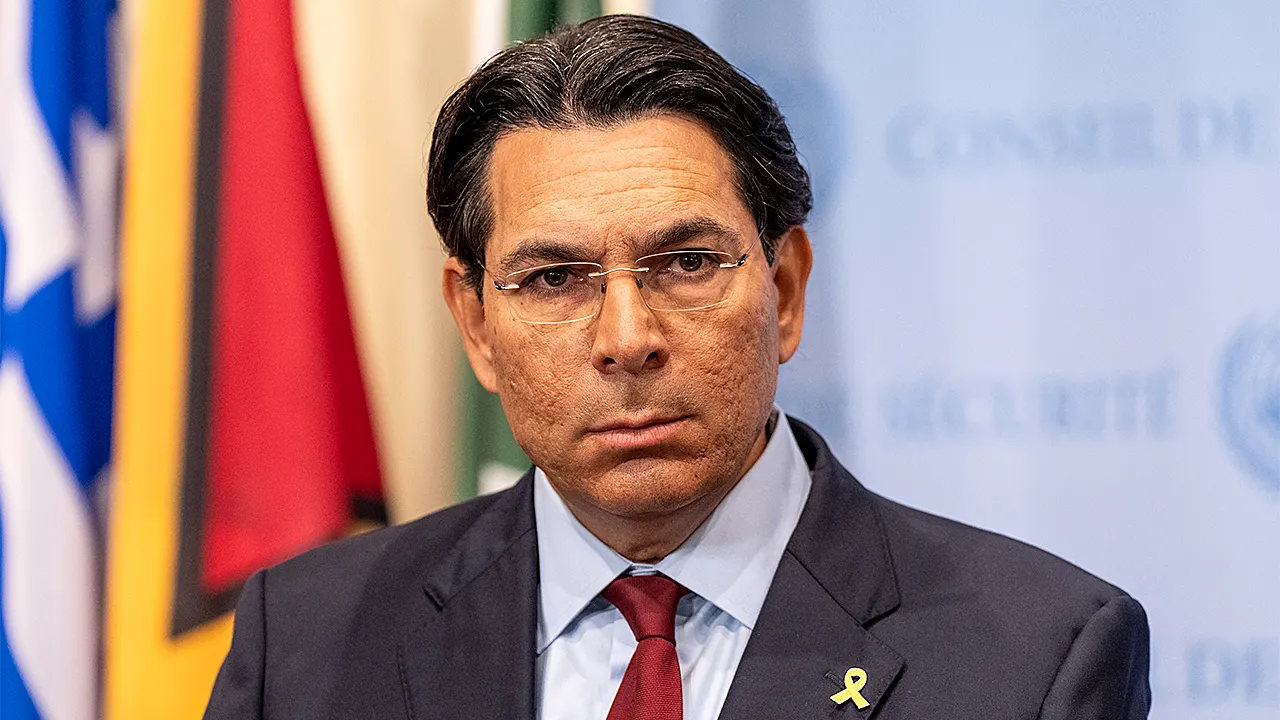
New Data Challenges Claims of Starvation in Gaza, Says Israeli UN Ambassador
Israel’s ambassador to the United Nations, Danny Danon, has responded to recent claims that Israel is deliberately starving the people of Gaza. He highlights new data showing a significant decrease in child malnutrition in the region, calling accusations against Israel “blood libel” that are fueled by information from Hamas.
The comments from Ambassador Danon come after a United Nations-supported survey revealed that rates of acute malnutrition among young children in Gaza have fallen to levels equal to or lower than those before the outbreak of conflict between Israel and Hamas.
“Many countries and some UN officials accused Israel of intentionally starving the Gaza population. We strongly deny these claims,” Danon stated. “When we sought clarification on these accusations, we learned they relied on reports from Hamas.”
Danon insists that the latest figures from the UN challenge the earlier starvation claims, asserting that previous statistics provided by Hamas were false.
The Gaza SMART nutrition survey, which looked at 1,335 children under the age of five, was conducted by the UNICEF-led Nutrition Cluster and covered areas that account for around 83% of Gaza’s population. However, about 17% of the population could not be surveyed due to security issues.
According to the survey, the rates of acute malnutrition were found to be between 0.2% and 0.8% based on weight-for-height, with an additional finding of 1.3% using mid-upper-arm circumference measurements. Evaluators concluded that there is “no widespread acute malnutrition at the population level” in Gaza, although issues like poor dietary diversity and health challenges remain.
Danon also referenced past comments made by international officials regarding food shortages in Gaza. For example, Tom Fletcher, the former UN Under-Secretary-General for Humanitarian Affairs, stated that 14,000 babies were at risk of dying from severe malnutrition. Danon criticized this statement, saying, “It was false and did not happen.”
He stressed that Israel has maintained detailed records of food supplies entering Gaza during the conflict and insists there is no lack of food in the region. “We control the checkpoints and track the number of aid trucks coming in,” Danon explained. He emphasized Israel’s commitment to ensuring humanitarian aid reaches those in need while addressing issues with Hamas.
Danon accused Hamas of exploiting humanitarian aid for profit, stating, “We know that Hamas has taken aid and sold it in the market, creating financial problems for the people.”
He also mentioned Israel’s interest in partnering with NGOs that are not affiliated with Hamas to ensure that aid is distributed properly.
Despite the ongoing conflict, Danon expressed optimism about the situation in Gaza, noting that food prices have dropped significantly, indicating that there is no food shortage. He reiterated Israel’s position, stating, “We have no intention to control Gaza. But for progress to happen, Hamas must disarm.”
As talks continue over a potential peace plan, tensions in the region remain high, and discussions are complicated by the demands for Hamas to relinquish its weapons.
The humanitarian situation continues to be a focus, with hopes for improvements as negotiations move forward.
