
Collaboration Advances India’s Next-Generation Weather Forecasting System
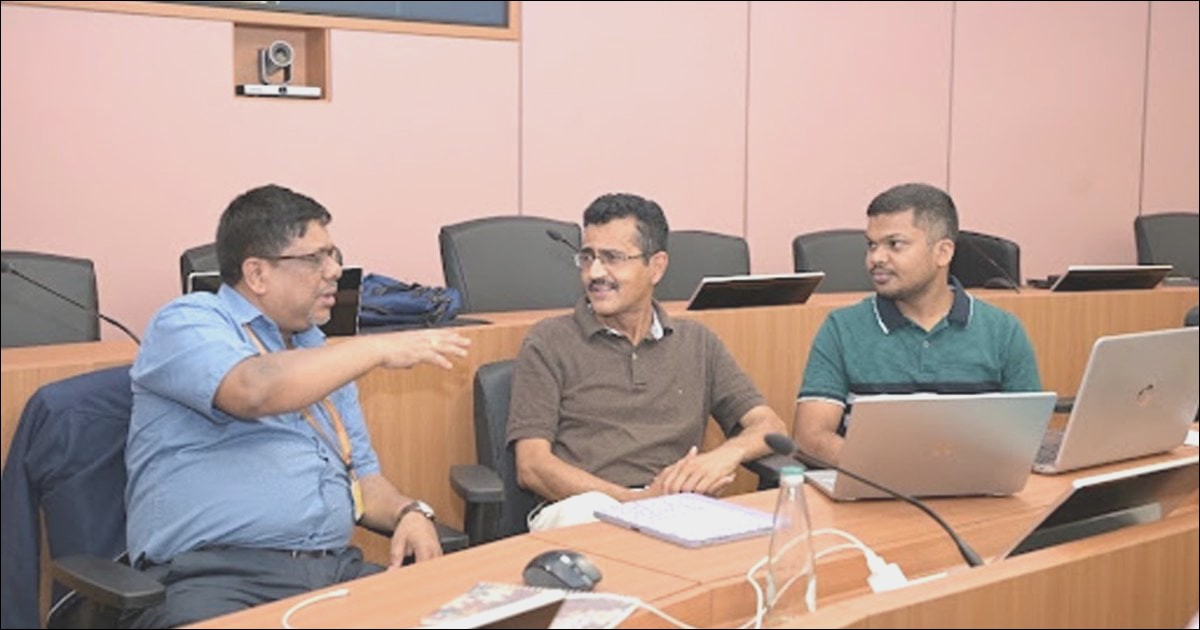
A team of scientists from various organizations, including NOAA/AOML, the Indian National Center for Ocean Information Services (INCOIS), and the India Meteorological Department (IMD), gathered to evaluate progress and plan the future of India’s advanced weather forecasting system. The meeting emphasized the successful operation of the coupled IOLA system, now functioning in an experimental mode at IMD, INCOIS, and NCMRWF.
The IOLA system is actively used for research at institutions like NIT Rourkela and the University of Texas at Austin, linking scientific research with practical forecasting. This innovative system is adept at providing forecasts that cover multiple scales, from large ocean-atmosphere interactions to localized severe weather incidents. By blending advanced modeling of the atmosphere, ocean, and land surfaces, IOLA stands out as one of the first regional systems designed to predict a wide range of weather phenomena—ranging from tropical storms and monsoon rains to severe weather events.
The development of the IOLA system results from over ten years of collaboration between NOAA and the Ministry of Earth Sciences (MoES). Initially focused on predicting tropical cyclones in Indian seas, IOLA has broadened its forecasting abilities to assess a wide variety of significant weather events. Research from NIT Rourkela showed promising outcomes from the first application of a moving-nest configuration for monsoon predictions. Meanwhile, scientists at UT Austin successfully utilized IOLA to analyze the heavy rainfall caused by Hurricane Helene in North Carolina, showcasing the system’s versatility.
The moving-nest framework, originally created to monitor tropical cyclones, has been adapted to track dynamic monsoon systems and heavy rain areas. Initial tests have shown that it yields better rainfall forecasts than traditional methods, emphasizing its potential for accurately predicting impactful weather.
In a follow-up to the meeting, Sundararaman “Gopal” Gopalakrishnan, NOAA’s lead scientist for the IOLA project, visited NIT Rourkela to align on goals for future model development. Their discussions focused on enhancing prediction capabilities, advancing AI-driven weather applications, and fostering collaborative research efforts as part of the NOAA-MoES partnership.
Gopalakrishnan remarked, “The achievements of the IOLA project underscore the impact of global cooperation. By uniting forecasting centers, academic institutions, and research labs, we are developing a system that addresses critical weather challenges in the region, paving the way for a unified modeling approach across various scales.”
This partnership not only aids NOAA in gaining valuable insights through regional forecasts and operational feedback but also strengthens the long-standing collaboration between NOAA and MoES. As IOLA transitions further into operational use, both organizations remain dedicated to improving weather forecasts that will help communities prepare for and respond to extreme weather, ensuring safety and resilience in one of the world’s most weather-sensitive regions.
