
Trump Adjusts Strategy on Iran Amid Severe Economic Struggles
In a recent phone interview, former President Donald Trump suggested that he prefers allowing economic pressures to weigh down Iran rather than opting for immediate military action. “We are just watching Iran, which is facing major inflation and financial trouble,” Trump told Axios, emphasizing a “low-key” approach as Iran grapples with its financial woes.
He believes the U.S. naval blockade in the Strait of Hormuz has worsened Iran’s financial situation. Trump’s comments follow a period in which the U.S. administration hinted at increasing military involvement against Tehran.
However, this raises a bigger question: How much of Iran’s economic troubles are due to U.S. sanctions and military strategies, and how much is a consequence of years of corruption and mismanagement within the Iranian government?
Spotlight on Iran’s Economic Struggles
Trump took to Truth Social to reiterate this message, pointing out Iran’s “51 years of bad behavior” and sharing a graphic showing the dramatic drop in the value of the Iranian rial, labeling it as “trash.”
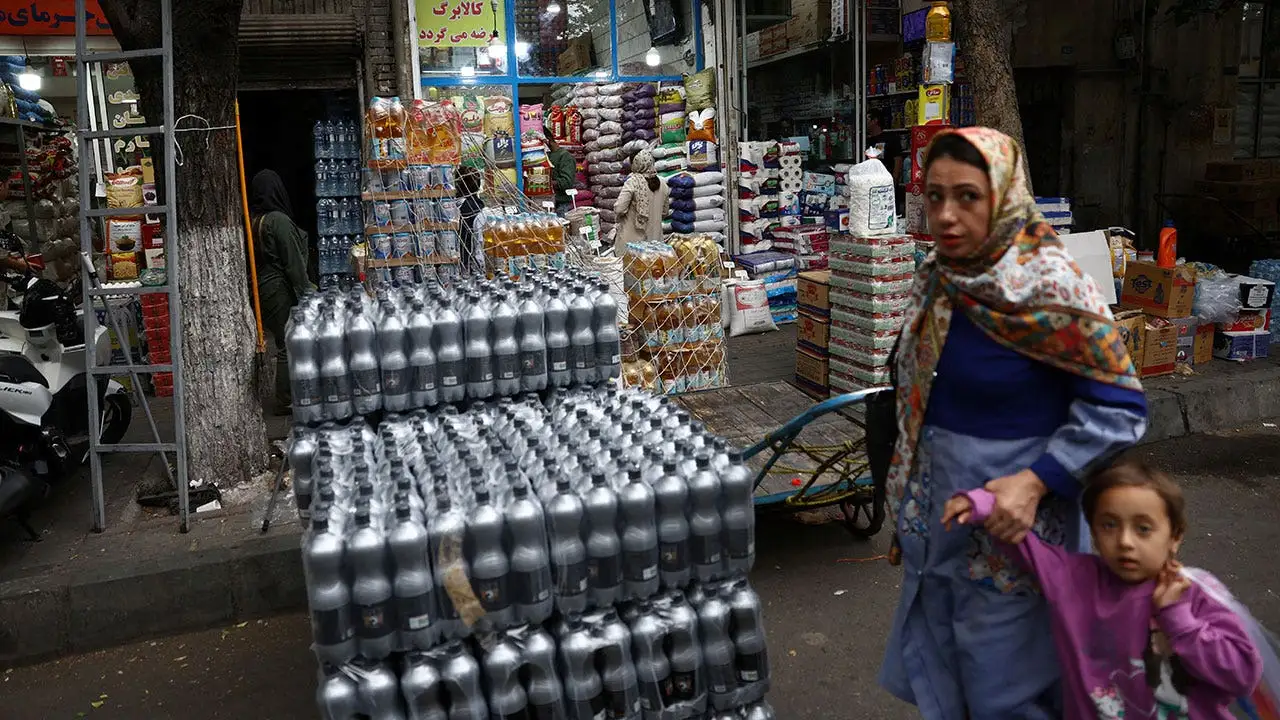
Everyday life for many Iranians reflects the deepening economic crisis. A recent report from the Iranian newspaper Jahan-e Sanat indicated that customers are resorting to shoplifting basic goods like bread and cheese or eating packaged food in stores simply because they can’t afford them, painting a grim picture of rising prices and dwindling purchasing power.
In response, the U.S. has intensified efforts to cut off Iran’s income sources. The Treasury Department’s “Economic Fury” campaign targets Iran’s oil trade, banking networks, and even its cryptocurrency exchanges. Officials estimate this initiative has blocked “tens of billions of dollars” from reaching the Iranian government and its affiliates.
A spokesperson for the Treasury emphasized that this campaign has left Iran “desperate for cash.” “Iran’s economy is in freefall, and the regime’s ability to pay its troops has been devastated,” the spokesperson added.
Historical Context of Iran’s Economic Issues
While Trump’s approach focuses on current pressures, experts say that many of Iran’s economic challenges stem from decades of mismanagement and corruption within its governance. Miad Maleki, a fellow at the Foundation for Defense of Democracies, argued that while sanctions may have accelerated the decline, they are consequences of Iran’s own actions—such as pursuing nuclear weapons and supporting proxy groups—rather than arbitrary external forces.
For years, Iran has prioritized military spending, often at the expense of public services like education and healthcare. Maleki highlighted how military expenditures soared from 16% of government spending in 1993 to over half by 2006, while investments in essential public services dropped significantly.
The Role of the IRGC
The Islamic Revolutionary Guard Corps (IRGC) has increasingly taken control, sidelining the country’s president and expanding its influence. Its budget far exceeds that of conventional military forces, reflecting a strategic choice to prioritize military influence over civilian welfare.
The IRGC also runs extensive economic operations through entities like Khatam al-Anbiya, which focuses on construction and energy projects, indicating a blend of military and economic power that complicates any resolution to the current crisis.
Impact on the Iranian People
Amid all these developments, it’s ordinary Iranians who bear the brunt of the economic hardships. According to Morad Tahbaz, an Iranian-American conservationist released from Iran’s Evin Prison, sanctions have created lucrative opportunities for those controlling smuggling and trade routes, resulting in a black market economy that harms average citizens.
He explained that those profiting from these conditions have a vested interest in maintaining the status quo, complicating efforts to resolve the conflict.
The U.S. Treasury maintains that measures are in place to limit the impact of sanctions on ordinary Iranians, including permits for humanitarian trade. However, the situation remains dire, with ongoing tensions between governmental factions looking for different paths forward.
In summary, while external pressures are significant, they are intertwined with decades of mismanagement within Iran that has shaped the current economic landscape. The impact on everyday Iranian lives continues to build, making the path to resolution a challenging one.
