
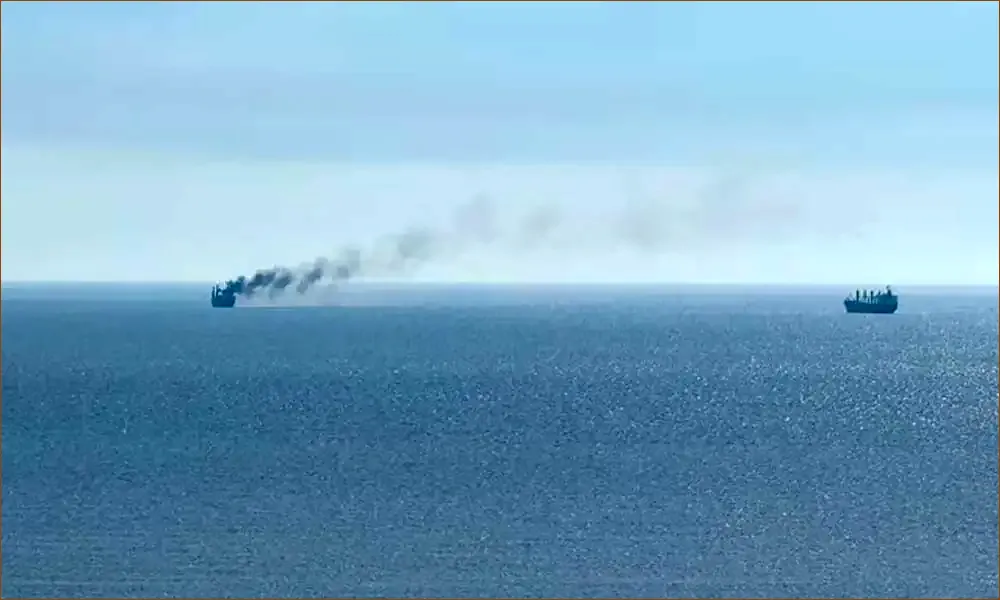
Rising Tensions in the Black Sea Disrupt Global Trade
LONDON: Recent attacks on ships and export hubs in the Black Sea are severely impacting the supply of grain and oil, making this area a critical point of concern in ongoing conflicts.
The Black Sea serves as a key route for shipping grain, crude oil, and refined products. Russia and Ukraine share this waterway, alongside Bulgaria, Georgia, Romania, and Turkey.
In recent weeks, tensions have escalated as Russia, the world’s largest wheat exporter, and Ukraine, a significant agricultural player, have increasingly targeted each other’s export facilities and commercial vessels. Ukraine has also intensified its attacks on tankers linked to Russian oil trade.
This new wave of violence adds another layer of pressure on international commodity markets, which are already struggling with disruptions in major shipping routes in the Middle East.
“The impacts are already visible in global agricultural markets,” warned UN official Kayoko Gotoh during a recent Security Council meeting, urging that the situation should not escalate further.
In another part of the world, the US-Iran conflict has disrupted oil flows through the Strait of Hormuz, and a maritime embargo by Yemen’s Iran-aligned Houthis on Saudi Arabian ports has raised shipping risks in the Red Sea.
Grain Exports Under Pressure
In July alone, Ukraine saw 35 attacks on vessels in its ports and 22 at sea, alongside 67 strikes on port facilities, according to its infrastructure ministry. This is a sharp increase compared to just 14 vessel attacks recorded throughout all of 2025. It is estimated that Ukraine has targeted numerous tankers involved in Russian oil trade.
These attacks have started to affect trade flows. Russian shipping group FESCO announced this week it has halted new shipment orders via the Black Sea after one of its vessels was damaged in a Ukrainian drone strike. Meanwhile, Russia has intensified its assaults on civilian ships and port infrastructure, particularly around Odesa, a crucial gateway for over 90% of Ukraine’s agricultural exports.
Both nations assert they only target military sites.
Agricultural exports remain Ukraine’s biggest source of revenue more than four years into the conflict. Though Kyiv is working on alternative export routes, Agriculture Minister Taras Vysotskyi indicated that these routes won’t reach full capacity until the end of August, and will only manage about half the usual shipping volume through Black Sea ports.
Shipping activities in the Sea of Azov, which leads to the Black Sea, have been restricted since July 10, impacting the major Russian grain port of Taman. Although grain exports are still occurring from Novorossiysk and Tuapse, they are at a much slower rate.
Oil shipments are similarly affected. Ukrainian strikes in July inflicted damage on several tankers, temporarily halting loading operations at Novorossiysk and the Caspian Pipeline Consortium (CPC) terminal, a key outlet for Kazakh crude oil. The CPC route is vital for Kazakhstan, accounting for approximately 80% of its crude exports, making any prolonged disruptions a concern for regional supply.
Maritime security firm Ambrey has advised that vessels calling at Black Sea ports should conduct thorough threat assessments for their journeys, and crews should stay in designated safe areas during drone attacks. Stephen Cotton, general secretary of the International Transport Workers’ Federation, condemned the loss of innocent lives among civilian seafarers as unacceptable.
Increased Shipping Costs Due to Rising Risks
The escalating security situation is also pushing shipping costs higher. Average daily costs for Black Sea oil tankers have surged to over $300,000, from just over $200,000 a week ago. War insurance for port calls to Black Sea terminals has climbed to 2% of the ship’s value, up from around 1% two weeks prior. Such increases can add hundreds of thousands of dollars to costs per voyage.
“If the volume of activity in the Black Sea remains low, we could see a 3% decline in global crude tanker volumes, which is troubling given the current market challenges,” stated Niels Rasmussen, chief shipping analyst at BIMCO.
