
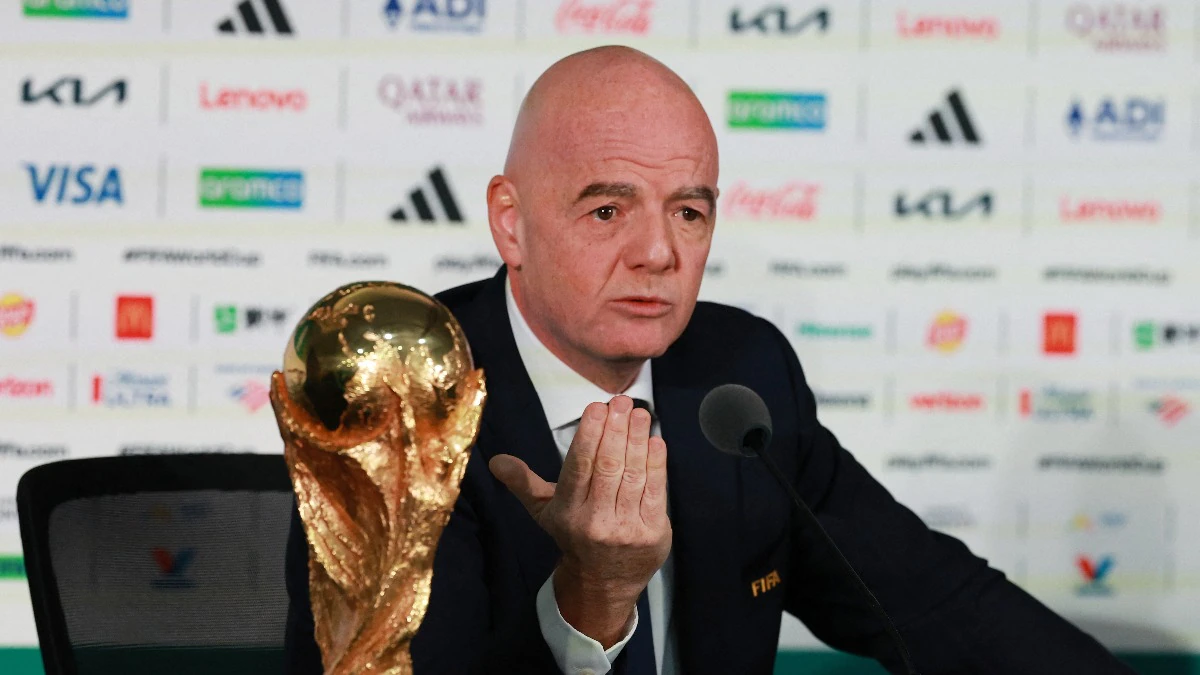
FIFA President Defends Proposal for Minority Stakes in New Commercial Entity
FIFA President Gianni Infantino has stepped up to defend a new plan that has stirred up controversy among football organizations. The proposal involves selling minority stakes in a fresh commercial entity aimed at managing the FIFA World Cup and other competitions, which Infantino describes as “an opportunity, not an obligation.”
Recently, FIFA unveiled its intention to create a $20 billion subsidiary dedicated to handling the commercial rights associated with the FIFA World Cup and its various tournaments. The plan would allow external investors to acquire up to a 20% stake in this new venture.
This move has been met with significant backlash from regional football confederations. Many expressed that they felt blindsided, raising alarms about the sudden involvement of private investors in the commercial aspects of the sport. There were worries about the lack of prior consultation and the potential implications for football’s biggest events.
Despite the criticism, Infantino emphasized that this step is simply part of the natural development of the sport. He reassured everyone that the consultation process is just beginning and encouraged dialogue around the proposal.
“It’s part of a democratic consultation process, and it presents an opportunity, but it’s not mandatory,” Infantino stated in a video released by FIFA. He added that FIFA aims to enhance the commercial side of football while ensuring that fans always remain central to the game.
FIFA is known for its considerable wealth, generating billions primarily from broadcasting rights and sponsorship deals linked to the World Cup. The organization believes that this new commercial subsidiary could bring in additional long-term investments to further support its global competitions.
Addressing concerns that private investment might sway football governance, Infantino assured that FIFA would continue to operate independently, free from outside influence. “FIFA will keep governing football on its own,” he stated, emphasizing that major tournaments like the FIFA World Cup and the FIFA Women’s World Cup will always be protected.
This discussion arises shortly after the conclusion of the 2026 FIFA World Cup, which saw Spain triumph over Argentina in a highly publicized final. Despite its commercial success, the tournament faced criticism over various organizational challenges.
As the conversation surrounding the proposal unfolds, it brings to light the ongoing debate about how to balance attracting investments while safeguarding the integrity of football’s most prestigious events.
