
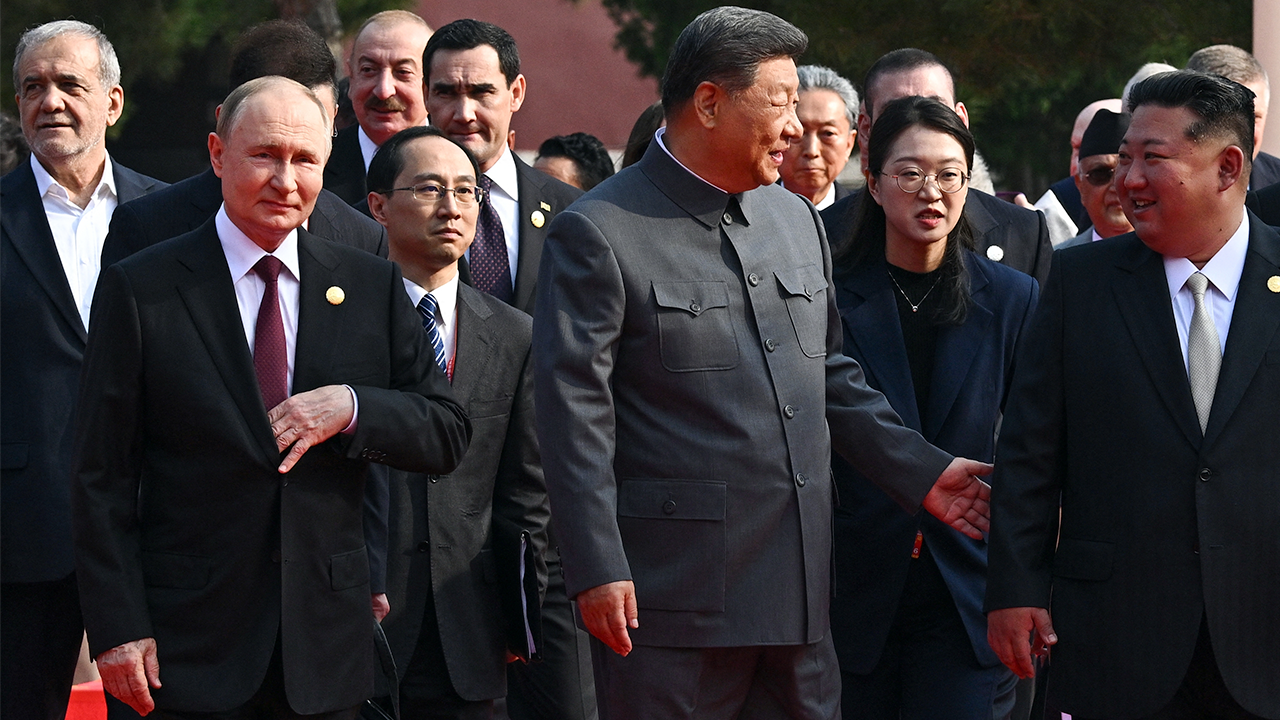
New Book Examines Coordinated Threat from China, Russia, Iran, and North Korea
A recent book highlights the increasing cooperation among China, Russia, Iran, and North Korea. Despite the absence of a formal defense agreement, these countries are acting in a concerted manner that could create significant challenges for the United States.
The book, titled Axis of Aggressors: Countering the Cooperation of China, Russia, Iran, and North Korea, details how these four nations support each other in areas like military, economics, cyber operations, and technology.
While there is no unified command or deep trust among them, the book’s authors argue their collaboration is evident in ongoing global conflicts.
Key Challenges for the U.S.
Retired Rear Admiral Mark Montgomery, one of the authors, noted that the U.S. faces what he calls a “simultaneity problem.” He explained that the U.S. may have to deal with various crises at once, such as a Chinese threat to Taiwan while North Korea could act against South Korea and Iran might engage in terrorist activities.
The research showed 616 instances of cooperation among these countries from 2019 to 2025, including arms deals and military exercises.
China’s Economic Support
One of the main themes of the book is China’s economic backing of Russia, especially as Moscow struggles with sanctions. Montgomery stated that China provides crucial support, allowing Russia to sustain its military efforts.
Co-author Elaine Dezenski emphasized that the relationship among these four nations is based more on necessity than trust. Each has needs that the others can fulfill, creating a “fractured alignment.”
For instance, China buys much of Iran’s oil, helping it to maintain its economy while providing technology and goods in return.
Growing Economic Networks
The authors warn that these nations are developing new payment systems to bypass Western financial institutions, which could weaken the U.S.’s ability to impose sanctions.
Montgomery indicated the importance of recognizing the interconnected nature of these countries, especially as they enhance their cyber capabilities. He pointed out that the line between criminal hackers and state actors is often blurred in these nations, making them a complex threat.
Carrie Filipetti, a former State Department official, added that military cooperation, such as drone use, poses genuine risks to U.S. forces overseas.
Conclusion
Retired generals have voiced concerns over the growing military modernization of these nations and the level of coordination between them. They caution that the situation represents a serious challenge to U.S. national security.
The authors suggest more robust partnerships with allies and stronger sanctions to counter this unified front. Understanding these relationships is critical as they continue to challenge U.S. interests on multiple fronts.
