
Quantum computing has been in a unique position for several years, caught between high hopes and real-world application.
These machines do exist, and many technology leaders are working on them. Research indicates that, for some tasks, quantum computers could outpace even the fastest supercomputers we have today.
The issue isn’t that these computers don’t function; rather, it’s that they’re very delicate.
Unlike standard computers that handle data as ones and zeros, quantum computers use quantum bits, or qubits. These qubits are very sensitive, meaning even slight disturbances from their environment, like small issues in the hardware or minor changes around them, can introduce random errors during calculations.
Scientists refer to this problem as quantum noise, which is a major challenge to the practical use of quantum computers.
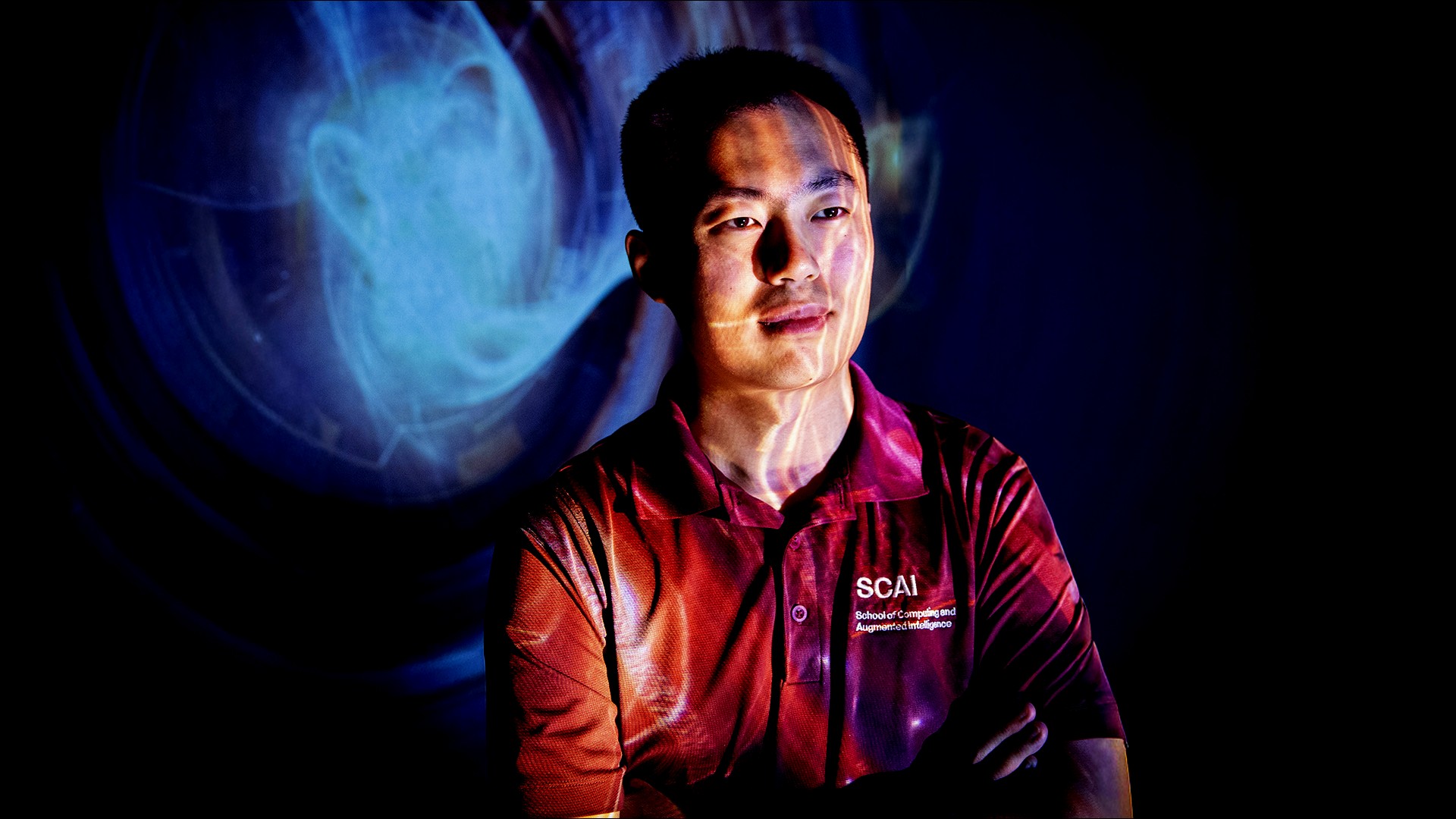
Baoyu Zhou is tackling this challenge by accepting that quantum computers have flaws. Instead of waiting for improved hardware, he is developing mathematical tools that help researchers get better results from the technology they already possess.
Zhou is an assistant professor at Arizona State University, working in the School of Computing and Augmented Intelligence, which is part of the Ira A. Fulton Schools of Engineering.
With a new three-year grant from the U.S. National Science Foundation, he will collaborate with Xiu Yang, an associate professor at Lehigh University, to create optimization algorithms that are specifically tailored for the current generation of quantum computers. This teamwork aims to develop mathematical methods that work efficiently, even when quantum hardware gives uncertain or noisy outcomes.
“We want to find ways to design stronger algorithms that can still function well despite the noise in today’s quantum technology,” says Zhou. “I believe quantum computers will eventually be useful for everyday tasks, and I want to help make that a reality.”
Finding Clarity Amidst the Noise
Many of the most promising methods in quantum computing involve trying different solutions repeatedly until the best one is found. However, quantum noise can make this approach unreliable. As tasks increase in complexity, it becomes harder to determine if the computer has found a genuinely better answer or if random errors are influencing the results.
Zhou is working on mathematical methods that enhance reliability in these decisions. His algorithms, which consider uncertainty right from the beginning, enable quantum computers to handle bigger and more complex problems with greater assurance.
His team will assess these methods across various applications in quantum computing, which could potentially benefit areas like artificial intelligence, molecular design, and biotechnology.
This project aligns perfectly with Zhou’s broader research goals.
He sees himself primarily as an optimization researcher. Whether the task involves machine learning, engineering challenges, or quantum computing, his focus is on creating mathematical algorithms that efficiently solve tough problems.
Zhou’s interest in quantum computing sparked during his doctoral studies at Lehigh University, where he frequently attended lectures from a nearby quantum optimization research group. Although not the main focus of his dissertation, the field intrigued him and became part of his long-term research aspirations.
Now, this NSF grant will also support Zhou’s doctoral students and promote collaborations in a field that is on the brink of fast-paced growth.
The Next Step in Quantum Technology
This project comes at a time when Arizona is making significant strides to become a national leader in quantum technology.
Earlier in the year, Phoenix introduced its Quantum Strategy initiative, appointing former NSF Director and ASU Professor Sethuraman Panchanathan to guide efforts to turn the region into a hub for quantum computing, communication, and sensing.
“Baoyu’s research is the kind of foundational work that will help establish Phoenix as a global leader in quantum technology,” says Panchanathan. “ASU and our partner institutions are nurturing the talent and ideas that will lead to new discoveries, a skilled workforce, and new industries.”
As companies compete to build stronger quantum hardware, researchers like Zhou are focused on a vital aspect: creating the mathematical groundwork that will enable these machines to solve real-world problems.
After three years, Zhou hopes to present scalable optimization algorithms that enhance the capabilities of today’s imperfect quantum computers while mentoring graduate students and releasing open-source software to further advance research in the field.
In the future, quantum computers could transform everything from medical breakthroughs to cybersecurity. However, first, they must learn how to provide reliable answers even in challenging conditions.
That’s the challenge Zhou is addressing by developing the mathematical tools that will help today’s imperfect quantum computers achieve their full potential.
