
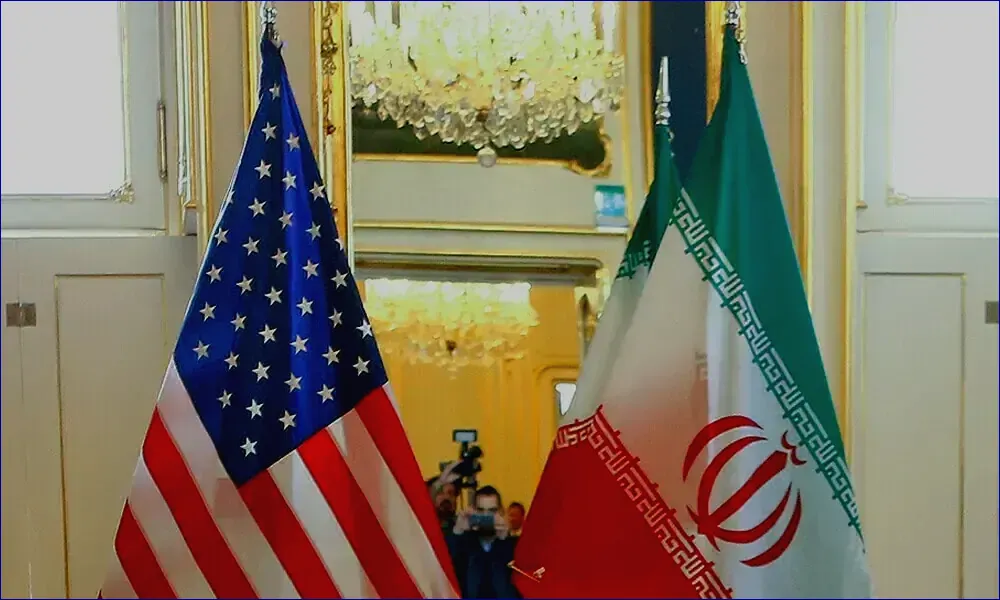
Pakistan Plays Key Role in US-Iran Diplomacy
WASHINGTON: Recent efforts by Pakistan to mediate discussions between the United States and Iran have shown promising advancements, with potential talks set to continue in Islamabad as early as next week, according to a report from The Wall Street Journal.
These diplomatic efforts come as both countries explore a temporary agreement aimed at paving the way for formal negotiations to resolve ongoing conflicts.
The report highlights Pakistan’s crucial role in facilitating communication between the two nations, with Islamabad being considered as a venue for the next set of discussions.
In the previous month, Iran and the US had their first round of talks in Islamabad, but subsequent efforts to organize more meetings didn’t lead to successful outcomes.
Officials from both the US and Iran are currently collaborating with mediators on a concise 14-point memorandum of understanding. This document is intended to outline a framework for around a month of official negotiations, with the possibility of extending this period if both sides agree to continue.
While the details and timeline of these proposed talks have not been formally confirmed, the discussions are expected to cover critical issues, including Iran’s nuclear program, uranium enrichment, and the management of Iran’s stockpile of highly enriched uranium.
One suggestion under consideration is transferring Iran’s enriched uranium to another country. US officials are seeking limits on uranium enrichment, while Iran is requesting clear sanctions relief and broader economic support.
Sanctions relief remains one of the most contentious points and could pose challenges to the negotiations. Additionally, discussions are likely to address the security of the Strait of Hormuz, a vital shipping lane.
The draft framework suggests that Iran could ease its blockade of this strategic waterway in exchange for a gradual lifting of US sanctions on Iranian ports over a 30-day period once talks commence.
Concerns about sea route security, regional tensions, and ongoing economic sanctions are also anticipated to be key topics in the upcoming discussions. The situation has become more tense following military strikes by the US and Israel on Iran in late February, which led to responses from Tehran and disrupted shipping in the Strait of Hormuz, a critical artery for global oil and gas supplies.
