
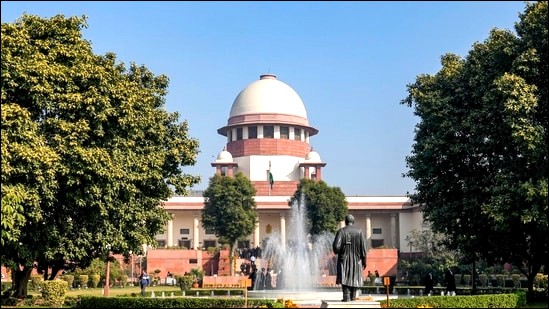
The Supreme Court made a significant statement on Friday concerning a proposed law for menstrual leave, suggesting that such legislation might not benefit women. The Court has chosen to leave the matter for the government to discuss and decided not to take up a public interest litigation (PIL) on this issue.
Chief Justice of India Surya Kant highlighted the “practical realities” women might encounter in the workplace if menstrual leave were to be mandated. He cautioned about the potential negative impacts this could have on perceptions in the job market. “You cannot predict the long-term challenges this might create,” he said.
This discussion arose during a PIL submitted by lawyer Shailendra Mani Tripathi. He pointed out that there is no consistent policy across the country concerning menstrual leave. While some companies and institutions offer this leave, others do not.
Senior advocate MR Shamshad, representing the petitioner, noted that states like Odisha and Karnataka have already adopted policies granting menstrual leave. In Kerala, university students can take up to 60 days of leave per year for menstrual-related issues. In Odisha and Karnataka, government employees receive 12 paid menstrual leave days each year, with Karnataka’s policy extending to private sector workers as well.
While the court acknowledged the importance of voluntary policies, it stressed the need to consider the practical realities of the job market. The bench questioned whether employers would be open to allowing employees to take two to three days off each month.
Shamshad mentioned that this was not the first time the petitioner had approached the court on this topic. Previously, in February 2023, the court had allowed him to present his case to the Union government, which he did. After a year, he returned to seek a structured policy on menstrual leave. This request was also addressed by the court in July 2024, which directed the Union Ministry of Women and Child Development to consult with relevant stakeholders to consider drafting a model policy.
The bench expressed its concerns about why the government hasn’t yet established a clear policy framework. As Tripathi’s petition was dismissed for the third time, the court affirmed its belief that the government would take its past orders seriously and work toward creating a comprehensive policy on this matter.
