
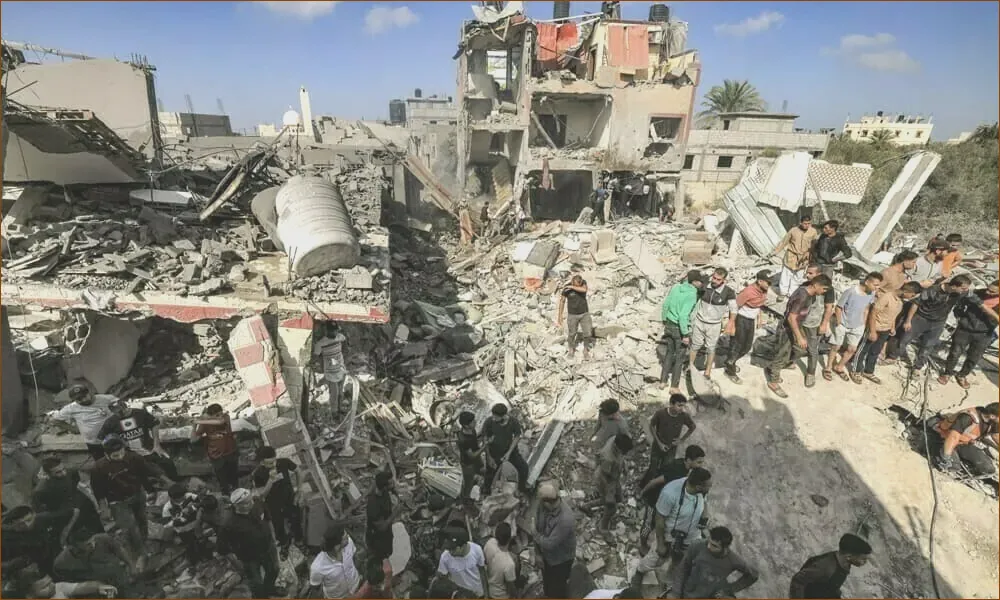
Israeli Air Strikes in Gaza Claim 22 Lives, Including Women and Children
GAZA CITY: On Saturday, Israeli air strikes in the Gaza Strip resulted in the deaths of 22 people, including women and children, as reported by the territory’s civil defense agency. This figure updates an earlier count amidst ongoing violence, despite a ceasefire brokered by the United States that had entered its second phase earlier this month.
Both Israel and Hamas continue to blame each other for breaking the truce. The recent attacks occurred just as Israel announced plans to reopen the Rafah crossing between Gaza and Egypt on Sunday—a crucial request from humanitarian organizations seeking aid access.
“Since dawn on Saturday, the death toll has risen to 22, with many victims still trapped under the rubble,” stated the civil defense agency, which operates under Hamas. Agency spokesman Mahmud Bassal highlighted that residential buildings, tents, shelters, and even a police station were hit, leading to what he described as a humanitarian disaster.
The air strike on the police station in the Sheikh Radwan district of Gaza City led to seven fatalities, including police officers and civilians who were there to address their cases. Additionally, another strike targeted a shelter in Al-Mawasi, a southern area where many displaced residents have sought refuge in tents, though details on casualties from that attack are still unclear.
Despite ongoing violence since the ceasefire began on October 10, Saturday’s death toll stands out as particularly severe. An Israeli military source claimed that air strikes were carried out in response to “Hamas’ clear violations” of the ceasefire agreement but did not provide specifics about those strikes.
Gaza’s health ministry reported that since the ceasefire’s initiation, Israeli attacks have taken the lives of at least 509 individuals in the region, amid severe shortages of medical supplies. Health ministry general director Munir al-Barsh noted that 11 additional people were killed and 20 injured in recent strikes targeting civilian areas in Gaza City and Khan Yunis.
The ongoing restrictions in Gaza have made it difficult to verify casualty figures or cover the events comprehensively, according to media reports.
Looking ahead, Israel has said that the reopening of the Rafah crossing will be limited to the movement of people, a crucial step in the current phase of the ceasefire. This development follows Israel’s earlier stance of not reopening the crossing until the remains of Ran Gvili, the last hostage held in Gaza, were returned—a task that was completed earlier this week.
