
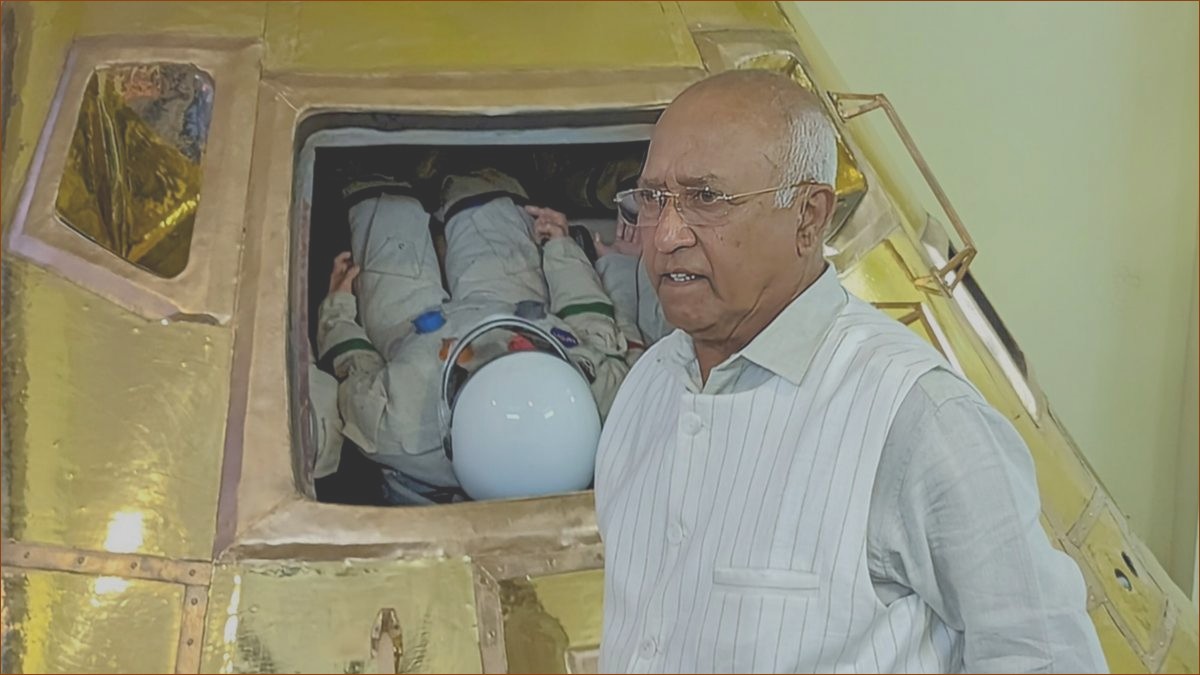
Astronaut Rakesh Sharma Reflects on Space Travel and Its Impact on Humanity
Rakesh Sharma, the first Indian astronaut to venture into space in 1984, has shared how experiencing space travel transforms people’s perspectives. He believes it brings to light the idea that "this planet belongs to everyone," emphasizing a shared connection to Earth.
In a podcast released by the Ministry of Defence, Sharma’s reflections came just as India marked its return to space after 41 years. On June 25, 2025, Group Captain Shubhanshu Shukla, along with three international astronauts, embarked on a significant mission to the International Space Station.
Sharma’s historic journey lasted eight days aboard the Soviet Union’s Salyut-7 space station.
Shubhanshu Shukla’s Historic Mission
Shukhla’s mission is a milestone, as he launched with a team of astronauts from the U.S., Poland, and Hungary as part of Axiom Space’s commercial mission. The crew greeted their families in Cape Canaveral, Florida, shortly before liftoff.
Reflecting on his own journey, Sharma recalled how he’d famously said "Sare Jehan Se Acha" during his flight. He was a test pilot in the Indian Air Force at the time of his selection. After undergoing rigorous training in Star City, near Moscow, he and his team spent 18 months preparing for their mission, including learning the Russian language.
A Shift in Perspective
Sharma noted the huge differences in how space missions are perceived now compared to 1984. While his flight occurred in a time when few homes had TVs, the Axiom-4 mission was viewed by millions around the world on various screens.
The mission successfully launched with the Crew Dragon spacecraft, powered by a Falcon-9 rocket from Florida. After the craft reached orbit, Shubhanshu expressed his delight, calling the ride "amazing."
Sharma, reflecting on the breathtaking view from space, described India’s diverse landscapes as "beautiful," showcasing its coastlines, mountains, and forests. He also mentioned the unique experience of day and night in space, where sunrises and sunsets occur every 45 minutes.
The Lasting Impact of Space Travel
While technology in space travel has advanced, Sharma noted that the human mindset remains largely unchanged. He explained that the experience of seeing Earth from space has a profound mental impact, broadening one’s worldview and underscoring humanity’s place in the universe.
The Indian Air Force highlighted Shukhla’s mission as a proud moment for the nation, reminiscent of Sharma’s journey 41 years earlier. Sharma believes that such missions not only push boundaries but also encourage peace and unity on Earth.
Looking ahead, he is optimistic about India’s future in space exploration. He stressed the importance of preserving our planet and suggested that humanity should prioritize harmony over conflict. He envisions India as a leader in space missions in the years to come.
After his return from space, Sharma continued his career in the Indian Air Force and later worked with Hindustan Aeronautics Limited, contributing to the development of the Light Combat Aircraft (LCA) ‘Tejas’.
