
The Future of Healthcare: A Prize-Winning Perspective
A recent discussion raises a critical question: could the push for advanced, AI-driven healthcare and subscription models alienate those who need help the most? Everyone is curious about how these changes might impact vulnerable patients.
For the third consecutive year, MIT held its Envisioning the Future of Computing Prize contest, encouraging students to explore how advancements in computing might reshape society, for better or worse. Students submitted essays of 3,000 words or less, vying for cash prizes.
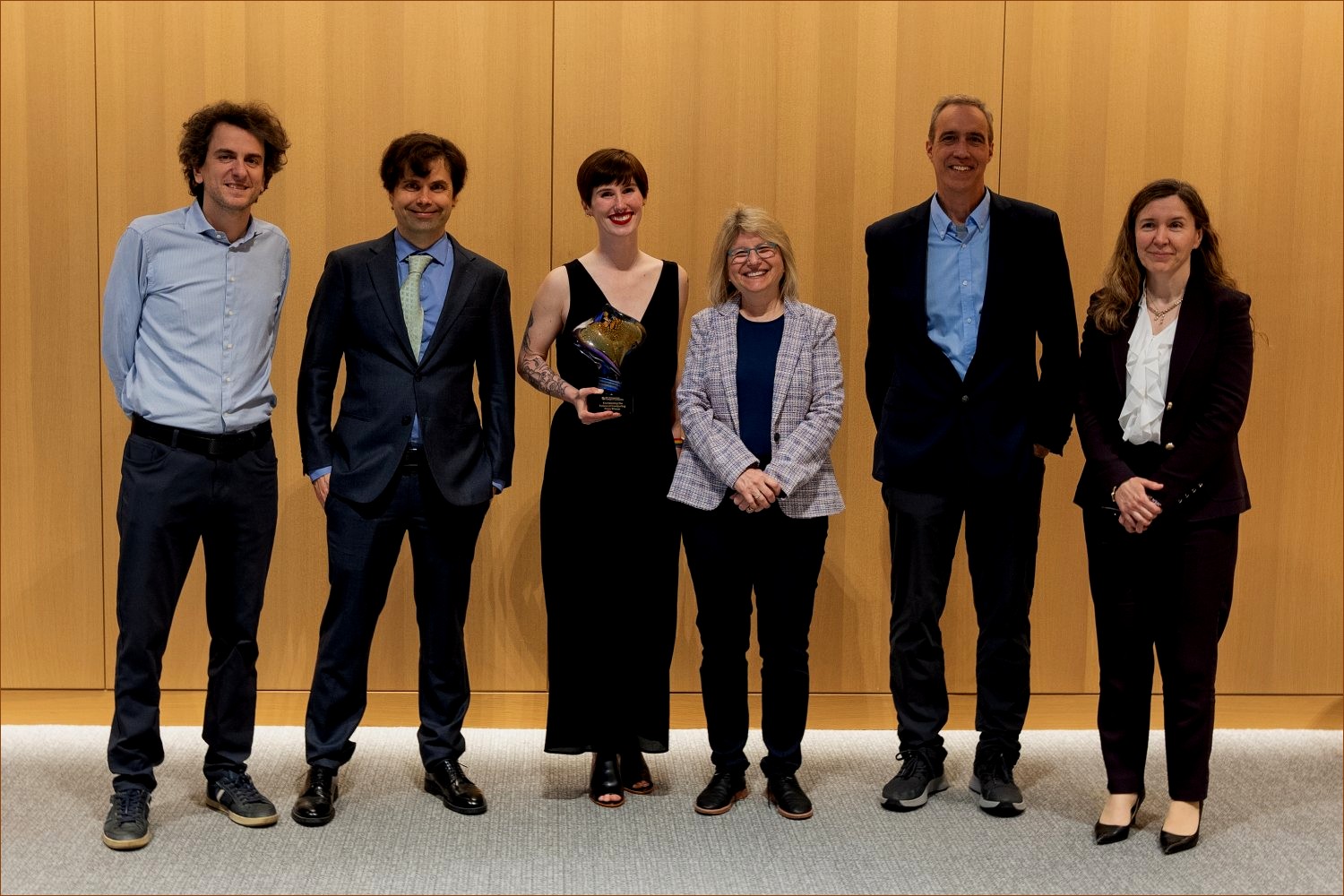
This year, Annaliese Meyer, a PhD candidate from the MIT-WHOI Joint Program in Oceanography and Applied Ocean Science and Engineering, won the grand prize with her innovative idea of “B-Bots.” These synthetic bacterial mimics, activated by Bluetooth, aim to improve gut health. In her paper, titled “(Pre/Sub)scribe,” Meyer follows a user named Briar as she navigates the benefits and challenges of B-Bots, especially as their introduction into the healthcare system aligns with a subscription model.
Meyer highlights how, even when technology seems revolutionary for health, profit-driven practices can lead to negative outcomes, particularly for those already facing financial hardships. Drawing from her Canadian background, she contrasts the healthcare systems of Canada and the U.S., reflecting on her mother’s cancer treatments and the burdensome costs involved.
Beyond sharing her insights on healthcare equity, Meyer also hopes to shed light on the intricate world of gut microbiomes. Her research delves into how microbes adapt and produce varying proteins based on their environment, emphasizing the complexity involved in these tiny ecosystems.
Despite wanting to enter last year’s competition, lab commitments delayed her plans. Now, while working on her thesis, she saw this contest as a great chance to diversify her writing while staying connected to her scientific interests. Writing has always been a favorite pastime for Meyer; she recalls dreaming of being an author before even considering a career in science.
Winning the $10,000 grand prize was both thrilling and rewarding for her. Meyer noted that preparing for the essay and presentation allowed her to explore new topics, expanding her understanding and pushing her boundaries as both a writer and a scientist. The awards ceremony was also a joyous occasion, where she celebrated with friends and colleagues, and met others in various fields at MIT.
The Contest’s Broader Impact
The Envisioning the Future of Computing Prize is co-sponsored by the Social and Ethical Responsibilities of Computing (SERC) and supported by MAC3 Philanthropies. This year, the contest attracted 65 submissions from students across various disciplines, including engineering, economics, and brain sciences.
Caspar Hare, the associate dean of SERC, initiated the prize to motivate students to reflect on how their technological advancements could benefit society as a whole. He believes it’s important for MIT students to consider the social implications of their work and looks forward to enhancing next year’s contest with more workshops and resources for participants.
The judging process involved faculty members evaluating essays anonymously to select final candidates based on creativity and depth. At a live ceremony in early May, the finalists presented their works, engaging the audience with thought-provoking discussions about the societal impacts of their proposed technologies.
This year’s judging panel featured a range of experts from different fields, and besides the grand prize winner, two runners-up received $5,000 each for their contributions. Martin Staadecker’s piece about a system tracking fossil fuels and Juan Santoyo’s story about AI supporting soldiers’ mental health were both recognized for their innovative ideas.
In addition, eight participants received honorable mentions, with each getting $1,000. This prize not only rewards great ideas but also gets students and faculty thinking about the ethical dimensions of technology, ensuring that the future remains bright and inclusive for everyone.
