
US Trade Tariffs: A Shift in Global Trade Dynamics
US President Donald Trump has made headlines with the announcement of new tariffs that will affect all trading partners, building on the existing tariffs on steel and aluminum. The main aims of these tariffs are to bring manufacturing jobs back to the US, particularly in sectors like automobiles, electronics, and technology, while also working to decrease the trade deficit with other countries. While the effectiveness of these measures is yet to be determined, two significant points stand out.
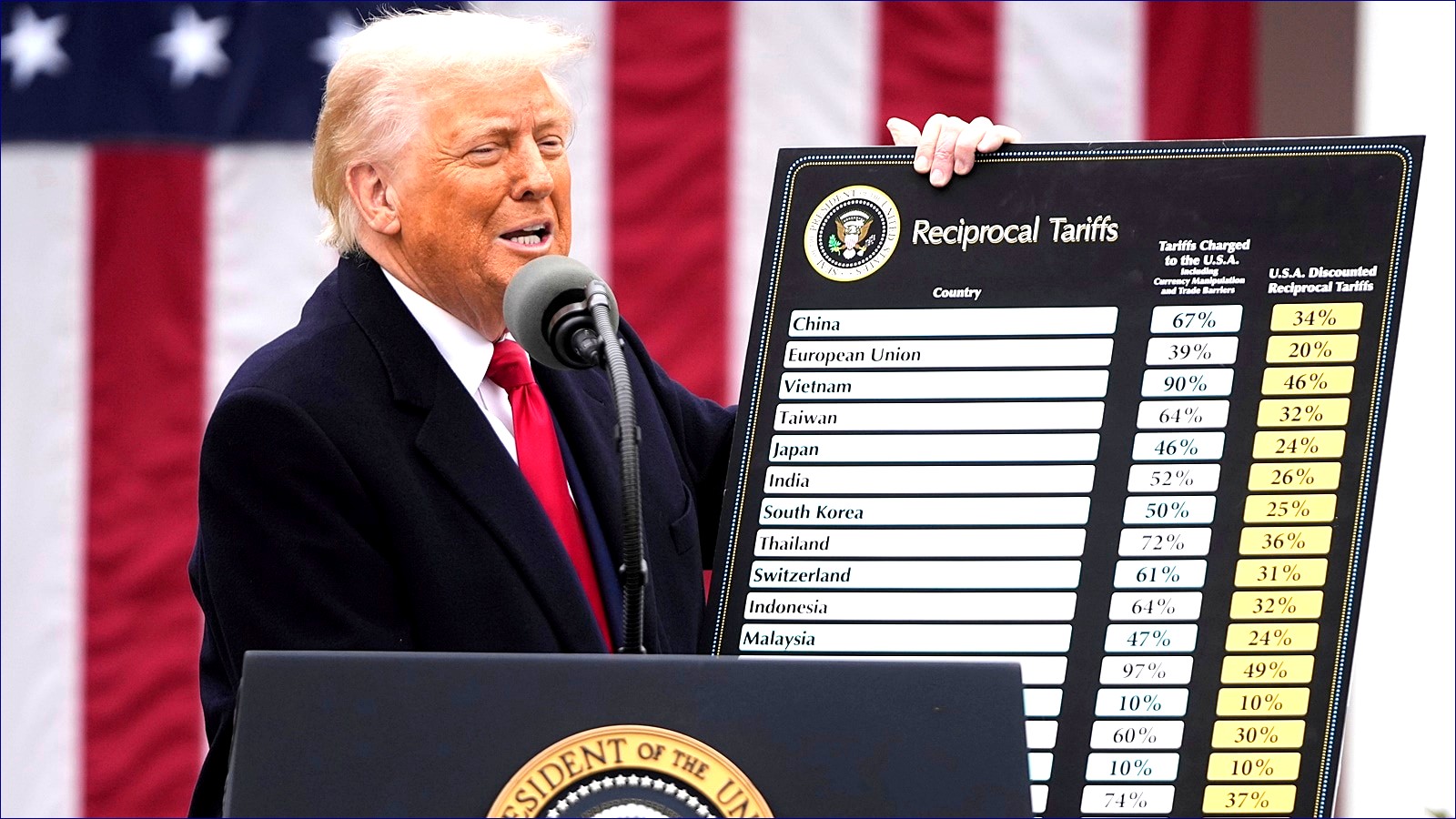
First, the introduction of these tariffs represents a major upheaval in the global trade system. The magnitude of the tariffs is unprecedented, with some experts suggesting they are even more significant than those established under the historical Smoot-Hawley Act. A base tariff of 10% will apply to all countries, with higher rates imposed on those that have a trade surplus with the US. For example, China faces a hefty 54% tariff, which includes an additional 34% recently announced on top of an existing 20%. Surprisingly, even some US allies, like the European Union, Japan, South Korea, and Vietnam, will also face higher tariffs of at least 20%. The US justifies these tariffs by citing issues like currency manipulation and other non-tariff barriers. This broad and sweeping approach could reduce global trade opportunities by increasing costs and prices, leading to decreased demand.
Secondly, new uncertainties in trade policy are emerging. Trump’s announcement left many details unclear. For instance, while the US has cited high protection levels for countries like India, there’s confusion about how dynamic these tariffs will be. If India were to lower its tariffs, would the US reciprocate? Additionally, how other countries might respond, whether through retaliatory tariffs or negotiations, creates further uncertainty in the global trade landscape. This unpredictability can make decision-making challenging for both businesses and governments.
On the flip side, India could find an opportunity within this changing scenario. The tariffs India faces are lower compared to those imposed on several competitors. For instance, in the apparel sector, tariffs on Indian exports to the US will be 27%, while China is looking at 54%, Vietnam at 46%, and Bangladesh at 37%. This could provide Indian exporters with a competitive edge as the US continues to import apparel.
In the electronics arena, the situation is more complex. The US is keen on bringing back production to its shores, but India still has an advantageous position. Many of India’s competitors in the electronics market face higher tariffs, although Japan and South Korea have slightly lower rates. With uncertainty surrounding production relocation, companies like Apple, which have established setups in India, can continue to serve international markets efficiently, avoiding additional tariffs.
While some countries in Latin America and Turkey face the lowest baseline tariff of 10%, among major Asian exporters, India is in a relatively favorable position. Additionally, the pharmaceuticals sector remains exempt from these new tariffs, further enhancing India’s competitive landscape.
In summary, despite the unclear policy landscape and potential dips in global export demand, India is well-placed to benefit from changes in supply chains as global firms adopt alternative strategies beyond China, Vietnam, and Bangladesh.
So, how should India react? To improve its share of the global market, India should focus on enhancing its competitiveness. This means shifting trade policies away from reactive measures and towards a long-term reform agenda. Key steps should include:
-
Lowering and Streamlining Tariffs: Establishing a more uniform tariff system of 5-10% or a simplified two-tier structure could make trade smoother and more efficient.
-
Removing Non-Tariff Barriers: Eliminating practices that serve as hidden protectionism can create a more inviting environment for investors.
- Ensuring Policy Stability: It’s essential for India to avoid frequent changes to tariffs and to maintain a stable policy environment, something that can attract international businesses.
An exception to this liberalization approach may be agriculture, especially food crops, where India needs to ensure local food security. However, there could be room to reduce tariffs on non-food crops meant for exports, like soybeans used in poultry feed.
In this unpredictable trade climate, countries that avoid raising barriers and instead promote transparency and openness will emerge as winners. Global firms will look for production bases that are cost-effective and stable, both of which India can offer. By resisting protectionist tendencies and committing to trade reforms, India can position itself as a thriving hub for international business, regardless of external pressures.
