
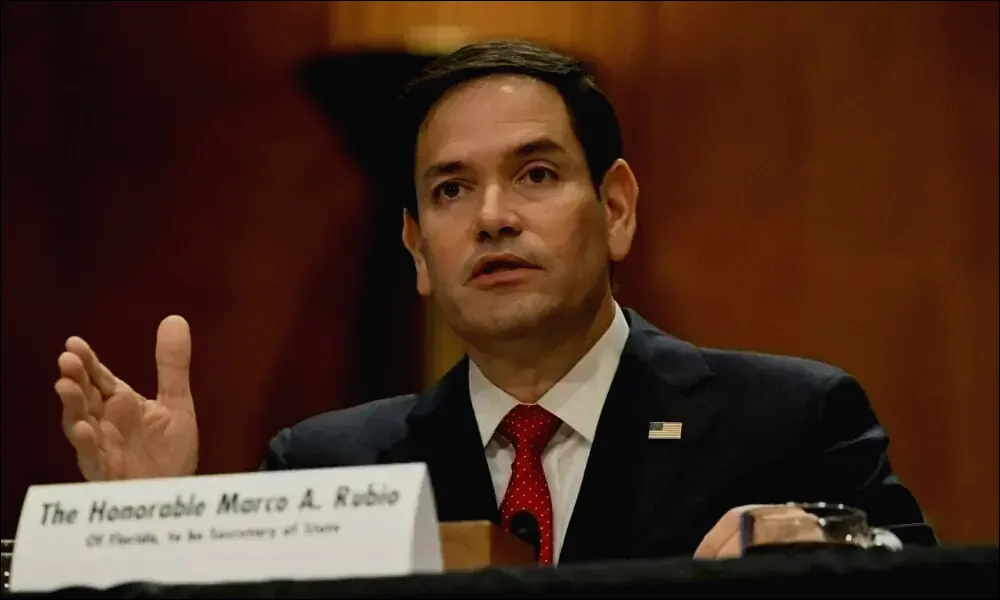
Progress Made in U.S.-Iran Negotiations, Says Secretary of State
WASHINGTON/DUBAI: The United States is making headway in its efforts to reach an agreement with Iran, although more discussions are necessary, according to Secretary of State Marco Rubio. This statement comes as diplomatic talks ramp up to resolve a conflict that has significantly impacted the global economy.
On Friday, Iran’s foreign minister held talks with his Pakistani counterpart to discuss proposals aimed at ending the ongoing war, as reported by Iranian media. Meanwhile, Qatar has sent a delegation to Tehran to help resolve critical disagreements.
Despite some narrowing of differences, significant issues remain, particularly regarding Iran’s enriched uranium and control over the Strait of Hormuz. The closure of this vital waterway has contributed to a global energy crisis. “There has been progress, but I wouldn’t say we are close to a resolution yet. More work is needed,” Rubio told reporters after a NATO ministers’ meeting in Sweden. He expressed hope that a deal could be reached soon.
Rubio emphasized that Iran’s proposed tolling system for the Strait, through which a significant portion of the world’s oil flows, is “unacceptable.” He noted the challenges posed by negotiating with Iran and indicated that if there is no change, the U.S. president has other options available.
While the U.S. has not sought NATO’s assistance regarding the Strait of Hormuz, Rubio mentioned the importance of having a backup plan if Iran does not agree to reopen the waterway.
Just days after delivering the latest U.S. message to the Iranians, Pakistani Interior Minister Syed Mohsin Naqvi held further discussions with Iranian Foreign Minister Abbas Araghchi in Tehran, according to the semi-official Tasnim news agency. The Qatari delegation, which is coordinating with the United States, arrived in Iran on Friday. Qatar has played a significant role in mediating various international conflicts but has distanced itself from this current situation due to recent attacks on its territory.
Rising Oil Prices Amid Uncertainty
The ongoing conflict has severely disrupted the global economy, with rising oil prices leading to concerns about inflation. On Friday, the U.S. dollar edged close to its highest levels in six weeks amid uncertainty surrounding the peace talks, while oil prices increased as investors remained skeptical about a potential breakthrough.
“We’re now in week 12 of the conflict, and I’m not convinced we’re any closer to a resolution between the U.S. and Iran,” commented Tony Sycamore, a market analyst at IG.
U.S. President Donald Trump mentioned that the U.S. intends to recover Iran’s stockpile of highly enriched uranium, which Washington suspects is being developed for nuclear weapons, while Tehran claims it is for peaceful purposes. Before Trump’s remarks, two Iranian sources informed Reuters that the Supreme Leader instructed that the uranium should not be sent out of the country. Trump faces challenges with the upcoming midterm elections, as rising fuel prices have upset many Americans and his approval ratings are low.
Iran’s recent offer to the U.S. appears to echo previous conditions that were rejected, including demands related to control of the Strait of Hormuz, war damage compensation, lifting sanctions, unfreezing assets, and the withdrawal of U.S. troops.
Traffic through the Strait has dramatically decreased from the usual 125 to 140 daily vessels before the war. Iran aims to reopen the strait for friendly nations that agree to its proposed terms, which may include fees. In the last day, 35 commercial vessels were allowed passage through the Strait after receiving permission from the Revolutionary Guards Navy.
The U.S. and Israel’s goals in the conflict are to limit Iran’s support for regional militias, dismantle its nuclear program, and reduce its missile capabilities, ultimately hoping to facilitate a transition of power in Iran. However, Iran continues to hold a significant stockpile of enriched uranium and retains the ability to threaten neighboring countries with its missile and drone capabilities.
