
New Delhi
The Ministry of External Affairs (MEA) responded on Friday to the United States Commission on International Religious Freedom (USCIRF) regarding its recent comments about the Rashtriya Swayamsevak Sangh (RSS). The MEA labeled the commission as “biased” and claimed it lacks reliability.
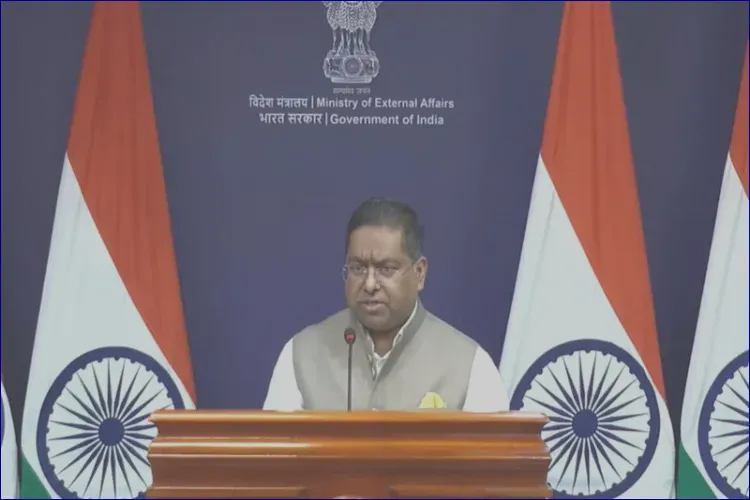
During a media briefing, MEA spokesperson Randhir Jaiswal stated that the USCIRF has a history of making false and inflammatory statements about India, and emphasized that such remarks should be disregarded. “This is a biased institution. For years now, they have issued incorrect and provocative statements about India that we should overlook, as they have their own agendas and do not hold credibility,” Jaiswal remarked.
This response from MEA followed USCIRF’s calls for sanctions against the RSS and urges for the US government to refrain from high-level diplomatic interactions with its leaders. These comments come just ahead of RSS chief Mohan Bhagwat’s trip to the United States, Canada, and the United Kingdom, set to start on August 25.
Bhagwat’s visit is organized at the invitation of local associations and organizations linked to the Indian diaspora. It also marks the centenary year of the RSS, during which he is expected to engage with members of the Indian community and representatives from various local groups.
RSS Prachar Pramukh Sunil Ambekar announced on social media that Bhagwat’s travels will kick off on August 25, with an emphasis on the ongoing centennial celebrations of the organization.
The recent critique from USCIRF follows its annual report published in March, where it accused India of violating religious freedoms and suggested targeted sanctions against specific individuals and organizations, including the RSS and India’s intelligence agency, the Research and Analysis Wing.
India firmly rejected the report, describing it as a “distorted and selective” view of the nation’s situation, without support from credible sources or balanced narratives.
In a previous statement on March 16, Jaiswal had denounced the commission for its “selective criticism,” urging it to consider the incidents of vandalism and attacks on Hindu temples in the US, as well as the challenges faced by the Indian diaspora in terms of intolerance and intimidation.
