
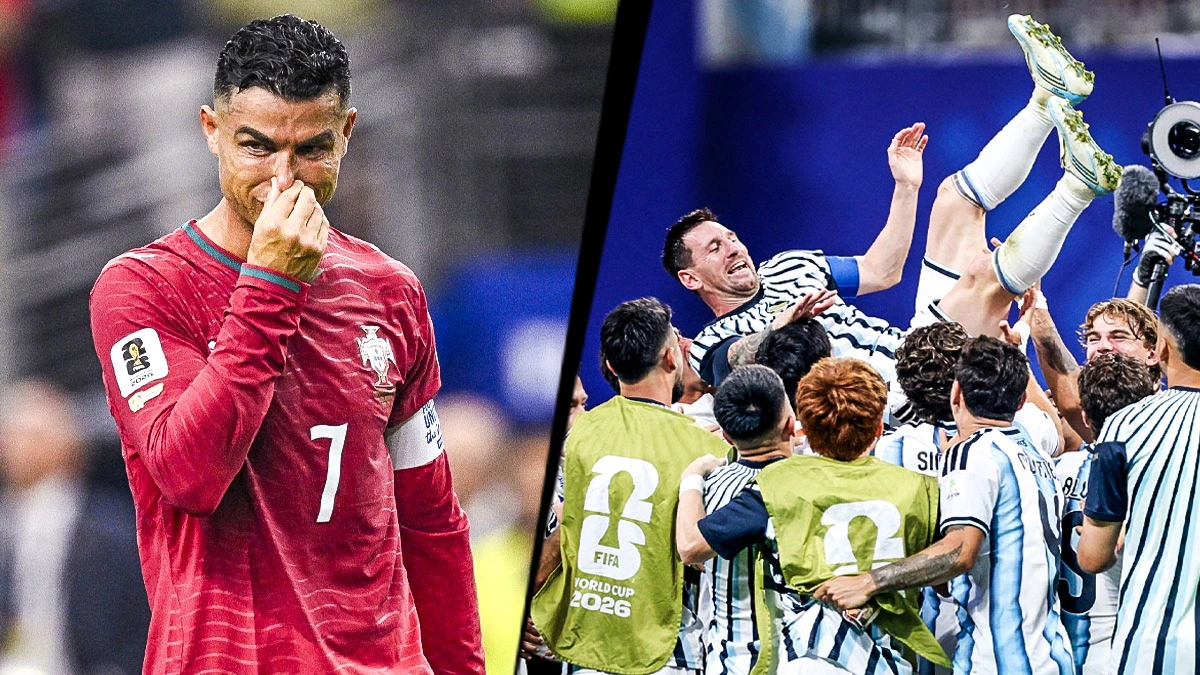
For twenty years, fans have debated who is the better player: Lionel Messi or Cristiano Ronaldo. They’ve looked at goals, awards, and big moments on the field. However, the true difference between them isn’t just statistics—it lies in the teams that support each player.
This distinction is most evident in how their teammates view and interact with them. When Argentina celebrates after a victory, it’s not just about the win; it’s about Messi. After their match against Egypt in the World Cup, his teammates lifted him onto their shoulders and chanted his name, showing how much they believe in him. To Argentina, Messi is more than just a fantastic player; he’s their leader.
In Portugal, the atmosphere isn’t quite the same. Former and current teammates respect Ronaldo for the standards he sets, but discussions often circle back to team strategy, like whether he should still be starting. Questions about Ronaldo’s position don’t arise for Messi; there’s never talk of moving on or replacing him. This ongoing dialogue impacts the environment in Portugal, which seems to lack the unity that Argentina has found.
This emotional difference didn’t appear suddenly; it built up over time. Argentina often relied on Messi’s brilliance to solve their problems, hoping he could carry the team alone. While they reached finals, they struggled to find true teamwork, which led to repeated disappointments.
A significant change came when Lionel Scaloni took charge of the team. Rather than expecting Messi to bear the entire load, Scaloni focused on building a balanced team around him. As a result, Argentina flourished as they integrated Messi’s skills without making him the sole focus. Teammates like Rodrigo De Paul and Enzo Fernandez supported him, allowing Messi to play to his strengths without the burden of carrying the team.
Meanwhile, Portugal’s journey has been different. They boast a talented roster with players like Bruno Fernandes and Bernardo Silva, but they’ve faced an identity crisis. Is this Ronaldo’s team, or has it transitioned into a newer squad where he is just one player among many? They’ve struggled to blend the old with the new, leading to uncertainty on the field.
As Ronaldo approaches retirement, he steps away from the World Cup stage without a clear resolution to this dilemma. The challenge has always been how to make the most of their greatest player while also allowing emerging talents to shine.
Argentina, however, has found clarity. With Scaloni, they didn’t try to recreate the Messi of the past but instead built around the Messi of the present—recognizing his limitations while enhancing his strengths. Argentina embraced him as their captain and forged a culture of teamwork and belief.
In contrast, Portugal has grappled with their relationship with Ronaldo, facing endless debates and divisions among fans that overshadowed the sport. The stark difference is clear: Argentina presents a united front behind Messi, while Portugal still seems unsure of their connection with Ronaldo.
Ultimately, the greatest gift Argentina has given Messi is not just their World Cup win but a team that truly understands him. For all of Portugal’s talent, that clarity never materialized for Ronaldo, leaving behind unanswered questions as he concludes his international career.
