
Palestinians Vote in Municipal Elections Amid Challenges
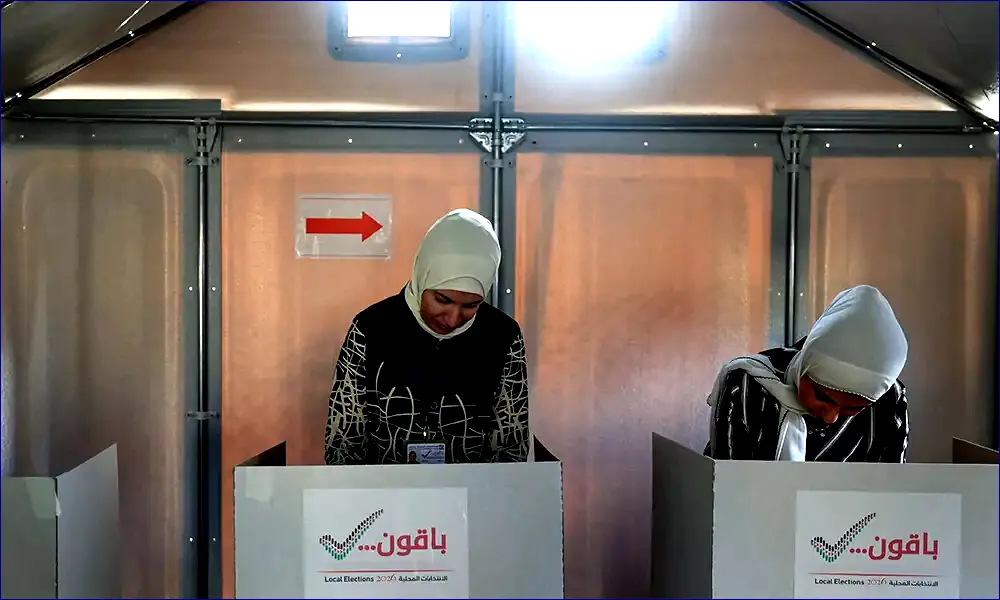
RAMALLAH: On Saturday, Palestinians in the West Bank and the central Gaza area cast their votes in municipal elections—the first since the recent conflict began in Gaza. However, the initial turnout was low, and the political landscape was limited.
Around 1.5 million individuals in the Israeli-occupied West Bank and approximately 70,000 in Gaza’s Deir al-Balah were eligible to vote, according to the Central Elections Commission based in Ramallah.
Early footage from Al-Bireh in the West Bank and Deir el-Balah showed a slow stream of voters entering polling stations. By late morning, only about 15% of registered voters had participated, with that number rising to 24.53% by 1 PM.
In various parts of the West Bank, polling stations appeared nearly empty, even though foreign diplomats were present to observe the process. Rami Hamdallah, the head of the Election Commission, urged all eligible voters to make their voices heard, emphasizing the importance of this election for the Palestinian people.
After casting his vote in Al-Bireh, Khalid Eid expressed a desire for change within the local councils. “We need to see changes every four years through elections… We can’t solve everything, but we hope to replace some people with those who can better help our communities,” said the 55-year-old.
Most candidates are either aligned with President Mahmud Abbas’s Fatah movement or are independent, while Hamas, Fatah’s rival and the governing authority in Gaza, is not participating in this election.
In many local areas, Fatah-backed candidates are competing against independents supported by smaller factions, such as the Popular Front for the Liberation of Palestine. Some potential candidates claimed they were unfairly barred from running, with at least one candidate reporting that associates were detained until after the registration period.
Municipal councils are responsible for managing local services, such as water supply and sanitation, without the power to create laws. With presidential and legislative elections on hold since 2006, these councils now represent one of the few remaining democratic structures within the Palestinian Authority, which faces criticism over issues like corruption and declining legitimacy.
In response, Western and regional donors have increasingly connected their support for the Palestinian Authority to the implementation of reforms, particularly in local governance. The European Union has described the elections as a crucial step towards enhanced democracy and strengthened local governance.
Polling in the West Bank is set to conclude at 7 PM, while Deir el-Balah stations will close earlier at 5 PM to allow for daylight counting, due to ongoing electricity shortages in the region.
The humanitarian situation remains dire, with significant destruction resulting from conflicts that began in October 2023. Recent reports indicate that over 72,000 individuals have died in Gaza, leading to substantial challenges in public infrastructure and health services.
This election marks the first in Gaza since Hamas won legislative elections in 2006. The Palestinian Authority is only conducting voting in Deir el-Balah to assess its performance, as this area has not seen the same level of displacement as others.
After voting, 24-year-old Mohammed al-Hasayna remarked that even though the elections appeared largely symbolic, they reflect the community’s resilience and desire for a better future. “We are a determined people, and we deserve to have our own state,” he stated. “We hope the world will help us recover from the devastation of war. Enough is enough—let’s focus on rebuilding Gaza.”
