
European Christmas Markets Open with Increased Security Amid Rising Costs
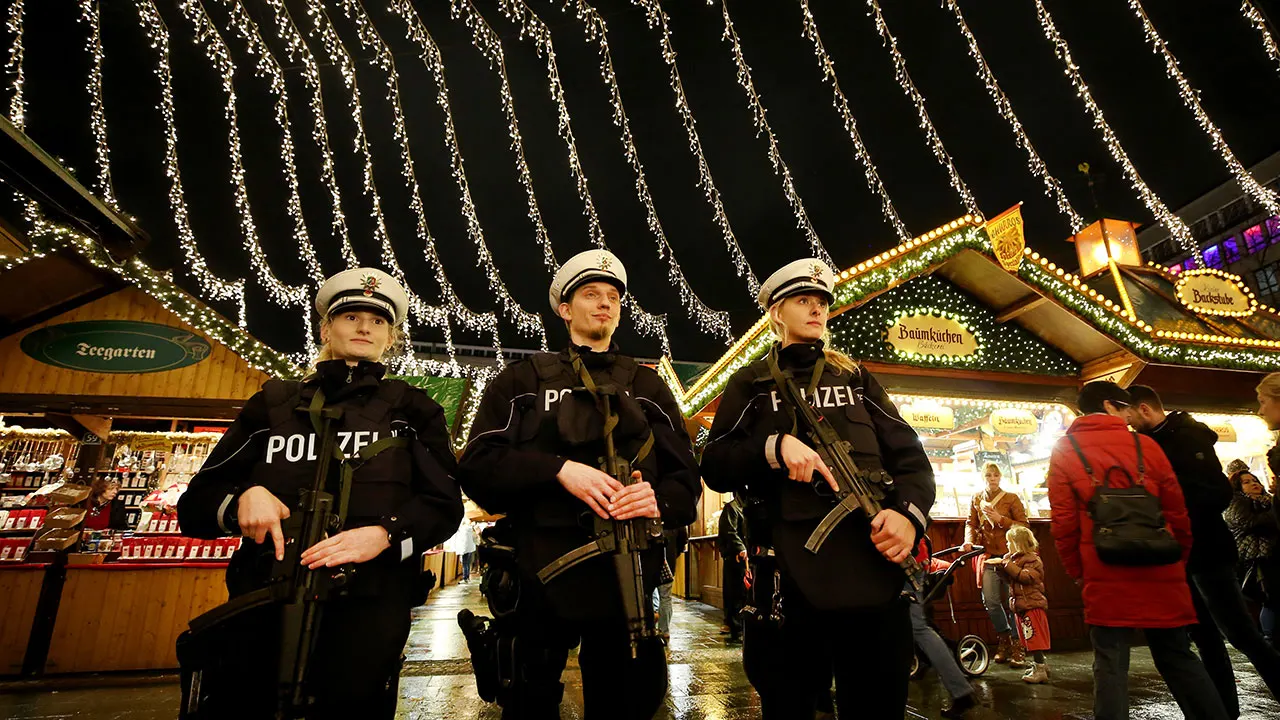
This holiday season, Christmas markets across Europe are seeing increased security measures and higher operational costs. In response to growing safety concerns, authorities in countries like Germany and France are implementing stricter regulations for public festivities.
A recent survey by the Federal Association of City and Town Marketing revealed that spending on security for public events in Germany has surged by about 44% over the last three years. In Berlin, the main Christmas market has opened this year with concrete barriers, enhanced video surveillance, and a larger presence of private security. Smaller towns, however, worry that the costs associated with these new safety measures may lead them to reduce or cancel their markets in the coming years.
David Russ, the head of production at Berlin’s Gendarmenmarkt, commented, “The requirements have become increasingly stringent… I feel safe.”
Though some towns receive public funding to run these markets, many smaller municipalities and private organizers bear most of the costs. Local officials are now urging Germany’s federal states to help cover the financial burden, arguing that anti-terrorism measures extend beyond what local planners should bear.
These increased security measures come after a tragic incident last December when an SUV attack at the Magdeburg Christmas market resulted in six fatalities and over 300 injuries. Since then, many cities in Germany have made their infrastructure more secure and improved crowd control strategies at large gatherings.
In France, similar actions are being taken. Authorities canceled the famous New Year’s Eve concert on the Champs-Élysées due to crowd management concerns and a recognized high terror threat. Events like Christmas markets are now labeled as “high-risk,” prompting cities to add more police officers and security screenings to ensure public safety.
Alan Mendoza, executive director of the Henry Jackson Society, raised questions about the ongoing need for such security, stating, “Why are Europeans forced to navigate layers of security instead of authorities making life difficult for those spreading hatred?” He emphasized that an aggressive approach is necessary to address the root causes of these threats.
In Austria, the well-known Christmas market in Salzburg, which attracts around 1.5 million visitors annually, has implemented round-the-clock private security and a network of 33 cameras to monitor activity. In other areas, some markets have been completely canceled due to the high costs of meeting new security standards.
Prague and Budapest are also enhancing their safety measures, with Prague using concrete blocks to block off busy areas and increasing police visibility, while Budapest has deployed plainclothes officers to watch for suspicious activities.
Experts suggest that both Christian and Jewish holidays are viewed as potential targets for extremist actions. As such, authorities remain alert during the festive season. Ben Cohen from the Foundation for Defense of Democracies noted that the threat level during the holiday season has remained significant, leading to heightened security in both Germany and France.
Despite the tighter security measures, many Christmas markets in Europe are still open, attracting visitors under these new protocols. It appears that these measures will remain in place as long as threat levels continue to be elevated, ensuring that people can enjoy the holiday spirit safely.
