
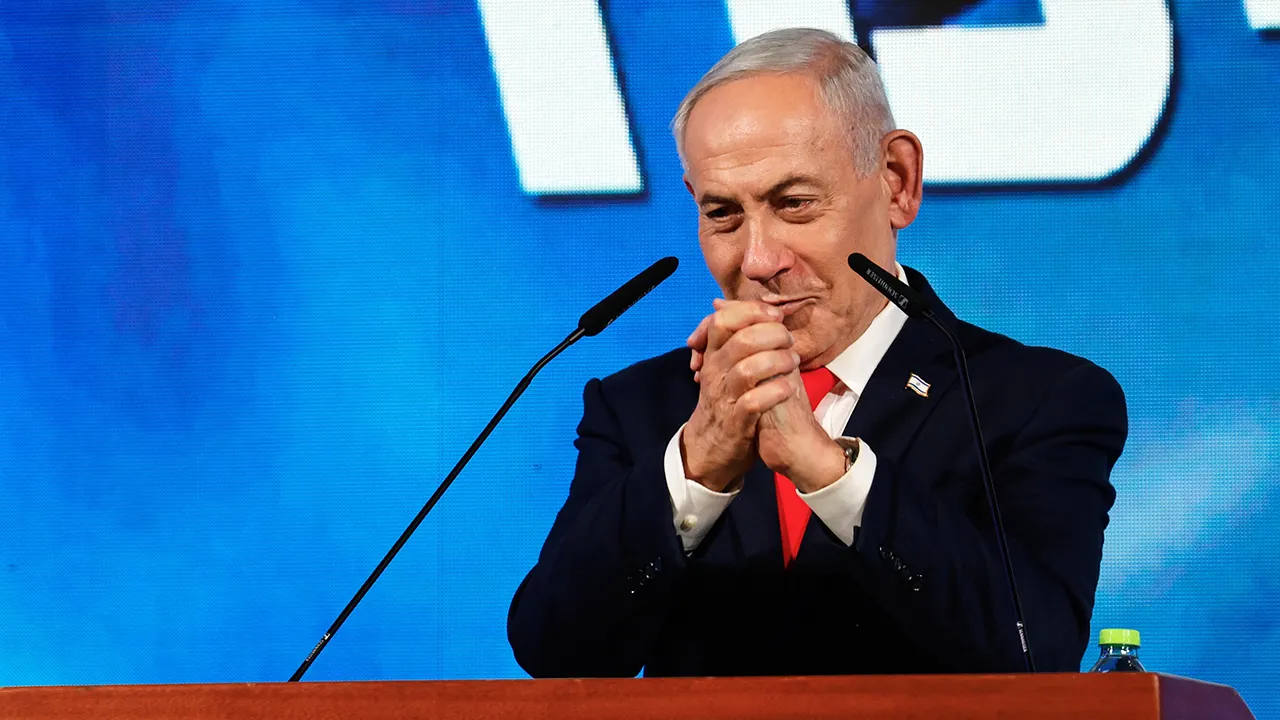
Netanyahu’s Election Gains Leave Israel at Political Crossroads
TEL AVIV, Israel — In the aftermath of Israel’s first national election since the tragic events of October 7, 2023, Prime Minister Benjamin Netanyahu’s political alliance made some gains, but still fell short of the majority needed to form a new government, raising concerns about another political stalemate in the country.
Early reports from the vote count indicated that Netanyahu’s right-wing and religious coalition had secured about 54 out of 120 seats in the Knesset, Israel’s parliament. The main opposition group trailed with 47 seats, while Arab parties claimed 19 seats, according to local news sources. Within his coalition, Netanyahu’s Likud party achieved 27 seats, while the Yashar party, led by Gadi Eisenkot, garnered 20.
As both Netanyahu and Eisenkot claimed victory during their speeches on Tuesday night, many Israeli voters expressed confusion about the uncertain results and what direction their country might take moving forward.
Despite Netanyahu’s lead, parties opposing him collectively hold 66 seats, creating a pathway for the opposition to challenge his authority, particularly if they gain the support of Arab lawmakers.
Initial exit poll results had sparked celebrations at Eisenkot’s campaign headquarters in Tel Aviv. Eisenkot urged Netanyahu to acknowledge the election results and step aside. Meanwhile, Netanyahu declared at his own headquarters that Likud had emerged as the largest party and called for the establishment of a robust right-wing government.
Now, the focus shifts from voting to coalition negotiations, which could be tricky.
Former U.S. President Donald Trump weighed in the following morning, stating that his endorsement may have positively influenced Netanyahu’s surprising performance in the election. He highlighted that initial polls may have underestimated Netanyahu’s support.
Arab Parties’ Influence Becomes Critical
The role of Arab parties is proving significant in this election cycle. According to preliminary results, the Joint List secured 13 seats, while Ra’am, led by Mansour Abbas, claimed six seats, totaling 19 seats for Arab parties. Abbas indicated a willingness to engage in discussions with both sides of the political divide.
Democrat leader Yair Golan has also suggested forming a new government that involves cooperation with Arab parties. He emphasized that every Israeli vote, regardless of ethnicity, should hold equal value.
However, tensions remain, as some leaders in the opposition, including Eisenkot, have previously resisted aligning with Arab parties. Netanyahu himself has cautioned against forming a government reliant on Arab representation.
Potential Paths to a New Government
Netanyahu faces a few options to assemble a government: he could try to broaden his coalition by attracting at least seven additional lawmakers, aiming for a traditional majority of 61 seats. Alternatively, Eisenkot may seek enough support, possibly from Arab parties, to convince President Isaac Herzog to grant him the first chance to form a government. This approach would not necessarily require Arab parties to join the coalition, but Eisenkot would need sufficient votes for a confidence motion.
A third scenario could see both leading figures unable to secure a majority, leading Israel into another election.
Vote counting is still underway, including ballots from military personnel and others who used special voting procedures, with official results expected by November 4. After that, Herzog will consult with parliamentary parties to designate a lawmaker to attempt forming the next government.
Until a new administration is in place, Netanyahu will continue to serve as prime minister.
