
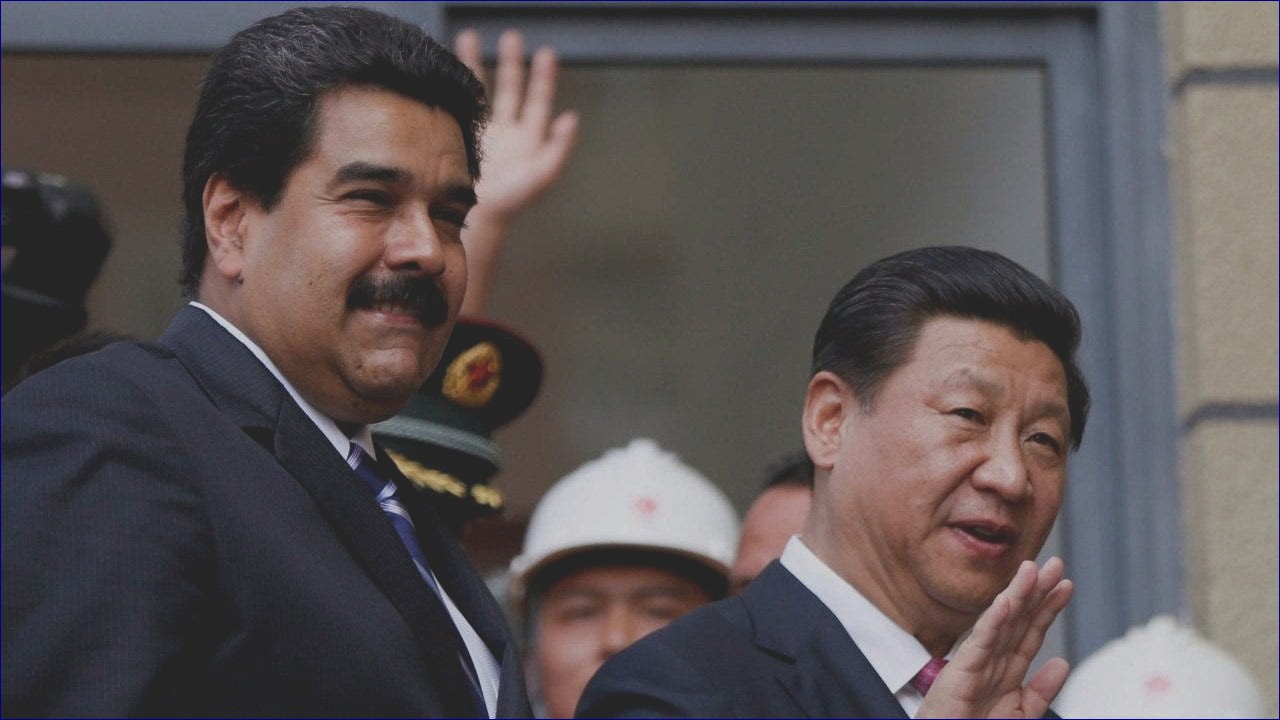
Venezuela’s Maduro Blames US for Ongoing Conflict
In a recent statement, Venezuelan President Nicolás Maduro accused the United States of initiating what he described as an “eternal war” against his country. This comes as tensions escalate between Maduro’s government and U.S. interests in the region. Daniel Di Martino, a fellow at the Manhattan Institute, discussed Maduro’s agenda to crack down on opposition activists while President Donald Trump has denied any plans for military action in Venezuela.
As tensions rise, Trump has emphasized a “zero tolerance” policy towards narco-states in Latin America, with China deepening its involvement in Venezuela. U.S. defense officials confirmed the deployment of an aircraft carrier strike group to the Caribbean, intending to oversee narcotrafficking routes connected to Venezuela’s military leadership.
The Pentagon noted that the USS Gerald R. Ford, which carries over 4,000 sailors and numerous aircraft, aims to enhance U.S. capabilities in identifying and disrupting criminal activities in the region.
China Responds to US Military Movements
China has condemned the U.S. military buildup off its Venezuelan coastline, labeling it as foreign interference. Amid rising tensions, Venezuelan military officers are reportedly preparing for “guerrilla-style” defense training in case of U.S. military action. This comes after reports of a new trade agreement between China and Venezuela, which aims to eliminate tariffs on a range of products and boost economic ties considerably.
Experts suggest this rapid shift in trade may signal China’s intent to solidify its economic control over Venezuela, further isolating the country from Western influence. “This could lead to a situation where Venezuela becomes entirely dependent on China,” noted Gordon Chang, a specialist in China’s trade strategies.
Venezuela’s Military Mobilization
In response to the increasing U.S. military presence, Venezuela has mobilized its troops and weapons. The country appears worried about potential U.S. aggression, with Maduro seemingly fostering stronger ties with China as a protective measure.
Chang emphasized that although the zero-tariff agreement offers temporary relief, it only deepens Venezuela’s reliance on China, which may harm the local economy further. He expressed concern that Chinese influence may lead to the decline of Venezuelan manufacturing.
Broader Strategic Implications
From China’s perspective, this trade accord opens up new commercial pathways in the Americas while U.S. sanctions tighten around Venezuela. For the past two decades, China has extended loans to Venezuela amounting to around $60 billion, much of which is repaid through oil. Meanwhile, experts view Venezuela as increasingly embedded within a network of nations opposed to U.S. influence, including Iran, Russia, and Cuba.
“Venezuela is becoming a base for regimes hostile to the United States,” said Isaias Medina III, a Harvard Fellow and former Venezuelan diplomat. He underscores the severe humanitarian impact of the current administration, stating that over 30% of the population has been displaced due to the ongoing crises.
Future Outlook
For now, the U.S. sanctions continue to restrict Venezuela’s oil exports. Recent reports indicated that U.S. threats to impose further tariffs disrupted shipments to China, although Beijing plans to proceed with its trade agreement.
Experts believe that the situation remains precarious, warning that while China can provide support, it lacks the military capability to counter potential U.S. actions. The stakes, as noted by Medina, extend beyond economics, as Venezuela’s influence could pose a direct threat to U.S. national security interests.
As the situation unfolds, the call for a collective international approach to address the challenges posed by Venezuela grows even stronger.
