
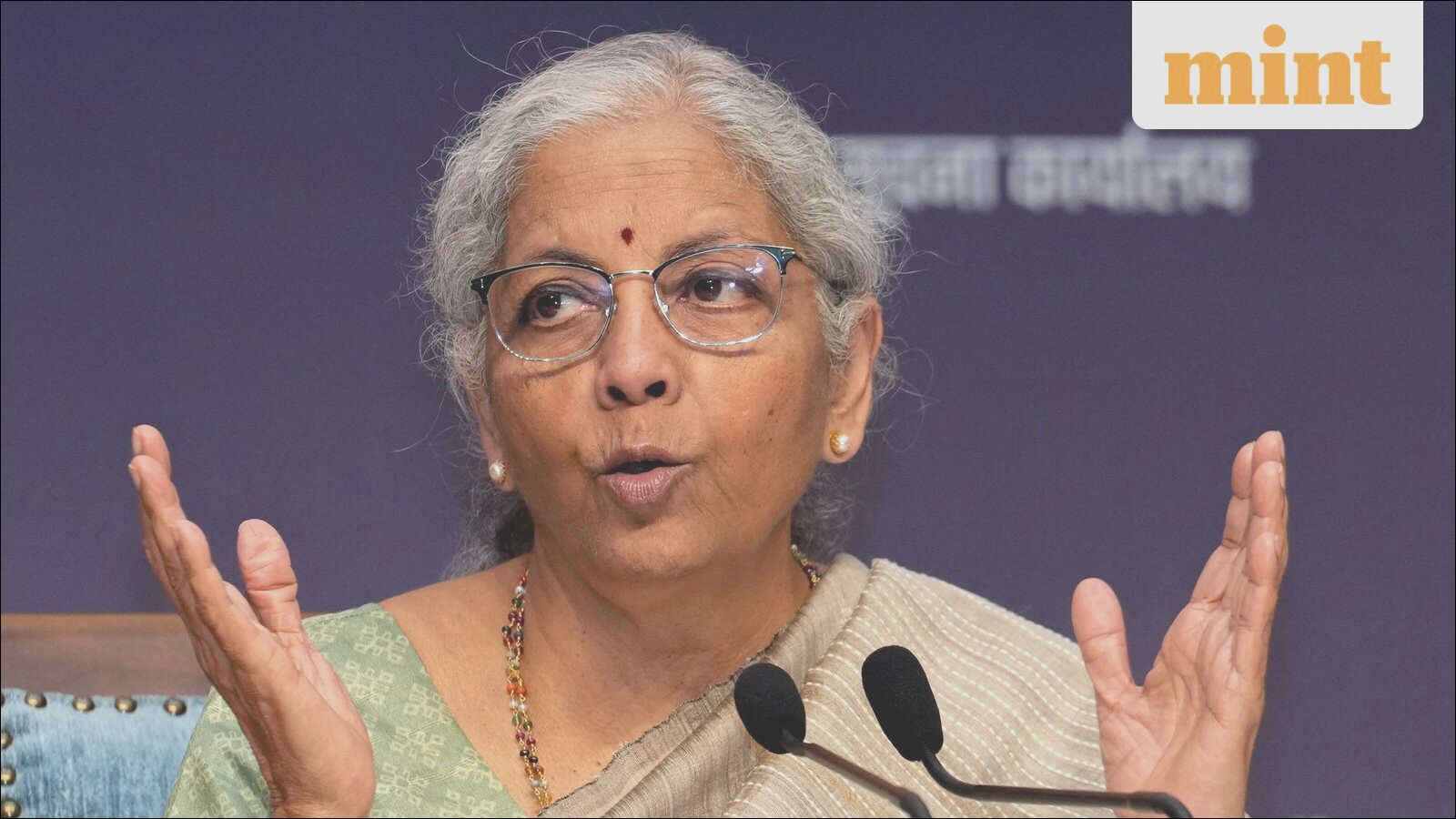
New Delhi: On Monday, Finance Minister Nirmala Sitharaman encouraged economists and scholars to embrace a more data-focused and technology-driven approach to better grasp India’s swiftly evolving economy. She emphasized the need for policy and research that truly reflects the realities of India, rather than relying solely on Western economic models.
Speaking at an event at the Delhi School of Economics (DSE), Sitharaman highlighted that the way we study the economy needs to change. She stressed that technology should be viewed as a crucial element in economic production. “Without technology, resources like land, labor, and capital will not make significant progress. Countries that effectively integrate technology grow faster, while those that do not tend to fall behind,” she remarked.
Sitharaman took pride in India’s economic progress, stating that the nation has risen from being the 10th largest economy in 2014 to the 5th largest today, with aspirations to move to the 3rd position soon. “India is standing tall and strong because of its economic power,” she said.
The minister emphasized the importance of objective, data-driven analysis, urging economists to truly engage with the data and advocate for India’s unique perspective and needs.
She pointed out that institutions like DSE should work to connect research with governance, producing insights that directly influence policy decisions. Many economic theories currently focus on Western ideals, and she insisted that India needs homegrown models that can also benefit other countries in the Global South.
Moreover, Sitharaman called on DSE to enhance training in advanced data analysis and artificial intelligence for economists and policymakers. This would help improve early warning systems for economic challenges, policy formulation, and overall governance. She advocated for a multidisciplinary approach, combining economics with data science, environmental studies, and public policy.
Additionally, she suggested that DSE implement field immersion programs allowing students to understand local realities by interacting with districts, small businesses, self-help groups, and cooperatives. This hands-on experience, she believes, will help create “economists with empathy” who can appreciate both the statistical data and the human stories behind it.
Lastly, Sitharaman called for more focused research on areas such as fiscal federalism, GST reforms, financial inclusion, employment elasticity, and climate finance, while also supporting state governments in creating effective policies.
