
India and the US Work on Finalizing Trade Agreement
India and the United States are making efforts to bridge the last significant gaps in their trade talks, with access to India’s dairy market being the main sticking point.
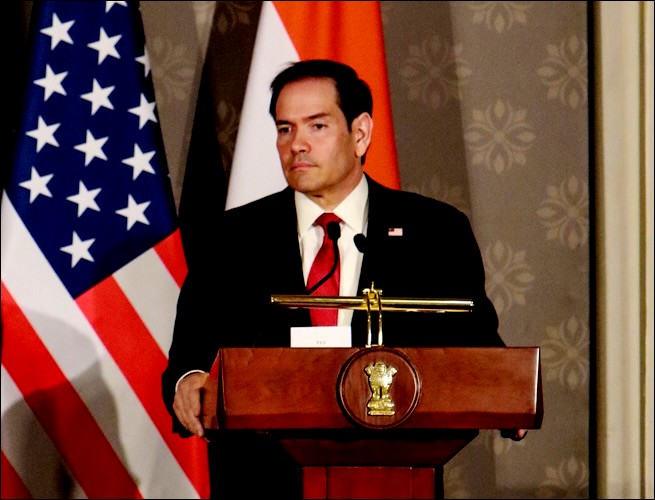
These discussions are taking place ahead of Secretary of State Marco Rubio’s upcoming visit to India and President Donald Trump’s announcement of new sanctions against Russia and Iran.
Recently, Trump signed into law the Lindsey O. Graham Sanctioning Russia and Iran Act, which includes provisions to waive tariffs on Russian oil imports.
The ongoing trade deal aims to reduce U.S. tariffs on Indian products in exchange for better access for American goods to Indian markets. Back in February, the U.S. cut its tariff on Indian goods from 25% to 18% and removed a separate 25% duty related to India’s imports of Russian oil.
In return, India has committed to either eliminate or reduce tariffs on various U.S. industrial goods and agricultural products, such as tree nuts, fruits, soybean oil, and wines. However, dairy access continues to be a contentious issue.
Commerce and Industry Minister Piyush Goyal stated on October 15 that the preliminary parts of the agreement have been finalized and are now in the legal drafting process. He mentioned that the agreement’s implementation depends on understanding India’s competitive advantages.
External Affairs Minister S. Jaishankar has suggested that the discussions are close to wrapping up, although U.S. Trade Representative Jamieson Greer warned on October 2 that a deal might not be ready immediately. Finance Minister Nirmala Sitharaman expressed optimism on October 16 that an agreement could be reached soon due to its significance for global trade.
In September, India’s exports grew by 23% to $44.4 billion, according to the Consulate General of India in New York. Increased imports of U.S. commercial aircraft, coal, gold, energy, and defense equipment could help reduce the trade deficit.
The energy sector remains a complex issue in the negotiations. Indian refineries rely heavily on crude oil from the Gulf and Russia. Although U.S. crude can be mixed with other types, quickly replacing Russian supplies has proven challenging, particularly with shipping routes affected by conflicts in the region.
India has also stepped up its purchases of U.S. natural gas, marking a significant shift. For the first time, the U.S. became India’s largest supplier of liquefied natural gas from March to May, according to data from Kpler. In August, it accounted for over half of India’s liquefied petroleum gas imports before the UAE regained the lead in September.
Rubio is set to visit several cities, including Samarkand, Mumbai, and Jamnagar, from October 17 to 22, with a meeting with Jaishankar scheduled for October 20.
