
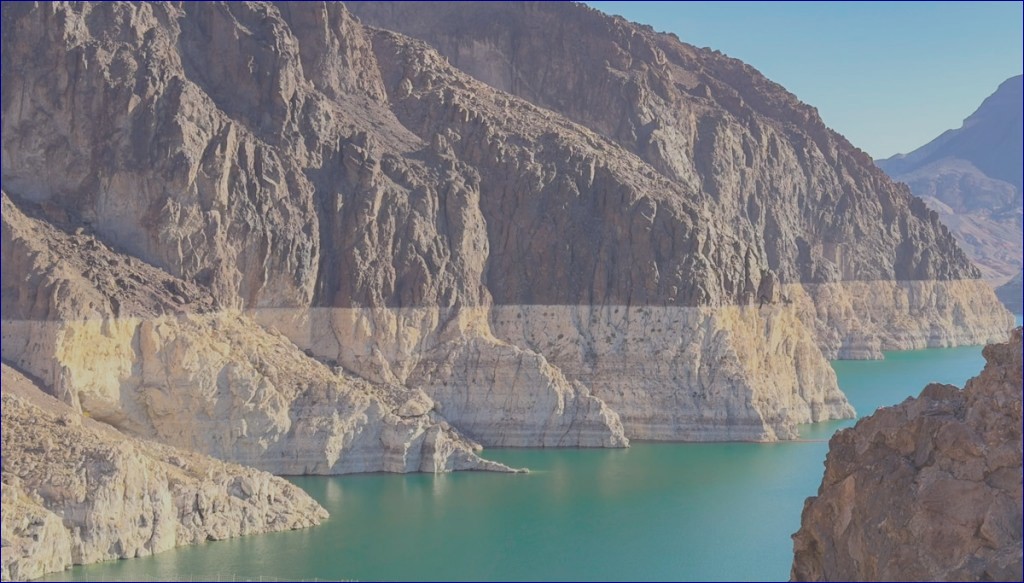
The Colorado River, a vital water source for many in the Southwest, is showing alarming signs of trouble. The river’s flow is decreasing, and the water levels at Lake Powell and Lake Mead are dropping, stark indicators of a severe megadrought affecting the region.
Recent research from Virginia Tech reveals that the situation is even worse below ground. Groundwater supplies in the Colorado River Basin are vanishing at an alarming rate, with surprising new trends emerging. Traditionally, the Lower Basin has faced greater groundwater losses, but now the Upper Basin is seeing significant declines as well. This shift is largely due to surface water shortages impacting groundwater supplies.
A research team led by Susanna Werth used data from NASA’s Gravity Recovery and Climate Experiment satellite mission, along with surface water, soil moisture, and snow-water estimates from 2004 to 2023, to examine changes in groundwater levels. Their findings, shared in the journal Water Resources Research, highlight that groundwater depletion has accelerated since 2019. Between 2020 and 2022, the Upper Basin lost about 4.6 trillion gallons of groundwater, almost twice the 2.5 trillion gallons lost in the Lower Basin during this period.
Esther Oyedele, a geosciences graduate student and lead author of the study, expressed surprise at the extent of groundwater loss in the Upper Basin, which was previously thought to have a more resilient water system due to its snowmelt. She noted that the groundwater decline does not mirror surface water shortages in the same way across the two basins.
The Colorado River Basin serves approximately 40 million people and supports extensive agriculture. While groundwater can help buffer against water shortages as surface supplies dwindle, that reserve is finite. Werth cautioned that ongoing depletion of groundwater, especially in the Upper Basin, could diminish its contributions to rivers, worsening the cycle of shortages.
The study underscores the urgency of managing both surface water and groundwater resources to protect the Colorado River Basin. Simply focusing on one type of water supply is no longer sufficient; a comprehensive approach is essential for preserving this critical resource.
