
Title: President Trump Claims Iran’s Military Has Been Severely Impacted
In recent statements, President Donald Trump declared that Iran’s military strength has been greatly weakened due to U.S. military actions. He emphasized that the country now possesses fewer drones and missiles, asserting that Iran’s naval and air forces have been significantly destroyed.
Iran’s Supreme Leader, Mojtaba Khamenei, responded to these claims on October 8, asserting that U.S. and Israeli operations have not undermined Iran’s internal security forces. Khamenei praised the police force for their resilience during confrontations that began in February, known as Operations Epic Fury and Roaring Lion.
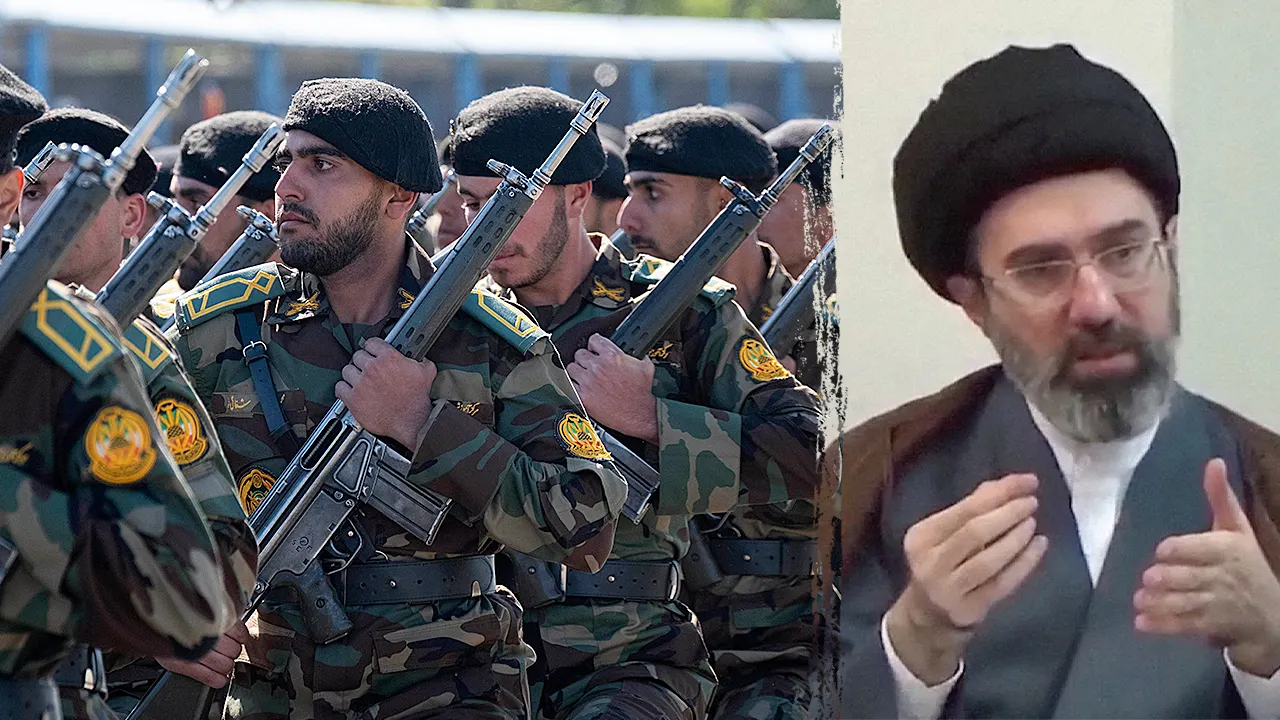
The U.S. Army recently released a guide designed to help American troops identify members of Iran’s conventional military, known as the Artesh. According to the Jerusalem Institute for Strategy and Security, the Artesh consists of approximately 350,000 personnel, which includes a significant number of conscripts.
Khamenei stated that the relentless attacks from the “criminal US-Zionist enemy” have not deterred Iran’s security forces, particularly the Law Enforcement Command (FARAJA), which he credited for maintaining domestic order amid growing tensions.
He also indicated that the focus on attacking the police force has highlighted its importance and urged for enhancements in personnel, equipment, and the implementation of advanced technology like artificial intelligence in their operations.
Iran’s security structure is composed of three main components: the Artesh for conventional defense, the Islamic Revolutionary Guard Corps (IRGC) for protecting the regime, and FARAJA for internal law enforcement. FARAJA, led by Brigadier General Ahmadreza Radan, has grown into a powerful institution tasked with suppressing protests and monitoring political activities.
Radan has previously faced U.S. sanctions for his involvement in human rights abuses and has been recognized for his role in containing civil unrest. Khamenei’s call for strengthening FARAJA underscores the regime’s commitment to enhancing internal security during ongoing conflict.
The U.S. Army’s recent recognition guide also highlights the types of weaponry that American soldiers may encounter in potential engagements with Iranian forces, which include different models of assault rifles and grenade launchers.
While the Artesh maintains structural integrity, it has reportedly suffered losses in air, naval, and air defense capabilities due to the intensity of the military operations against Iran. As of now, it is unclear how quickly Iran can rebuild its military resources in light of recent setbacks.
President Trump has stated that the U.S. will refrain from conducting further military actions against Iran before the upcoming midterm elections, noting ongoing constructive dialogues between the nations.
