
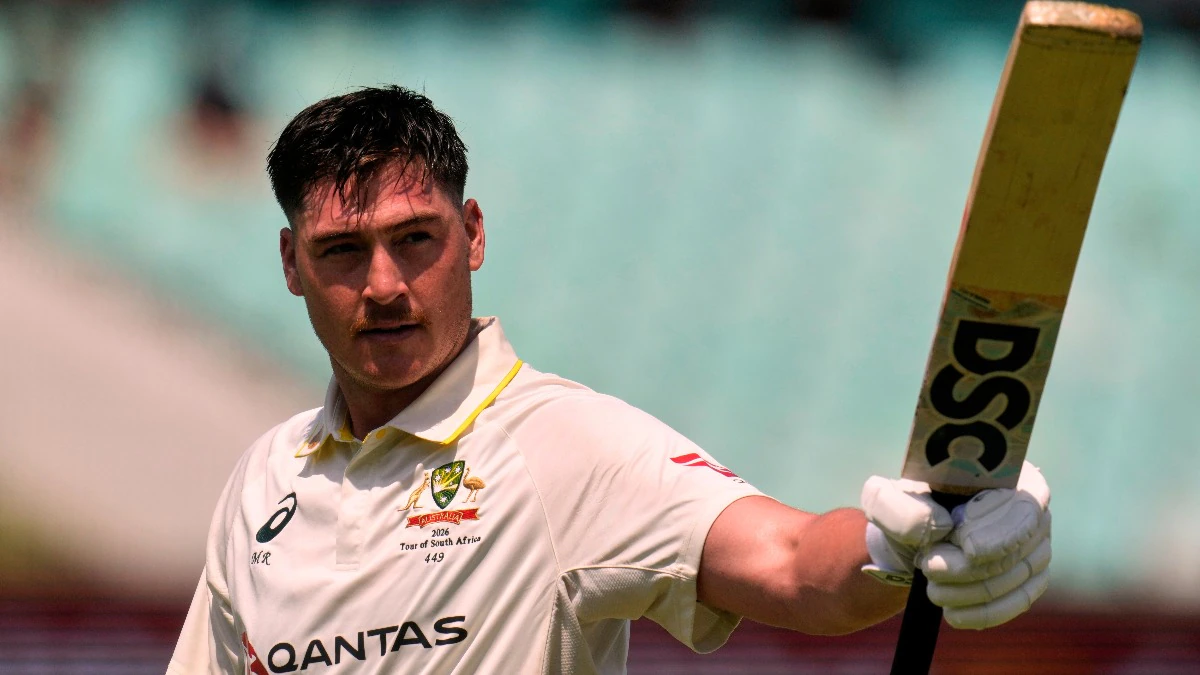
Matt Renshaw made a memorable comeback by scoring a Test century after nearly ten years, but his performance at Kingsmead meant much more than just achieving a personal milestone. It highlighted how much he has grown as a player since he first entered the Australian cricket scene.
On Saturday, Renshaw hit his second Test century against South Africa, his first being back in January 2017 against Pakistan in Sydney. His impressive score of 102 not out during the lunch break on Day 2 helped Australia recover from a struggling start, leading them to a total of 277/8 after 96 overs.
This century was particularly significant; it marked Australia’s first Test hundred in South Africa since 2014 and their first at Kingsmead since 2009.
A New Mindset
Renshaw’s journey back to scoring big runs has taken a long time. In a previous podcast, he shared how the pressure he felt while trying to secure a spot in the Australian Test team weighed heavily on him. “I put red-ball cricket on a pedestal for too long,” Renshaw explained. “In my white-ball games, I felt relaxed. I just focused on watching and hitting the ball.”
Now, he aims to carry that easy-going attitude into Test matches, realizing that his initial quest for success was holding him back.
Renshaw also talked about the initial challenges of joining an international team filled with players he once admired. This experience added its own set of pressures, and he admitted he had a tough time adjusting at first. “I found myself in an environment with my heroes, and I didn’t know how to handle it,” he said. However, he feels he is now better prepared to manage this internal pressure, allowing him to concentrate on the game rather than outside expectations.
Staying Strong
Renshaw’s calm demeanor was essential as Australia tried to bounce back from a rough start. After winning the toss and choosing to bat, the team found themselves in a tricky spot at 84/4 and later at 124/6, leaving Renshaw with a lot to do.
His moment to shine came after Marnus Labuschagne was out just before lunch on the first day. With a break to mentally prepare, Renshaw adjusted to the playing conditions. “I was getting used to the light and moving my body the way I wanted,” he noted.
When play was stopped due to bad light on Friday, Renshaw was not out at 46, helping stabilize the innings alongside captain Pat Cummins, who had 33 not out at that point.
Cummins added 10 runs on Saturday before being caught, after the duo built an important 86-run partnership for the seventh wicket. However, South Africa’s bowlers fought back, with Wiaan Mulder taking four wickets by the end of the morning session. Renshaw, undeterred, continued to defend his wicket. He reached his half-century off 117 balls and completed his century in 204 balls, finishing lunch on 102 not out with 10 boundaries.
Ready for Challenges
Renshaw’s ability to adapt has become a key strength for him as Australia adjusts its batting lineup based on different game conditions. He pointed out how changes, like Travis Head opening the batting, illustrate the need for flexibility at the international level.
“I prepare as best as I can for anything,” he mentioned, referring to the versatility he’s shown during one-day games. He acknowledged that waiting for a chance to bat can be tough, especially after being away from red-ball cricket for a while. He also indicated that a player can lose their groove if a morning session extends too late into the day.
For Renshaw, the innings at Kingsmead required both patience and skill. After years of feeling pressure to perform in Test cricket, he is now focused on enjoying the game, drawing inspiration from how he plays in shorter formats.
With his century ending a long wait since 2017, Renshaw’s job isn’t finished yet as Australia looks to build a strong first-innings total.
