
Protest Leader Detained in Delhi: Calls for Election Chief’s Resignation
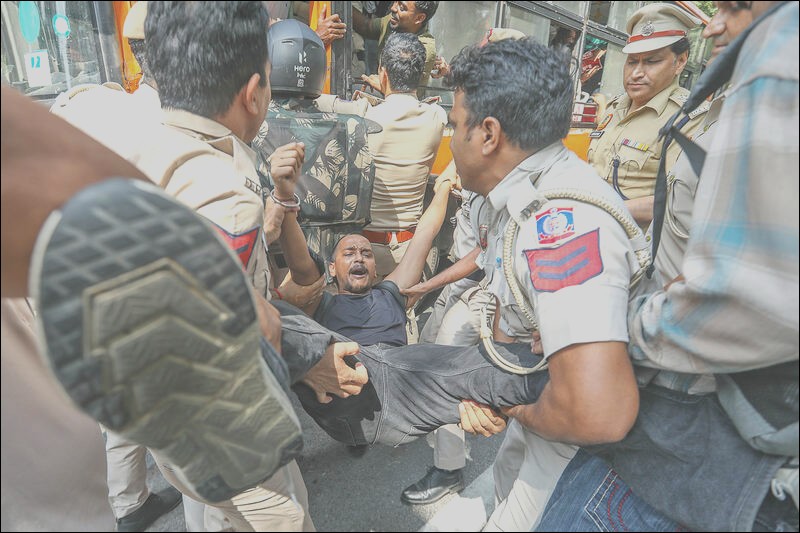
In a significant political incident, Indian police detained Abhijit Dipke, the founder of the Cockroach Janta Party, as he arrived in New Delhi for a rally. This event comes amid ongoing protests demanding the resignation of the election commission head, who faces allegations of manipulating voter lists that reportedly affected around 130 million people.
Dipke, who is 31 years old and comes from a Dalit background, has gained prominence after his sharp response to recent comments by India’s Supreme Court Chief Justice, who compared unemployed youths to “cockroaches.” This statement sparked the creation of the Cockroach Janta Party, which has quickly evolved from a humorous online movement into a significant political force.
As police approached his plane, Dipke was seen on television challenging them, saying, “I have come to be arrested, arrest me… I am not afraid of you guys.” Police clarified that he was not being arrested but that they required his cooperation.
Dipke, known for his casual attire of T-shirts and jeans, had recently led a protest in Bengaluru before traveling to the capital. Along with him, two key leaders from his party, Saurav Das and Ashutosh Ranka, were also detained. Despite the heavy police presence in Delhi and the restrictions on protests, Dipke encouraged his supporters to remain peaceful, citing Mahatma Gandhi as an inspiration.
He voiced his determination in a video before his flight, stating, “I don’t know what will happen tomorrow, but I am not going to be afraid. We have to save our democracy.” Authorities have increased security across Delhi, with thousands of officers deployed to prevent any potential protests, even suspending travel and telecommunications.
The Cockroach Janta Party has rallied millions of followers online, successfully organizing protests over various issues, including concerns around a medical entrance examination leak that impacted two million applicants. The pressure from this movement ultimately resulted in the resignation of Dharmendra Pradhan, the Education Minister, in July.
Dipke and his supporters see their campaign as a push for political accountability rather than simply forming a conventional political party. Following a recent report indicating internal concerns within the election commission regarding voter list revisions, the movement has reignited. The election authority claims that any incorrect removals from the voter rolls can be corrected by re-enrollment.
With growing anxiety about the future of democracy in India, Dipke’s tenacity and his movement’s influence signal a shifting landscape for political engagement, particularly among younger citizens.
