
Colombian Vice President Supports New Regional Security Alliance
UNITED NATIONS – Colombian Vice President José Manuel Restrepo has expressed strong support for a new security partnership in the Americas, as promoted by former President Donald Trump. However, he emphasized that Colombian soldiers, rather than American troops, will take the lead in action against local armed groups.
In an interview shortly after attending a meeting in New York alongside Trump and other Latin American leaders, Restrepo highlighted the importance of Colombian sovereignty. Trump introduced the initiative during the Shield of the Americas conference, calling it “the largest and most powerful alliance for economic and national security” in the Western Hemisphere.
Trump urged participating nations to treat what he labeled “narco-terrorists” as shared threats and to impose sanctions on designated terrorist organizations.
Restrepo discussed the shifting political dynamics in Latin America with Trump. He noted that Colombia, under the new leadership of President Abelardo De La Espriella, is moving more to the right, joining countries like Argentina and Chile. This political shift stems from public concerns about crime, economic challenges, and political instability.
“There is a wave of freedom and democracy,” Restrepo told reporters. “If we want to protect democracy in the region, the Shield of the Americas is the best opportunity for that.”
Restrepo mentioned that he and Trump acknowledged the need for a close partnership between Colombia and the United States. He believes Colombia plays a vital role in regional security, particularly in combatting drug trafficking and armed groups.
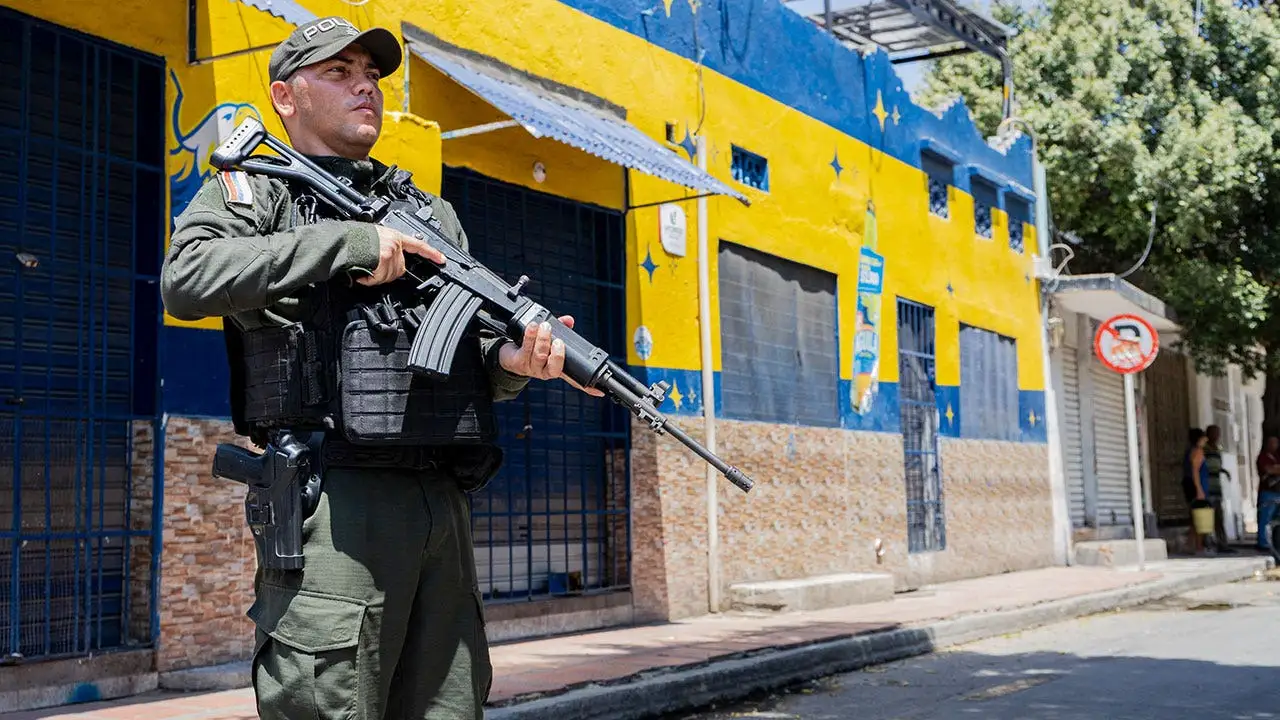
The Colombian government’s current approach has involved deploying military forces to areas affected by violence, particularly in Santa Marta, where a recent armed group attack prompted a significant military response.
In a bid to address the ongoing issues of violence and drug trafficking, the De La Espriella government seeks to dismantle the previous administration’s “total peace” strategy, which prioritized negotiation with armed groups.
“The previous government created a sense of impunity,” Restrepo asserted, as he outlined a commitment to tackling what the new administration views as terrorist activities.
The country’s Ministry of Foreign Affairs has also taken a step regarding its foreign relations, declaring a suspension of diplomatic ties with Iran due to concerns over alleged associations with terrorist groups.
Restrepo reflected on the broader implications for international cooperation, particularly regarding terrorism. He called for the United Nations to enhance its counterterrorism strategies, emphasizing the need for better intelligence sharing and judicial collaboration among member states.
This moment is seen not only as a chance for Colombia but also as a critical opportunity for the UN to reassess its role in fostering peace and security. According to Restrepo, there is a pressing need for human rights standards to be applied universally, regardless of political contexts.
“In our fight for peace, we cannot forget the importance of confronting terrorism,” he said, highlighting the intertwining challenges of human rights and international security.
